Shipping from China to Vietnam
Short answer: You can ship from China to Vietnam by sea freight (FCL or LCL), cross-border truck, rail, air freight or express. Because the two countries share a border, transport is fast: sea freight from Shenzhen takes about 2–3 days to Hai Phong or 3 days to Ho Chi Minh City port to port, and trucks from South China reach Hanoi in about 2–4 days through the Youyiguan–Huu Nghi border gate. Door to door, allow 7–15 days by sea, 3–6 days by truck to northern Vietnam and 2–4 days by air. Northern destinations usually use Hai Phong or a land border; southern destinations use Cat Lai or Cai Mep. In November 2026 a 20GP from Xiamen or Yantian to Ho Chi Minh City costs from US$390–410 and LCL to Cat Lai from US$30 per revenue ton. Imports pay duty by HS code (often reduced under ACFTA Form E or RCEP) plus VAT of 10%, temporarily 8% for many goods until 31 December 2026.
BAT Logistics is a Guangzhou-based freight forwarder operating since 2013. We book space directly with shipping lines including COSCO, Hapag-Lloyd and MSC, work directly with airlines, operate our own express accounts and specialise in dangerous goods, including lithium batteries and battery-powered products, as well as general commercial freight. We handle supplier pickup, export clearance, international freight and coordination with your Vietnamese importer or customs agent through to final delivery.
China to Vietnam Shipping at a Glance
On smaller screens, scroll to see all columns.
| Option | Best for | Typical transit | Price and scope to check |
|---|---|---|---|
| Sea FCL | Container loads, heavy cargo, southern Vietnam | 2–20 days port to port; 7–15 days door to door | From US$390 per 20GP to HCMC; terminal, free time, haulage |
| Sea LCL | Smaller commercial lots | 3 days port to port to Cat Lai; 10–18 days door to door | From US$30/RT; CFS charges, unstuffing, collection |
| Truck (land border) | South China to Hanoi and northern Vietnam | 3–6 days door to door | Border gate, transloading, import clearance, DG acceptance |
| Rail | Cargo from inland China to Hanoi | 5–10 days | Terminals, border handover, last mile |
| Air freight | Urgent or high-value cargo | 2–4 days door to door | Sample rates vary by route and chargeable weight; battery acceptance |
| Express | Samples and small parcels | 4–7 working days on average | UPS from RMB 22.05/kg over 500 kg; duty and VAT |
Transit times are estimates, exclude factory readiness, and must be confirmed for each shipment, including start and end points. Border queues, customs channel (green, yellow or red), typhoons, document corrections and delivery appointments can all change them.
Northern or Southern Vietnam? Start with the Delivery Address
Vietnam is long and narrow: Hanoi and Ho Chi Minh City are more than 1,500 km apart. The best route depends on where your receiver is, not on the distance from China.
On smaller screens, scroll to see all columns.
| Receiver location | Usual route to compare |
|---|---|
| Hanoi, Bac Ninh, Bac Giang, Hai Duong, Hung Yen | Truck via Huu Nghi (Lang Son), or sea to Hai Phong / Lach Huyen |
| Hai Phong and Quang Ninh | Sea to Hai Phong, or truck via Mong Cai |
| Lao Cai and the northwest | Truck or rail via Hekou–Lao Cai |
| Da Nang and central Vietnam | Sea to Da Nang, or via Hai Phong or Ho Chi Minh City |
| Ho Chi Minh City, Binh Duong, Dong Nai, Long An | Sea to Cat Lai or Cai Mep–Thi Vai; air to Tan Son Nhat (SGN) |
| Air cargo to the north | Noi Bai (HAN), Hanoi |
Before comparing quotes, also confirm the goods (and whether they contain batteries), the China pickup address and ready date, the receiving hours and unloading conditions, and who is the Vietnamese importer.
Sea Freight from China to Vietnam: FCL or LCL
FCL (full container load): suits container-scale or heavy cargo, and almost all cargo for southern Vietnam. A 20ft container holds about 33 CBM and a 40ft high cube about 76 CBM. Confirm the terminal, free time, haulage, unloading and empty-container return.
LCL (less than container load): your cargo shares a container. Ask where it is consolidated, which Vietnamese CFS warehouse unstuffs it and which destination charges apply. Not every consolidator accepts battery cargo.
FCL rates and transit from China to Ho Chi Minh City (November 2026)
Sample ocean freight rates from BAT’s carrier quotes for November 2026 sailings to Ho Chi Minh City, general cargo, USD per container:
On smaller screens, scroll to see all columns.
| Port of loading | Carrier and routing | Transit | 20GP | 40GP | 40HQ |
|---|---|---|---|---|---|
| Xiamen | MSC, direct | 4 days | US$390 | US$580 | US$580 |
| Yantian, Shenzhen | Asean Seas Line, direct | 3 days | US$410 | US$610 | US$610 |
| Nansha, Guangzhou | Maersk, direct | 2 days | US$640 | US$835 | US$835 |
| Shanghai | Wan Hai, direct | — | US$800 | US$1,550 | US$1,550 |
| Ningbo | Asean Seas Line, direct | 7 days | US$830 | US$1,565 | US$1,565 |
| Dalian | Asean Seas Line, direct | 7 days | US$1,185 | US$1,300 | US$1,300 |
| Qingdao | Maersk, direct | 4 days | US$1,330 | US$1,330 | US$1,330 |
| Tianjin | TS Lines, via Shekou | 20 days | US$1,400 | US$1,500 | US$1,500 |
China-side charges per shipment (CNY): B/L fee 50, documentation 450, seal 50, terminal handling RMB 563–750 per 20GP and RMB 856–1,250 per 40ft depending on port, plus a booking fee of RMB 294 (20ft) or 316 (40ft) on some services. Vietnamese destination charges, duty and VAT are extra. Hai Phong rates are available on request.
Rates are valid only for the sailings and dates quoted, change every few weeks and depend on space. Dangerous goods, including lithium batteries, are quoted separately.
LCL from China to Ho Chi Minh City (Cat Lai)
On smaller screens, scroll to see all columns.
| Item | Rate |
|---|---|
| Ocean freight (general cargo) | US$30 per revenue ton (1 CBM or 1,000 kg, whichever is greater) |
| Documentation | RMB 150 per set |
| Export customs declaration | RMB 300 per set |
| Cat Lai destination charges | Charged at cost by the destination CFS |
| Schedule | Cut-off Tuesday and Thursday, sailing Friday and Monday |
| Service | Direct consolidation, about 3 days port to port, KMTC |
Battery cargo by LCL is quoted separately after the DG documents have been checked.
Truck and Rail across the China–Vietnam Border
For cargo from Guangdong, Guangxi or Yunnan to northern Vietnam, trucking is often faster than sea because it skips the port cut-off and terminal queue.
On smaller screens, scroll to see all columns.
| Border gate (China–Vietnam) | Typical use |
|---|---|
| Youyiguan (Pingxiang) – Huu Nghi (Lang Son) | Main road gate for South China to Hanoi and the northern industrial zones |
| Dongxing – Mong Cai (Quang Ninh) | Coastal road gate, close to Hai Phong and Quang Ninh |
| Hekou – Lao Cai | Road and rail gate for Yunnan and the northwest |
| Pingxiang – Dong Dang | Rail border crossing on the Nanning–Hanoi line |
Before booking, confirm: where the China export declaration is made; where the Vietnamese import declaration is filed; whether the cargo stays on the same truck or is transloaded at the border yard; who has custody at each stage; and how the released cargo reaches the receiver. Dangerous goods, including batteries, are restricted at border gates and on many cross-border trucks, so acceptance must be confirmed for every leg. Border queues can grow before holidays such as Tet.
Air Freight and Express to Vietnam
Air freight suits urgent or high-value cargo through Noi Bai (Hanoi) or Tan Son Nhat (Ho Chi Minh City). It is charged on the higher of actual and volumetric weight; most airlines use a divisor of 6,000 (L × W × H in cm ÷ 6,000 = kg). Standalone lithium-ion batteries normally travel on cargo aircraft only.
Sample air freight rates to Vietnam, general cargo, RMB per kg:
On smaller screens, scroll to see all columns.
| Route | Airline | Transit | +100 kg | +300 kg | +500 kg | +1,000 kg |
|---|---|---|---|---|---|---|
| Shanghai → Ho Chi Minh City | Vietnam Airlines (VN), direct | 1 day | 15.5 | 15.5 | 15.5 | 15.5 |
| Shanghai → Ho Chi Minh City | China Eastern (MU), direct | 1 day | 17 | 17 | 17 | 17 |
| Shenzhen → Singapore → Ho Chi Minh City | Shenzhen Airlines (ZH) | 3 days | 15 | 14.5 | 14 | 14 |
| Guangzhou → Ho Chi Minh City | SF Airlines (O3), direct | 3 days | 24.5 | 23.5 | 22 | 22 |
| Shanghai → Hanoi | Air China (CA), direct | 1 day | 17 | 17 | 17 | 17 |
| Shanghai → Hanoi | Longhao Airlines (GI), direct | 2 days | 19.5 | 17.5 | 15.5 | 14.5 |
| Shenzhen → Taipei → Hanoi | China Airlines (CI) | 3 days | 24.5 | 23.5 | 22 | 21 |
| Guangzhou → Kuala Lumpur → Hanoi | Malaysia Airlines (MH) | 2 days | 23.5 | 23.5 | 22 | 22 |
| Shanghai → Da Nang | VietJet (VJ), direct | 1 day | 10.5 | 10.5 | 10.5 | 10.5 |
| Shanghai → Da Nang | Vietnam Airlines (VN), direct | 1 day | 22 | 22 | 17.5 | 17.5 |
Airport-to-airport rates; fuel and security surcharges and local charges may apply. Confirm the current validity. Battery cargo is quoted separately.
Express suits samples and small consignments; couriers commonly use a divisor of 5,000. Battery and commodity restrictions vary by network. Sample express rates to Vietnam (RMB per kg):
On smaller screens, scroll to see all columns.
| Courier | 21 kg | 45 kg | 100 kg | 300 kg | 500 kg | Typical transit |
|---|---|---|---|---|---|---|
| UPS | 27.58 | 25.6 | 23.05 | 23.05 | 22.05 | About 6–7 working days on average |
| DHL | 33.23 | 37.14 | 29.91 | 28.91 | 28.41 | About 4 working days on average |
| FedEx IP | 49.24 | 49.46 | 36.94 | 34.72 | 33.11 | — |
Door delivery and DDP: a door quote should list China pickup, export clearance, freight or trucking, Vietnamese import declaration, release, delivery and unloading, and say who pays duty and VAT. DDP should only be offered where a valid importer and tax arrangement exist and are agreed in writing.
How Long Does Shipping from China to Vietnam Take?
Sea freight (FCL): 2–20 days port to port depending on origin; 7–15 days door to door
Sea freight (LCL): 10–18 days door to door
Truck to northern Vietnam: 3–6 days door to door
Rail: 5–10 days
Air freight: 2–4 days door to door
Express: confirm door-to-door timing by service and shipment
On such short routes, preparation and clearance often take longer than the journey itself. Shipments routed to the customs red channel for physical inspection can take several extra days. Plan around Chinese New Year and Vietnamese Tet, when factories and border gates slow down.
How Much Does Shipping from China to Vietnam Cost?
Rates move with the season, capacity and fuel. The tables above show sample FCL, LCL, air and express rates; request a current shipment-specific quotation. Truck rates to Hanoi are available on request. When comparing quotes, check the same scope:
On smaller screens, scroll to see all columns.
| Cost area | What the quote should show |
|---|---|
| China origin | Pickup, warehouse, consolidation, export clearance |
| Main transport | Sea, truck, rail, air or express; surcharges, validity |
| Border or port handling | Transloading, THC, D/O, CIC, storage |
| Import | Customs agent fee, duty, VAT, permits, inspection |
| Delivery | Trucking, appointment, unloading, container return |
What is the cheapest way to ship from China to Vietnam? Sea LCL or FCL for most cargo, especially to southern Vietnam. For northern Vietnam, a consolidated truck can compete with sea once port charges and trucking from Hai Phong are added. Compare total landed cost, not just the freight rate.
Vietnamese Import Clearance, Duty and VAT
Importer and declaration
Vietnamese Customs processes import declarations electronically through VNACCS/VCIS, usually filed by a licensed customs agent for the importer. Each declaration is assigned to the green (no check), yellow (document check) or red (physical inspection) channel. The invoice, packing list and bill of lading must match exactly: mismatched weights or piece counts are a common cause of delay.
Duty and VAT
Import duty: set by the HS code in the Vietnamese tariff; Form E (ACFTA) or RCEP can reduce it for qualifying goods.
VAT: 10% standard; a reduced 8% rate applies to many goods until 31 December 2026, with exclusions. VAT is calculated on the customs value plus import duty (and any special consumption tax).
Other taxes: special consumption tax or environmental protection tax apply to specific goods.
Worked example (hypothetical): customs value VND 200,000,000, duty 5%, VAT 10%. Duty = VND 10,000,000; VAT = 10% × 210,000,000 = VND 21,000,000; total = VND 31,000,000, before agent and port charges.
Documents
Commercial invoice and packing list.
Bill of lading, air waybill or road consignment note.
Form E or RCEP proof of origin if claiming preference.
Catalogues or technical sheets to support the HS code.
Licences, conformity certificates or inspection results for specialised-management goods.
Form E and RCEP
Goods that meet the rules of origin can enter Vietnam at a reduced or zero preferential rate with a valid Form E (ASEAN–China FTA) or under RCEP. Check the HS code first: if the normal duty is already zero, preference saves nothing. A wrong HS code, a missing invoice number or a date mismatch on the certificate can lose the preference, so check the draft against the invoice before the cargo leaves China. BAT does not issue certificates of origin. MOIT: RCEP rules of origin
Who does what
On smaller screens, scroll to see all columns.
| Party | Responsibilities |
|---|---|
| Supplier or exporter | Accurate goods, invoice and packing data; Form E application |
| Vietnamese importer | Product conformity and permits, duty and VAT |
| Customs agent | VNACCS declaration and customs queries |
| BAT Logistics | Pickup, export clearance, freight or trucking booking, document coordination and delivery arrangements within the agreed quote |
| Carriers | Transport and cargo acceptance on each leg |
| Receiver | Delivery appointment, access and unloading |
Shipping Lithium Batteries to Vietnam
Dangerous goods are our specialty. For battery cargo to Vietnam, check three separate layers:
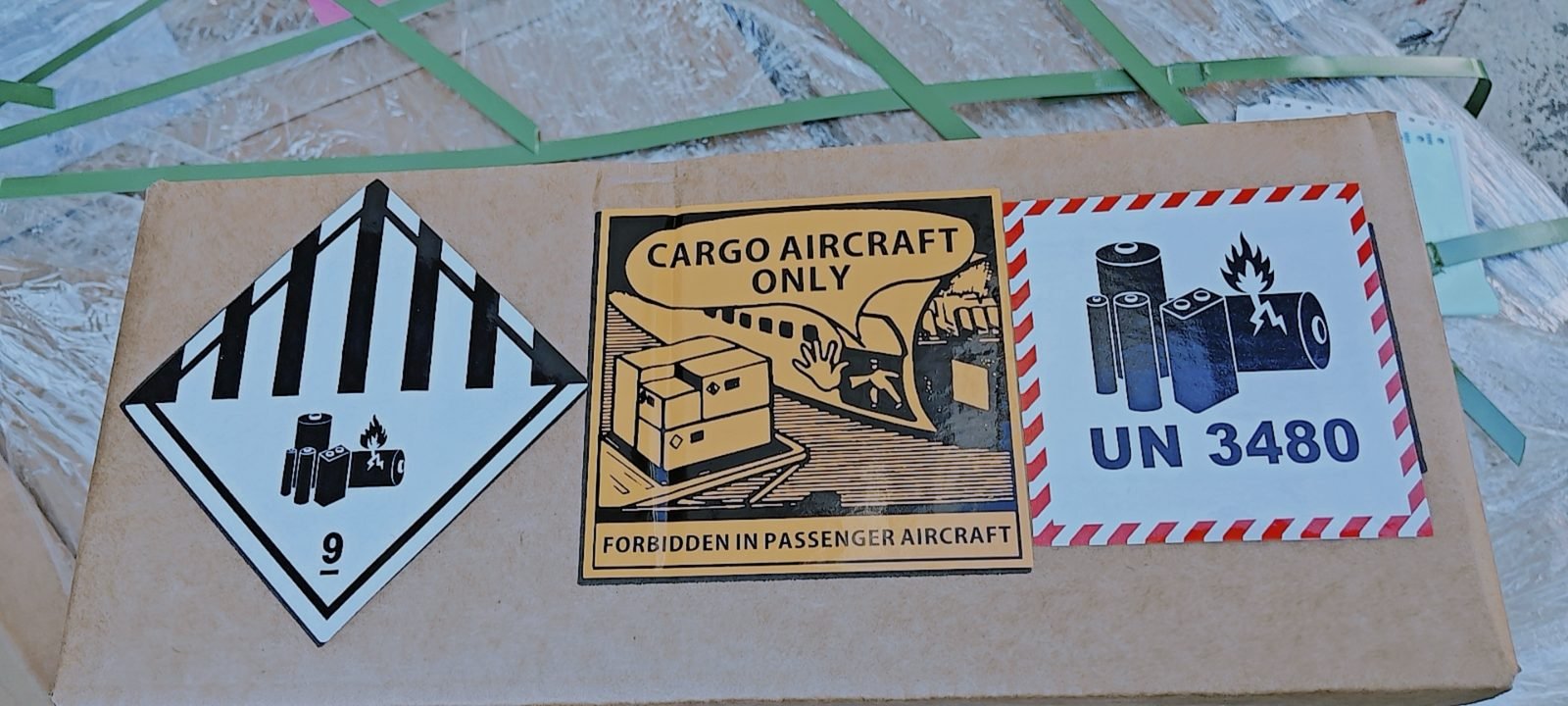
Transport (DG) requirements. Tell us whether the goods are batteries shipped alone, packed with equipment or contained in equipment (UN 3480/3090 or UN 3481/3091 for lithium), with the chemistry, model, watt-hours or lithium content, quantity, packing and photos. Depending on the mode we review the UN 38.3 test summary, SDS, UN-specification packaging, Class 9 labels and the DG declaration. Sea freight may be suitable for battery cargo, subject to carrier acceptance and shipment-specific conditions.
Every leg must accept the cargo. Border gates and cross-border trucks often restrict dangerous goods, so a route that works for general cargo may not work for batteries. Confirm each operator before booking.
Vietnamese product rules. Vietnamese conformity rules, including QCVN 101:2020/BTTTT where applicable, depend on the product and current regulations. The importer should confirm the exact classification, certification and declaration requirements with the responsible authority.
For a containerised energy storage system or other BESS project, see our China to Vietnam BESS shipping page.
Our two DG-certified staff review the supplied documents and packing before cargo is tendered. Recent battery shipments include 30,000 lithium-ion 21700 cells flown to Warsaw on a direct cargo charter flight (China to Poland), a full 40HQ of energy storage batteries from Shekou to Manila (China to the Philippines) and battery jump starters by truck from Shenzhen to Bangkok (China to Thailand). Testing, reports and SDS come from the manufacturer or a laboratory; BAT does not issue them or guarantee carrier acceptance, permits or customs release.
Seven Steps from Inquiry to Delivery
Describe the goods: product, battery configuration, packing, quantity, weight and dimensions.
Define the route: China pickup point, Vietnamese province and address, ready date and Incoterm.
Compare options: sea, truck, rail, air or express on the same door-to-door scope.
Check acceptance: operators, border gate, equipment, packing and DG conditions for every leg.
China coordination: supplier pickup, warehouse or loading, export clearance and Form E if needed.
Vietnamese import: HS code, conformity and permits, duty, VAT, VNACCS declaration and release.
Final delivery: port, border or airport release, trucking, appointment and unloading.
What to Send for a Useful Quotation
Supplier address, pickup contact and cargo-ready date.
Vietnamese province, city and full delivery address, receiver contact.
Product description and intended use; HS code and UN number if known.
Packages, gross weight, dimensions, packing and photos.
For batteries: chemistry, configuration, model, Wh or lithium content and available documents.
Preferred mode, Incoterm, named place, and whether you need Form E or RCEP.
Importer and customs agent, and who pays duty and VAT.
Site access, receiving hours and unloading equipment.
Why Ship from China to Vietnam with BAT Logistics
Operating since 2013, with a team of more than 15 people in Guangzhou.
Direct bookings with shipping lines including COSCO, Hapag-Lloyd and MSC, and direct airline capacity.
Own express accounts for samples and small parcels.
Dangerous goods specialists: two DG-certified staff, lithium batteries and battery-powered products.
Based in South China: close to Shekou, Nansha and the Guangxi border gates.
Transparent pricing: sample FCL, LCL, air and express rates shown on this page.
Sea, truck, rail and air compared on one door-to-door basis.
China to Vietnam Shipping FAQ
How long does shipping from China to Vietnam take?
Sea freight from Shenzhen takes about 2–3 days to Hai Phong and 3 days to Ho Chi Minh City port to port, or 7–15 days door to door. Trucks from South China reach Hanoi in about 3–6 days door to door.
Should I ship to Vietnam by sea or by truck?
Truck is often faster for South China to Hanoi and the northern industrial zones. Sea is usually better for southern Vietnam, heavy cargo and battery cargo. Compare total door-to-door cost and time.
How much does shipping from China to Vietnam cost?
In November 2026, a 20GP to Ho Chi Minh City costs from US$390 (Xiamen) or US$410 (Yantian), LCL to Cat Lai US$30 per revenue ton plus fees, and air freight varies by route and weight. Duty, VAT and destination charges are extra.
Which China–Vietnam border gate is used for trucks?
Mostly Youyiguan (Pingxiang) – Huu Nghi (Lang Son) for Hanoi, Dongxing – Mong Cai for Quang Ninh and Hai Phong, and Hekou – Lao Cai for Yunnan and the northwest.
What are the import duty and VAT in Vietnam?
Duty depends on the HS code and may be reduced under Form E or RCEP. VAT is 10%, or 8% for many goods until 31 December 2026, on the customs value plus duty.
Is a Form E certificate enough to remove import duty?
Not on its own. The goods must meet the rules of origin, the certificate must match the invoice and HS code, and the preferential rate must actually be lower than the normal rate.
Can lithium batteries be shipped from China to Vietnam?
Yes, if the classification, UN 38.3 summary, SDS, packing, labels and DG declaration are correct and every carrier accepts the cargo. Sea freight may be suitable subject to carrier acceptance; many border trucks restrict batteries. Some batteries also need Vietnamese conformity certification.
Does door-to-door shipping include Vietnamese duties and taxes?
Not necessarily. The quote should state who handles import clearance, duty, VAT, destination charges and final delivery.
Does BAT issue UN 38.3 reports or guarantee customs clearance?
No. Reports come from the manufacturer or a laboratory. We review them and coordinate the agreed logistics; carriers and authorities make their own decisions.
Request a China to Vietnam Shipping Quote
Tell us what you are shipping, where it is ready in China, and the Vietnamese province and delivery address. Include quantity, packing, weight, dimensions, ready date, preferred mode and available documents. For batteries, add the chemistry, configuration and capacity.
We aim to reply within 24 hours with route options and an itemised quote.