Shipping from China to Thailand—2026

Thailand is ASEAN’s #2 economy (USD 510B GDP 2024) with 70M+ consumers and China’s 3rd-largest ASEAN trading partner (USD 130B+ bilateral trade in 2024). The China–Thailand freight lane is the #1 B2B freight corridor for Chinese EV supply chains in Southeast Asia — driven by Thailand’s “Detroit of Asia” status (1.8M+ vehicles/year, ASEAN’s #1 auto producer), the USD 2.5B+ Chinese EV investment wave (BYD Rayong, MG SAIC, GAC Aion, Great Wall, Changan), the USD 50B+ Eastern Economic Corridor (EEC), and the Laem Chabang Port (8.1M TEU 2024, world #20).
 
Whether you’re shipping auto parts, lithium batteries, electronics, machinery, or consumer goods — this guide gives you the exact 2026 rates, transit times, customs procedures, and 0% tariff strategies you need to ship from China to Thailand with confidence.

Quick Answer: Shipping from China to Thailand in 2026

The cheapest way to ship from China to Thailand is sea LCL at $20-90/CBM (10-15 days door-to-door). The fastest is air freight to Bangkok Suvarnabhumi (BKK) at $2.50-7.00/kg (1-2 days airport-to-airport). For most commercial shipments over 15 CBM, sea FCL to Laem Chabang at $383-700 per 20GP (4-6 days port-to-port) is the best balance of cost and speed. Most China-Thailand imports pay 0% MFN duty (with valid ACFTA Form E or RCEP Form RCEP) + 7% VAT (2024-2025) = 7% effective tax rate — one of the lowest in Southeast Asia. Cross-border trucking via Laos (¥18-25/kg, 7-9 days) is a strong middle option for 30-300 kg e-commerce cargo. BAT Logistics quotes all-in pricing in 1-2 hours, including freight + duty + VAT + last-mile to any Thai city.

June 2026 Rate Update

⚠️ June 2026 Shipping Alert — Geopolitical conditions (Strait of Hormuz, Middle East): China-Thailand sea freight rates have climbed 20-28% month-over-month as a broad multi-region ocean upswing reaches intra-Asia lanes. Lock in FCL quotes 2-3 weeks before booking to avoid further increases.

Monthly Rate Movement (May → June 2026)

Shipping Mode
May 2026
June 2026
Change
Notes
Sea 20GP (Laem Chabang)
$319-390
$383-468
+20%
Capacity tight, broad upswing
Sea 40GP (Laem Chabang)
$562-687
$720-880
+28%
Steeper rise than 20GP
Sea 40HQ (Laem Chabang)
$620-770
$780-1,000
+26%
Same upward trend
LCL per CBM
$20
$20
flat
Stable, still best for <15 CBM
Air freight (general 1000kg+)
$1.40/kg
$1.50/kg
+7%
Modest firming, sat out ocean move
Air freight (DG Class 9 battery)
$6.00-10.50/kg
$6.00-11.00/kg
flat-stable
THAI Cargo space allocated
Express (DHL/FedEx/UPS)
$2.60/kg
$2.71/kg
+4%
Small uptick, e-commerce stable
Cross-border Trucking (via Laos)
¥18-25/kg
¥18-25/kg
flat
Most stable mode
VAT (customs)
7%
7%
flat
Extended through 2025-09-30

What This Means for You

  • FCL shippers (15+ CBM): Lock 20GP quotes early — the 40GP rise (+28%) is steeper than 20GP (+20%). If your cargo fits a 20GP, book it now for the better cost-per-container ratio.
  • LCL shippers (1-15 CBM): LCL at $20/CBM held flat — this is now relatively more competitive vs surging FCL and remains the best option for small volumes.
  • Air shippers: Air did not follow the ocean move. At $1.50/kg for 1000kg+ shipments, air is now more competitive vs the sea price hike for urgent or time-sensitive cargo.
  • Peak season warning (Oct-Dec 2026, Songkran Apr 2026): Expect an additional 15-25% cost increase and 1-3 day transit delays.
Outlook for July 2026: FCL rates may ease once demand normalizes post-peak. Air should hold steady. LCL remains flat. Monitor this page for monthly updates.

1. Why Ship from China to Thailand in 2026? 5 Reasons

1. $130B+ Bilateral Trade + "Detroit of Asia"

Thailand is ASEAN’s #2 economy with USD 510B GDP, 70M+ consumers, and a 1.8M+ vehicles/year automotive industry. The China-Thailand bilateral trade hit USD 130+ billion in 2024 — a record. China is now Thailand’s #2 trading partner (after the US, ahead of Japan).
China supplies Thailand with: auto parts, EV batteries, electronics, machinery, chemicals, steel, textiles, solar panels, and consumer goods at scale.

2. The Chinese EV Investment Wave (USD 2.5B+ in 2024-2025)

The single biggest shift in 2024-2025 is Chinese automakers building factories in Thailand, creating a massive demand for Chinese auto parts, batteries, and components shipped from China:
  • BYD — Rayong plant, 150,000 vehicles/year capacity, fully operational 2024
  • MG (SAIC Motor) — Chonburi plant, 100,000 vehicles/year, #1 Chinese-brand in Thailand
  • GAC Aion — Chachoengsao plant, USD 600M investment, 50,000 vehicles/year
  • Great Wall Motor — Rayong plant, 80,000 vehicles/year, 2025 launch
  • Changan Automobile — Bangkok plant, 100,000 vehicles/year, 2025 launch
  • Chery, NETA, GWM, Leapmotor — additional USD 1B+ investments
This creates unprecedented demand for Chinese auto parts, EV batteries, and BESS components — BAT manages dedicated automotive JIT lanes for these factories.

3. Laem Chabang Port — World #20 (8.1M TEU 2024)

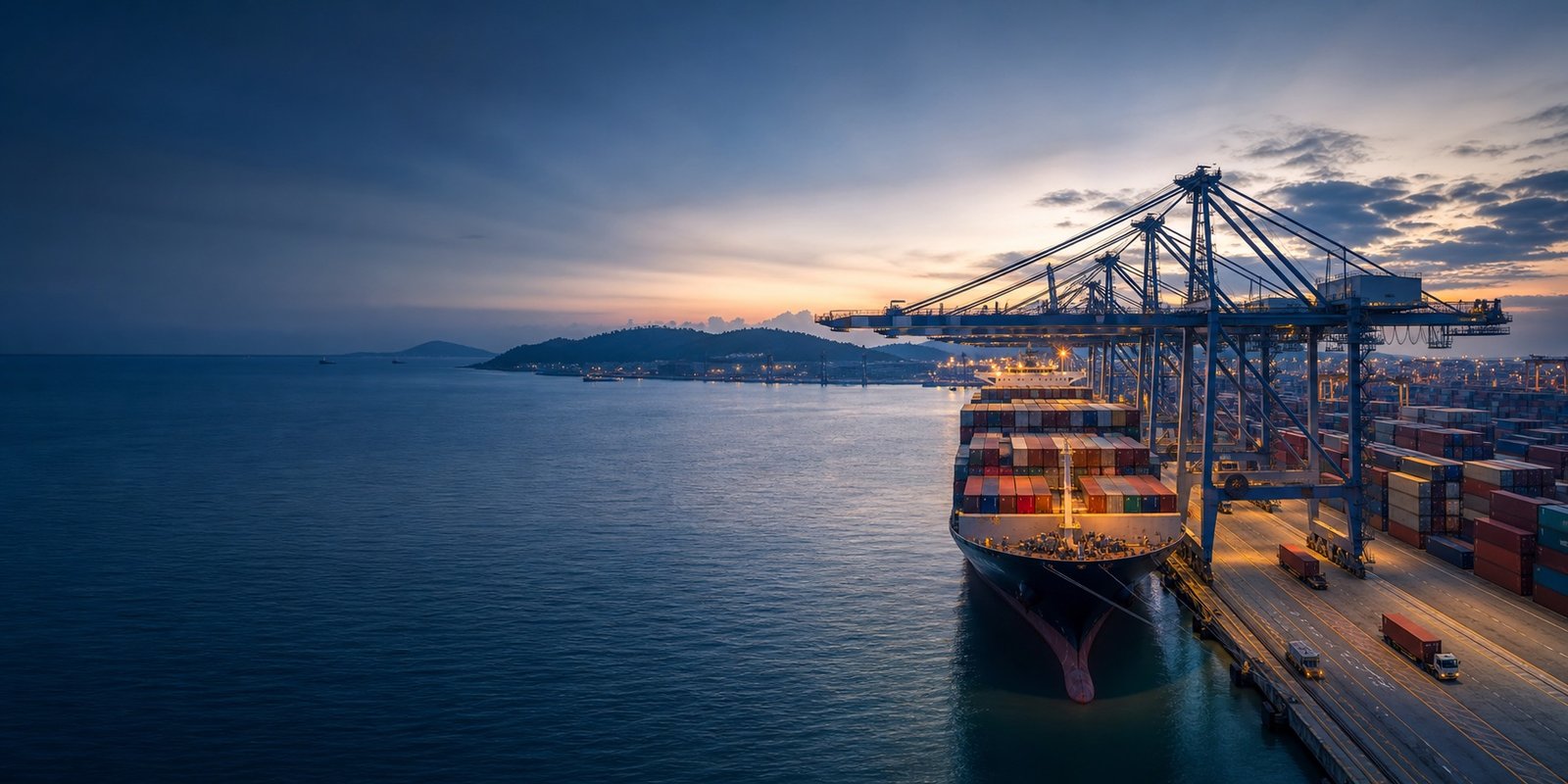
Laem Chabang Port is Thailand’s #1 container port, ranked world #20 with 8.1M TEU in 2024. Located 110 km southeast of Bangkok, it has deep-water draft (-16m) and direct connections to 150+ ports globally.
BAT holds direct berth allocation at Laem Chabang Terminal (LCT 1-4) and operates 24/7 bonded warehousing in the Free Trade Zone (FTZ).

4. Eastern Economic Corridor (EEC) — USD 50B+ Investment

The EEC is Thailand’s flagship industrial zone, covering 3 provinces (Chachoengsao, Chonburi, Rayong) with:
  • 100+ industrial estates managed by IEAT (Industrial Estate Authority of Thailand)
  • BOI (Board of Investment) incentivesup to 8 years of corporate income tax exemption for promoted activities
  • Special Economic Zones (SEZ) with 0% import duty on raw materials
BAT operates direct EEC bonded warehouses at Amata City Chonburi + Rojana Rayong + Hemaraj Chachoengsao for clients in the EEC industrial chain.

5. Lowest Effective Tax in ASEAN (7%)

Thailand offers one of the lowest effective tax rates in Southeast Asia for Chinese imports:
  • Indonesia: 30-45% (MFN + PPN 11% + PPh 22 2.5%)
  • India: 50%+ (BCD + IGST 18% + cess)
  • Vietnam: 10% (MFN + VAT 10%)
  • Thailand: 7% (VAT 7% in 2024-2025) + 0% MFN with Form E

2. Thailand as ASEAN Manufacturing Hub (Detroit of Asia)

Thailand is the largest automotive producer in Southeast Asia and one of the top 10 globally, producing 1.8M+ vehicles per year — a higher output than India, Mexico, or Brazil.

Key Thailand Manufacturing Stats

Industry
2024 Status
Why it matters for Chinese exporters
Automotive
1.8M+ vehicles/year, ASEAN #1
Massive demand for Chinese parts, batteries, EV components
Electronics
USD 60B+ output (HDD 50%+ global share)
Components, semiconductors, PCBs
Petrochemicals
Map Ta Phut, 2nd largest in ASEAN
Specialty chemicals, plastics
Tourism
35M+ visitors/year (2024 record)
Hotel supplies, F&B, equipment
Agricultural
World’s #1 rubber exporter, #2 rice
Food processing equipment
Solar/BESS
100% renewable target by 2050
Solar panels, batteries, inverters
Batteries
8 GWh/year BESS installations 2024
Lithium cells, BMS, packs

EEC Industrial Zones (Top 5)

EEC Industrial Estate
Province
Key Industries
Amata City Chonburi
Chonburi
Auto, electronics, 200+ factories
Hemaraj Eastern Seaboard
Rayong
Auto, petrochemical, 300+ factories
Rojana Rayong
Rayong
Auto, steel, 150+ factories
Eastern Seaboard IEAT
Chachoengsao
Heavy industry, logistics
Smart Park
Rayong
EV, electronics, hi-tech
BAT operates direct cross-dock + bonded warehouse at each of these EEC estates for JIT delivery to Chinese-owned factories (BYD, MG, GAC Aion, etc.).

3. How to Choose: Decision Tree by Cargo Size + Urgency

Not sure which shipping method fits your shipment? Use this decision tree — the same one BAT’s account managers use with every new client.

Quick Decision Guide

Your Cargo
Best Method
Why
Cost Range
0.5-2 kg (samples, urgent documents)
Express (DHL/FedEx/UPS)
Cheapest for tiny parcels; 1-4 days
$15-70 base + $9-22/kg
2-50 kg urgent (samples, e-commerce B2C)
Air freight to BKK
1-2 days; faster than express for >5 kg
$4.00-7.00/kg
50-300 kg cost-focused (e-commerce, B2B)
Truck via Laos
Cheapest per kg; 7-9 days
¥18-25/kg ($2.50-3.50/kg)
100-500 kg medium cargo
Rail (China-Laos-Thailand)
Stable, 7-10 days, no monsoon risk
¥22-28/kg ($3.10-3.95/kg)
1-15 CBM small bulk (samples, first-time shipments)
Sea LCL to Laem Chabang
$20-90/CBM; 10-15 days
$30-90/CBM
15-30 CBM (single pallet to half container)
Sea FCL 20GP
Container is cheaper per CBM than LCL at this volume
$383-700/box
30+ CBM (bulk, machinery, DG)
Sea FCL 40GP/40HQ
Best cost per CBM for large volumes
$720-1,400/box
Door-to-door, no paperwork (B2C, retail)
DDP
BAT handles everything; 5-12 days
FCL + 7% VAT + 0% MFN
Class 9 lithium battery (EV, BESS, power bank)
Air CAO or Sea FCL Reefer
IATA DGR 67th (SoC ≤30%) or IMDG 42-24
$6-11/kg air / $1,800-3,200/reefer
High-value, urgent (semiconductor, pharma)
Air with cold chain
Temperature-controlled; 1-2 days
$7-13/kg
💡 Pro tip: The “magic number” is 13-15 CBM. Below that, LCL is more cost-effective. Above that, FCL starts winning on cost per CBM. If your cargo is right at 14 CBM, run both numbers — sometimes LCL with backhaul is cheaper than FCL with empty space.

When Air Beats Sea (and Vice Versa)

Scenario
Choose Air
Choose Sea
High-value, low-weight (e.g., USD 500/kg electronics)
✅ Always
❌ Wastes capacity
Heavy, low-value (e.g., USD 1/kg steel)
❌ Wastes money
✅ Always
15+ CBM bulk
❌ Often requires multiple flights
✅ Single box, single invoice
Time-sensitive (1-3 days)
✅ Air wins
❌ 10-15 days
DG (Class 9, 3, 8)
✅ If SoC ≤30%
✅ IMDG-compliant reefer
Peak season (Oct-Dec) surge
✅ Air sat out the June ocean upswing
⚠️ FCL +28% MoM

4. 5 Shipping Methods from China to Thailand (with 2026 Rates)

You’ve got 5 main options. Each one has a specific use case. Most importers use 2-3 of these together for different SKUs.

Method 1: Sea Freight (FCL) — Most Common for Bulk Cargo

Definition: You book an entire container — typically a 20ft, 40ft, or 40HQ — exclusively for your cargo. The container stays sealed from origin to destination.
Best for: Auto parts, machinery, furniture, garments, large DG cargo (lithium batteries, solar panels), 15+ CBM.
When to use FCL: When your shipment exceeds 13-15 CBM (per BAT and BSI’s industry threshold). At that volume, a full container costs less per CBM than sharing space.
Example: A Thai auto parts distributor importing 40 CBM of EV components from Shenzhen to a BYD Rayong supplier uses FCL 40GP. The container stays sealed from Yantian to Laem Chabang (5 days), protecting against damage and loss.
Cost implications: Higher fixed cost (~$383-1,400/box) but more economical per unit at large volumes. Faster through customs since only your cargo is inside.
Transit time: 3-6 days (port-to-port).
Major routes:
  • Yantian → Laem Chabang: 4-5 days (most cost-effective from South China)
  • Shanghai → Laem Chabang: 5-6 days
  • Ningbo → Laem Chabang: 5-6 days
  • Qingdao → Laem Chabang: 7-8 days
  • Shekou → Bangkok (Klong Toey): 4-5 days
  • Hong Kong → Laem Chabang: 4-5 days
2026 FCL rates (China → Laem Chabang):
Container
Rate (USD)
Best use case
20GP
$383 – $700
15-28 CBM bulk (most popular)
40GP
$720 – $1,200
28-58 CBM bulk
40HQ
$780 – $1,400
28-68 CBM bulky cargo
Reefer 40HQ
$1,800 – $3,200
Temperature-sensitive or DG Class 9
Top carriers serving this route (with indicative June 2026 rates):
Carrier
Origin (China)
Destination
Service
Transit
20GP Rate
CMA CGM
Nansha (via Shekou)
Laem Chabang
Spot
6 days
$1,180
CMA CGM
Guangzhou (via Zhongshan)
Laem Chabang
Spot
11 days
$1,320
KMTC
Nansha (via Shekou)
Laem Chabang
Standard
9 days
$1,150
SITC
Guangzhou (Nansha)
Laem Chabang
Standard
11 days
$1,240
COSCO, ONE, Maersk, MSC, ZIM, PIL, Yang Ming, Evergreen, Wan Hai
Major ports
Laem Chabang / Bangkok
Standard
5-12 days
$383-1,716
💡 Pro tip: For June 2026, the 40GP rose +28% MoM while the 20GP rose only +20% — if your cargo fits a 20GP, it now offers a better cost-per-container ratio. Lock FCL quotes 2-3 weeks before booking to avoid further increases.

Method 2: Sea Freight (LCL) — For Smaller Volumes

Definition: Your cargo shares container space with other shippers’ goods. You pay only for the CBM you use (consolidation at origin, deconsolidation at destination).
Best for: 1-15 CBM shipments, samples, first-time shipments, B2C e-commerce.
When to use LCL: When your shipment is under 13-15 CBM and waiting to consolidate a full container would delay you unnecessarily.
Example: A Bangkok promotional merchandise importer ordering 8 CBM from Yiwu uses LCL — paying for a fraction of a container is far cheaper than booking a full 20ft box for a small consignment.
Cost implications: Higher per-CBM rate ($30-90/CBM) than FCL, but lower total cost for small volumes. Additional handling charges apply since cargo is loaded and unloaded multiple times. LCL typically takes 2-5 extra days vs FCL due to consolidation/deconsolidation.
Transit time: 6-12 days (port-to-port), 10-15 days door-to-door.
2026 LCL rates (China → Laem Chabang):
Volume
Rate per CBM
Notes
1-3 CBM
$50 – $100/CBM
Higher per-CBM (consolidation surcharge)
3-10 CBM
$35 – $75/CBM
Mid-tier pricing
10-15 CBM
$30 – $60/CBM
Best LCL per-CBM rate
June 2026 update
$20/CBM flat
Sino-Shipping June 2026 rate (held flat MoM)
LCL consolidation hubs in China: Yantian, Shekou, Shanghai, Ningbo, Xiamen.LCL deconsolidation in Thailand: Laem Chabang, Bangkok Klong Toey, Lat Krabang ICD.

💡 Pro tip: LCL at $20/CBM held flat in June 2026 while FCL rose 20-28%. If your cargo is <15 CBM, LCL is now relatively more competitive vs the surging FCL market.

Method 3: Cross-Border Trucking (via Laos) — Best Cost-Performance

Definition: Road freight from China through Laos into Thailand via the Thailand–Laos Friendship Bridge (Nong Khai border crossing). China–Laos–Thailand railway (2022+) provides a stable rail alternative.
Best for: 30-300 kg e-commerce B2B shipments, regular commercial cargo, mid-weight cargo where air is too expensive and sea too slow.
When to use trucking: When sea freight is too slow (10-15 days) but air freight is too expensive ($4-7/kg) for your cargo weight or budget. Trucking is the “middle ground” at $2.50-3.50/kg.
Example: A Guangzhou-based e-commerce seller shipping 200 kg of consumer electronics to Bangkok uses cross-border trucking — 7-9 days door-to-door, ¥18-25/kg total cost, much cheaper than air.
Cost implications: Trucking is the cheapest option per kg for 30-300 kg mid-weight cargo. Slightly slower than air but 50-70% cheaper. Rail via China–Laos–Thailand railway is more stable in monsoon season.
Transit time: 5-9 days (door-to-door).
2026 trucking rates (Guangzhou → Bangkok):
Service
Min Weight
Rate (RMB/kg)
Transit
Best For
Truck (normal goods, 30+ kg)
30 kg
10 RMB/kg
7-9 days
30-300 kg e-commerce
Truck (sensitive goods: battery/liquid)
30 kg
28-35 RMB/kg
7-9 days
DG cargo requiring IMDG-like compliance
Truck (full truckload, FTL)
3,000+ kg
¥5,500-8,000/truck
5-7 days
3+ ton bulk cargo
China–Laos–Thailand Railway
50 kg
22-28 RMB/kg
7-10 days
Stable, monsoon-resistant
BSI global rate (Shanghai/Guangzhou → Bangkok)
45 kg
18-25 RMB/kg
5-7 days
Mid-volume e-commerce
Main road route inside Thailand (after crossing Laos border at Nong Khai):
  • Udon Thani → Khon Kaen → Nakhon Ratchasima (Korat) → Ayutthaya → Bangkok
💡 Pro tip: Cross-border trucking holds flat pricing while sea FCL rose 20-28% in June 2026. For 30-300 kg cargo, trucking is now the most stable option with predictable transit. The China–Laos–Thailand railway (2022+) is the best alternative during monsoon season (May-Oct) when road delays increase.

Method 4: Air Freight (BKK + DMK) — For Urgent Cargo

Definition: Air cargo from major Chinese airports to Bangkok Suvarnabhumi (BKK) or Don Mueang (DMK). Higher per-kg cost but fastest transit.
Best for: High-value electronics, urgent samples, semiconductor parts, pharmaceuticals, lithium battery samples, time-sensitive EV parts.
When to use air: When delivery time matters more than cost. Especially for medium-weight cargo too urgent for sea but too heavy for express.
Example: A Thai electronics manufacturer needing 500 kg of urgent semiconductor parts in 2 days for production line uses air freight — paying $2.65/kg (1000kg+ rate) vs $1.50/kg sea + 12 days transit.
Cost implications: Per-kg rate is 3-10x higher than sea for general cargo. But air is competitive for time-sensitive or lighter cargo, especially with the June 2026 ocean upswing where air sat out most of the increase.
Transit time: 1-2 days (airport-to-airport), 2-4 days (door-to-door).
2026 air freight rates (China → Bangkok):
Cargo type
Rate (per kg)
June 2026 update
General cargo (< 100 kg)
$4.00 – $7.00/kg
Stable
General cargo (> 100 kg, SZX/CAN → BKK)
$2.65 – $3.50/kg
Modest firming (+7% MoM)
General cargo (1000 kg+)
$1.50/kg
Up modestly from May
Lithium battery (DG Class 9, ≤30% SoC)
$6.00 – $11.00/kg
Flat-stable, THAI Cargo space allocated
Pharma cold chain (2-8°C)
$7.00 – $13.00/kg
Stable
Express (DHL / FedEx / UPS)
$2.71/kg
Up modestly (+4% MoM)
Detailed air freight rate table (June 2026):
Origin City → Bangkok
100 kg
300 kg
500 kg
1000 kg
Transit
Shenzhen (SZX)
$3.50/kg
$3.20/kg
$2.90/kg
$2.70/kg
2-4 days
Guangzhou (CAN)
$3.40/kg
$3.10/kg
$2.84/kg
$2.65/kg
2-4 days
Shanghai (PVG)
$3.80/kg
$3.50/kg
$3.20/kg
$3.00/kg
3-5 days
Beijing (PEK)
$3.90/kg
$3.60/kg
$3.30/kg
$3.10/kg
3-5 days
Chengdu (CTU)
$3.60/kg
$3.30/kg
$3.04/kg
$2.85/kg
3-5 days
Key direct routes:
  • PVG → BKK (5-6 hours, 5+ daily via China Eastern + THAI Cargo)
  • HKG → BKK (4 hours, 10+ daily via Cathay + THAI Cargo)
  • CAN → BKK (4 hours, 5+ daily via China Southern + Thai Smile)
  • SZX → BKK (4 hours, 5+ daily via China Southern + Shenzhen Airlines)
  • XMN → BKK (4-5 hours, 3 daily via Xiamen Airlines + THAI Cargo)
  • PVG → DMK (5-6 hours, 2-3 daily via China Eastern + Thai AirAsia)
💡 Pro tip: The higher the weight, the lower the per-kg rate — 1000 kg is ~30% cheaper per kg than 100 kg. Transit times stay 2-5 days regardless of weight (volume doesn’t slow air). For DG cargo, BAT’s THAI Cargo direct space allocation avoids the 1-2 day pre-approval delay common with general cargo airlines.

Method 5: Express Shipping — For Small Parcels

Definition: Door-to-door courier service via DHL, FedEx, UPS, SF International, Kerry Express Thailand, or ePacket for e-commerce B2C.
Best for: 0.5-50 kg, e-commerce B2C, samples, urgent documents, small parcels under 2 kg.
When to use express: When you need 1-4 day door-to-door with real-time tracking and no customs paperwork from your side. Best for B2C where speed and customer experience matter more than cost.
Cost implications: Per-kg rate is the highest of all methods. Best for tiny parcels where the absolute cost is low.
Transit time: 1-4 days (door-to-door), with ePacket 5-8 days for low-cost e-commerce.
2026 express rates (China → Thailand):
Weight
Rate
June 2026 update
Documents
$15 – $40
Stable
Small parcels (1-5 kg)
$20 – $70
Stable
Medium parcels (5-20 kg)
$9 – $22/kg
Stable
2 kg DDP
฿3,500 – ฿7,000
~$100-200, includes all duties
DG with MSDS
$15 – $40/kg
THAI Cargo + FedEx IPG
Major providers: DHL, FedEx, UPS, SF International, Kerry Express Thailand, Flash Express, J&T Express Thailand, Thailand Post ePacket.

Method 6: DDP Door-to-Door (Delivered Duty Paid)

Definition: BAT handles the entire shipping chain — China export, transport, Thai e-Customs filing, MFN duty payment, VAT payment, last-mile delivery — and gives you one all-in price.
Best for: B2C e-commerce, first-time importers, hotel/restaurant suppliers, retail brands, e-commerce sellers who want zero customs paperwork.
What’s included:
  • Factory pickup (anywhere in China)
  • China export clearance
  • ACFTA Form E or RCEP Form RCEP application
  • Sea / air / express transport
  • Thai e-Customs filing (no paperwork for you)
  • MFN duty payment (or 0% with Form E)
  • VAT 7% payment
  • Last-mile delivery (Kerry Express, Flash Express, J&T Express Thailand, Thailand Post)
Transit time: 5-12 days (door-to-door).
2026 DDP rates:
DDP Service
Rate
Transit
Best For
DDP Truck (30 kg+ normal goods)
20 RMB/kg (~$2.80/kg)
7-9 days
30-300 kg e-commerce
DDP Sea (normal goods)
1000 RMB/CBM (~$140/CBM)
10-15 days
1+ CBM B2C
DDP Sea (pure batteries, Class 9)
1850 RMB/CBM (~$260/CBM)
10-15 days
Lithium battery B2C
DDP Air (DHL/FedEx/UPS)
$5.00 – $11.00/kg
1-4 days
Urgent B2C

💡 Pro tip: DDP vs DAP — which to choose?

This is the single most important decision for sea freight shippers. Here’s a side-by-side breakdown.
Decision Factor
FCL (Full Container Load)
LCL (Less than Container Load)
Volume threshold
13-15 CBM and above
1-15 CBM
Container ownership
Exclusively yours
Shared with other shippers
Cost per CBM
Lower (flat per box)
Higher (~$30-90/CBM)
Total cost for small volume
Higher (you pay for empty space)
Lower (you pay only for your CBM)
Handling risk
Lower (sealed end-to-end)
Higher (loaded/unloaded multiple times)
Customs speed
Faster (only your cargo inside)
Slower (shared cargo, multiple inspections possible)
Transit time
4-6 days port-to-port
10-15 days door-to-door (consolidation adds 2-5 days)
Best for
Auto parts, machinery, furniture, garments, DG, 15+ CBM
Samples, e-commerce, B2C, first-time importers
June 2026 cost
$383-1,400/box (20GP-40HQ)
$20-90/CBM (flat)
June 2026 trend
+20-28% MoM
Flat MoM

When FCL Wins (use FCL if...)

  • ✅ Your cargo exceeds 13-15 CBM
  • ✅ You need faster transit (4-6 days vs 10-15 days)
  • ✅ Your cargo is fragile or high-value (sealed end-to-end)
  • ✅ You want faster customs clearance (single shipper)
  • ✅ Your cargo is Class 9 DG (full IMDG control)

When LCL Wins (use LCL if...)

  • ✅ Your cargo is under 13-15 CBM
  • ✅ You can’t wait to consolidate a full container
  • ✅ You’re a first-time importer testing the market
  • ✅ Your cargo is non-urgent e-commerce
  • ✅ You want lower absolute cost (don’t pay for empty space)

Real Example: 14 CBM Bangkok Furniture Shipment

A Bangkok furniture retailer imports 14 CBM of wooden chairs from a Foshan supplier.
  • FCL option: 20GP at $383 → $383 / 14 CBM = $27.36/CBM (cheaper)
  • LCL option: 14 CBM × $40/CBM = $560 ($40/CBM)
Wait — FCL at $383 for the whole box is cheaper than LCL at $560 for 14 CBM. At 14 CBM, you’re right at the break-even point — FCL often wins.
But at 10 CBM:
  • FCL 20GP at $383 → $383 / 10 CBM = $38.30/CBM (you pay for 4 CBM empty space)
  • LCL at 10 CBM × $40 = $400
LCL is now cheaper ($400 vs $383 only marginally, but you have flexibility on timing). At 10 CBM, LCL is the smarter choice for first-time importers.
💡 Pro tip: The break-even point is usually around 12-14 CBM. If you’re at 13 CBM, run both numbers — sometimes LCL with backhaul freight is cheaper than FCL with empty space.

6. Factors Affecting Transit Times + Mitigation Strategies

Several factors can add 1-5 days to your standard transit. Here’s what to watch for and how to mitigate.
Delay Factor
Impact
Affected Modes
Mitigation
Monsoon (May-Oct)
+1-3 days
Sea (Andaman), air (heavy rain)
Use China–Laos–Thailand rail (7-10 days, stable); book buffer days
Port congestion (Laem Chabang peak)
+2-4 days customs
Sea FCL/LCL
Pre-clear e-Customs before arrival; use Bangkok Klong Toey as alt
Peak season (Oct-Dec, Songkran Apr)
+15-25% cost, +1-3 days transit
All modes
Lock quote 3-4 weeks early; book BAT space allocation
Chinese New Year (Feb 1-15, 2026)
+5-7 days
All modes
Ship by mid-January for Feb delivery; air alternatives
DG (Class 9 battery)
+3-5 days
Air (operator approval)
BAT pre-clears UN38.3 + MSDS; CAO booking in advance
First-time importer
+5-7 days customs
All modes
BAT handles DBD + Tax ID registration (7-14 business days)
Customs hold (HS code dispute)
+2-10 days
All modes
BAT’s AHTN 8-digit code pre-classification reduces hold risk by 80%
Holidays (Songkran Apr 13-15, etc.)
+1-2 days
All modes
Plan around Thai public holidays
Bangkok traffic
+0.5-1 day
Trucking last-mile
Use bypass routes; BAT’s local Thai drivers

Cost-Volume Relationship: Why Small Parcels Cost More

The chargeable weight formula determines what you pay:
Mode
Formula
Example
Air freight
(L × W × H in cm) ÷ 6000
50×50×50 cm box = 125,000/6000 = 20.83 kg chargeable
Express (DHL/FedEx/UPS)
(L × W × H in cm) ÷ 6000
Same as air
Sea freight
(L × W × H in cm) ÷ 5000
100×100×100 cm = 1,000,000/5000 = 200 kg
1 CBM
= 167 kg (air) or 200 kg (sea)
1 CBM = 1 m³ = 1,000,000 cm³
Pro tip: If your cargo is light but bulky (e.g., pillows, foam), sea is cheaper because the divisor is higher (5000 vs 6000). If your cargo is heavy and compact (e.g., metal parts), air per kg is competitive with sea per CBM.

Common Shipping Issues & Solutions

Issue
Cause
Solution
Customs delay
Wrong HS code, missing Form E, value under-declaration
BAT’s AHTN pre-classification + Form E application (5-7 days)
Unexpected cost
Volume vs actual weight difference, remote area surcharge
Always request all-in quote including destination charges
Transit delay
Peak season, weather, port congestion
Build 2-3 day buffer; choose China–Laos–Thailand rail during monsoon
DG refusal
Missing UN38.3, MSDS, or operator approval
BAT pre-clears all DG documentation 48-72 hours before departure
Cargo damage
Poor packaging, container handling
FCL sealed end-to-end (less handling); BAT DG-compliant packaging
Wrong port delivery
Mis-specified Bangkok Port vs Laem Chabang
BAT confirms port before booking; Laem Chabang is default for bulk
VAT overcharge
Mis-declared CIF value
BAT’s pre-shipment CIF valuation review by licensed Thai broker

7. Important Notes 2026 Market

Seasonal Pricing Calendar

Period
Impact
Recommendation
Jan-Feb (pre-CNY)
Stable rates, high demand
Book early for March delivery
Feb 1-15 (CNY)
+5-7 days transit, factories closed
Avoid air/sea bookings
Mar-May
Stable, Songkran Apr 13-15
Plan around Songkran
May-Oct (monsoon)
+1-3 days sea (Andaman storms)
Use China–Laos–Thailand rail
Oct-Dec (peak)
+15-25% cost, +1-3 days
Lock quote 3-4 weeks early
Nov 25-Dec 5 (Black Friday + Singles Day)
E-commerce surge
BAT pre-books space in early October

7. Lat Krabang ICD — Inland Container Depot

  • 2024 throughput: 1.2M TEU
  • Specialty: Bangkok inland cargo + customs clearance
  • Location: Eastern Bangkok, near EEC rail

Remote Area Surcharges

Destination
Surcharge
Notes
Bangkok (BKK)
Base
No surcharge
Laem Chabang / Chonburi / Rayong
Base
EEC industrial, no surcharge
Phuket
+¥10-20/kg or +$200-500/shipment
Island, ferry required
Chiang Mai
+¥10-20/kg
Northern, 700 km from Bangkok
Koh Samui / Phangan
+¥15-25/kg
Island, no commercial port
Hat Yai / Songkhla
+¥5-10/kg
Southern border

Market Trends to Watch (2026-2027)

  • VAT reverting to 10%: Thai Cabinet decision expected Q3-Q4 2026. BAT monitors and updates clients in real-time.
  • CPTPP membership: Thailand applied 2024, under review. Once accepted, CPTPP Form CPTPP will offer 0% on 95%+ of categories.
  • EEC expansion: USD 50B+ investment continues; new EV battery plants opening in 2026-2027.
  • Laem Chabang Phase 3: Expansion underway, will add 4M TEU capacity by 2028.
  • China–Laos–Thailand railway extension: Bangkok–Kunming rail (2030 target) will reshape land freight.

8. China's Major Export Ports to Thailand

Chinese Port
2024 TEU
Direct routes to Thailand
Transit
Shenzhen / Yantian
33.20M
Direct to Laem Chabang, Bangkok
4-5 days
Hong Kong
14.39M
Direct to all Thai ports
4-5 days
Shanghai
50.16M
Direct to Laem Chabang
5-6 days
Ningbo-Zhoushan
39.30M
Direct to Laem Chabang
5-6 days
Guangzhou
24.18M
Direct to Laem Chabang
4-5 days
Xiamen
12.4M
Direct to Laem Chabang
4-5 days
Qingdao
30.87M
Direct to Laem Chabang
7-8 days
Shekou
~8M
Direct to Bangkok (Klong Toey)
4-5 days

Location and Volume (context for shippers)

Shanghai — The world’s busiest container port, handling 50+ million TEU annually. Located at the mouth of the Yangtze River, it connects central and eastern China directly to Thailand via weekly services to Laem Chabang.
Shenzhen/Yantian — Located in the Pearl River Delta, Shenzhen is a critical hub for electronics and high-tech goods, with specialized logistics services. Handles 33+ million TEU annually across Yantian, Chiwan, and Shekou terminals.
Ningbo-Zhoushan — The world’s largest cargo port by tonnage (1.2+ billion tonnes), with 39+ million TEU. Specializes in furniture, machinery, and bulk commodities. Strong in containerized manufacturing exports to Southeast Asia.
Guangzhou (Nansha) — The largest multipurpose port in southern China, trading with over 300 ports worldwide. Nansha terminal handles over 24 million TEU annually. For Thailand, Guangzhou-Nansha offers some of the shortest sea transit times (5-6 days) thanks to its proximity.

Key Trading Partners and Strategic Importance

  • Shanghai: Dominant departure point for goods from the Yangtze Delta industrial zone (Jiangsu, Zhejiang, Anhui). Strong transpacific + intra-Asia.
  • Shenzhen: Closely linked to the Pearl River Delta’s electronics manufacturing base (Apple, Foxconn, Huawei, OPPO, Vivo, BYD, DJI).
  • Ningbo-Zhoushan: Key departure point for goods destined for Southeast Asia, strong in containerized manufacturing exports (furniture, home goods, machinery).
  • Guangzhou-Nansha: Strategically positioned for Southeast Asia trade with shortest sea transit times.

Context for Businesses

  • If your supplier is in Jiangsu, Zhejiang, or Anhui → Shanghai is typically your most efficient export port.
  • If your supplier is in Guangdong Province (Shenzhen, Dongguan, Foshan, Guangzhou) → Shenzhen/Yantian or Guangzhou-Nansha offer 4-5 day transit to Laem Chabang.
  • If your supplier is in northern China (Beijing, Tianjin, Hebei, Shandong) → Tianjin or Qingdao are your starting points (expect 14-16 days).
  • If your cargo is from Yiwu, Zhejiang → Ningbo is your port (better vessel frequency for furniture/home goods).
BAT’s recommendation:
  • South China (Guangdong, Hunan, Hubei): Yantian / Shekou → Laem Chabang (4-5 days, lowest cost)
  • East China (Shanghai, Zhejiang, Jiangsu): Shanghai / Ningbo → Laem Chabang (5-6 days)
  • North China (Shandong, Beijing/Tianjin): Qingdao → Laem Chabang (7-8 days)

9. Thailand's Major Container Ports

1. Laem Chabang Port — Thailand's #1 (World #20)

Location and Volume: Located in Chonburi Province, Laem Chabang is Thailand’s largest deepwater port, handling over 8.1 million TEUs per year (2024) and serving as the country’s primary gateway for containerized trade with China.
Key Trading Partners and Strategic Importance: China is its top trading partner, followed by Japan and Vietnam. Its position on the Gulf of Thailand and proximity to the Eastern Economic Corridor (EEC) make it the default entry point for Chinese manufactured goods.
Context for Businesses: If you’re importing goods from China for distribution across Thailand or onward into Southeast Asia, Laem Chabang is almost always your best option — it offers the widest carrier choice and most competitive rates.
Draft: -14m to -16m (deep-water). Terminals: LCT 1-4 + TIPS (Thai Laem Chabang International Port). Connectivity: 150+ ports globally.

2. Bangkok Port (Klong Toey) — Inner City

Location and Volume: Situated on the Chao Phraya River, Bangkok Port handles over 1.5 million TEUs annually and is Thailand’s second busiest container port.
Key Trading Partners and Strategic Importance: China, Malaysia, and Singapore are its primary partners. Its central Bangkok location provides direct access to the capital’s commercial zones and road network.
Context for Businesses: Useful when your final delivery point is central Bangkok and you’re shipping smaller volumes. Note that its draft limitations (-8.5m) mean it cannot accommodate the largest vessels used on the China–Thailand route.

3. Map Ta Phut Port — Petrochemical Hub

Location and Volume: Located in Rayong, Map Ta Phut specializes in industrial and bulk cargo with a capacity of approximately 30 million tonnes per year.
Key Trading Partners and Strategic Importance: Primarily trades with China, Japan, South Korea, and India, with a focus on petroleum, petrochemicals, and raw materials.
Context for Businesses: If you’re importing industrial chemicals, raw materials, or energy products from China, Map Ta Phut’s specialized infrastructure is the most efficient option.

4. Songkhla Port — Southern Thailand

Location and Volume: Located on the east side of the Malay Peninsula, Songkhla Port specializes in bulk cargo.
Key Trading Partners and Strategic Importance: Its major trading partners include Malaysia, Singapore, and Indonesia. As a key player in southern Thailand, Songkhla facilitates both domestic and international trade.
Context for Businesses: If your business involves the export of bulk items like agricultural products or minerals, Songkhla Port’s specific facilities could effectively accommodate your shipping needs.

5. Phuket Port — Tourism + Andaman

Location and Volume: Located on the Andaman Sea, Phuket specializes in tourism-related cargo and yacht transport.
Key Trading Partners and Strategic Importance: China, Singapore, and the Middle East. Hub for hotel supply chain.
Context for Businesses: If you’re shipping hotel supplies, F&B equipment, or resort construction materials to Phuket, this is your port.

6. Chiang Saen Port — Mekong River (China-Laos-Thailand)

Location and Volume: Located on the Mekong River in Chiang Rai Province. Strategic role in China-Laos-Thailand railway (2022+) connection.
Key Trading Partners and Strategic Importance: China (Yunnan), Laos, Myanmar. Hub for cross-border Mekong trade.
Context for Businesses: If your cargo originates in Yunnan, China-Laos-Thailand railway connectivity makes this a growing option for northern-bound cargo.

7. Lat Krabang ICD — Inland Container Depot

Location and Volume: Eastern Bangkok, near EEC rail. 1.2M TEU/year throughput. Inland Container Depot for Bangkok.
Context for Businesses: If your final destination is Bangkok and you want inland customs clearance (avoid port congestion), Lat Krabang ICD is a strong alternative.

10. Thailand's Major Cargo Airports

1. Suvarnabhumi Airport (BKK / VTBS) — Thailand's #1

Location and Volume: Eastern Bangkok, 25 km from city center. 1.5M tons cargo (2024). World top 20 for cargo.
Key Trading Partners and Strategic Importance: Hub for THAI Cargo (Thai Airways Cargo), Cathay, China Airlines, China Eastern, China Southern, Xiamen Airlines, FedEx, DHL, UPS.
Context for Businesses: 99% of all China-Thailand air shipments go through BKK. BAT has a dedicated BKK cargo team for Class 9 lithium battery handling. Cargo terminals: BFS (Bangkok Flight Services), WFS, THAI Cargo terminal. Customs: 24/7 e-Customs clearance, 2-6 hour turnaround.

2. Don Mueang International Airport (DMK / VTBD) — Low-Cost Hub

Location and Volume: Northern Bangkok. 0.15M tons cargo (2024).
Key Trading Partners and Strategic Importance: Hub for Thai AirAsia, Nok Air, Thai Lion Air.
Context for Businesses: If you ship e-commerce, low-cost cargo via AirAsia, DMK offers better rates but less DG capacity than BKK.

3. Chiang Mai International Airport (CNX / VTCC) — Northern Hub

Location and Volume: Northern Thailand. 0.04M tons cargo (2024).
Context for Businesses: If you ship to northern Thailand, CNX offers regional cost savings (no Bangkok transit). Best for Myanmar border trade.

4. Phuket International Airport (HKT / VTSP) — Tourism

Location and Volume: Phuket. 0.04M tons cargo (2024).
Context for Businesses: Hotel supply chain. Direct service from China to Phuket is limited — most cargo goes through BKK then truck to Phuket.

5. Other Airports

  • Hat Yai (HDY): Southern Thailand, Malaysia border
  • Chiang Rai / Mae Fah Luang (CEI): Myanmar/Laos border, China–Laos–Thailand rail
  • Koh Samui (USM): Tourism
  • U-Tapao (UTP): EEC + Eastern Seaboard, growing cargo hub
💡 Pro tip: Local charges and freight rates are usually lowest through BKK. Using secondary airports often adds THB 5,000-15,000 per shipment in handling fees.

11. Thailand Customs, VAT & Import Duties (2026)

11.1 Thai Customs Department + e-Customs

The Thai Customs Department administers all imports. All commercial imports are filed via e-Customs (electronic single-window), launched nationwide in 2024.
Required at import:
  • HS classification (Thailand uses AHTN 8-digit codes)
  • Country of Origin (COO) with Form E / Form RCEP (for 0% preferential tariff)
  • Customs value (CIF)
  • Importer of Record (IOR) with valid DBD registration + Tax ID
  • Customs Broker (recommended, mandatory for restricted goods)
  • Permits/Licenses (for restricted goods: TFDA, TISI, NBTC, Excise, BOI)
BAT advantage: 24-72 hour clearance for compliant cargo. In-house Thai Customs broker + DBD registration support.

11.2 VAT 7% (2024-2025) — Possible Re-version in 2026

Thailand’s VAT was temporarily reduced from 10% to 7% in October 2023 to support economic recovery, extended through 2025-09-30. The 2026 rate is subject to Thai Cabinet decision — could revert to 10% or stay at 7%.
VAT timeline:
  • 2023-09-30 and prior: 10%
  • 2023-10-01 to 2024-09-30: 7% (reduction)
  • 2024-10-01 to 2025-09-30: 7% (continued)
  • 2025-10-01 to 2026-09-30: 7% (likely continued)
  • 2026-10-01+: 10% (reversion possible)
Calculation for CIF USD 10,000 electronics:
  • CIF Value: $10,000
  • MFN Customs Duty: 0% × $10,000 = $0 (with Form E)
  • VAT 7% × $10,000 = $700
  • Total Tax: $700 (7% effective rate)
Pro tip: Thailand VAT is multi-stage with full input tax credit (input VAT can be deducted from output VAT). Foreign importers can claim VAT refund for re-export or business use.

11.3 MFN Customs Duty (0% to 50%+)

Category
MFN Duty
Most electronics, smartphones, laptops
0%
IT equipment, semiconductors
0%
Raw materials for export industries
0-5%
Machinery, capital equipment
0-20%
Auto parts
0-30%
Two-wheelers (motorcycles)
0-60% (varies by engine size)
Cars, vehicles
0-80% MFN + Excise up to 200%
Textiles, fabrics
0-20%
Cement, steel
0-50%
Alcohol, tobacco
0% MFN + Excise up to 500%
Sugar, dairy
0-40%
Petroleum
0-20%
Average MFN
~5-7%

11.4 Excise Duty (HS-Specific)

  • Cars (engine capacity-based): 25-200% Excise
  • Motorcycles (>250cc): 5-20% Excise
  • Beer: 60% Excise
  • Wine (≤20% ABV): 30% Excise
  • Spirits (>20% ABV): 50% Excise
  • Tobacco: 60-90% Excise
  • Sugar, soft drinks: 10-30% Excise

11.5 ACFTA (ASEAN-China Free Trade Agreement) — 0% Preferential

With valid Form E issued by Chinese CCPIT (5-7 business days):
  • MFN duty → 0% on 90% of categories
  • Issued at CCPIT or authorized China Customs office
  • Most popular FTA for China-Thailand trade

11.6 RCEP — 0% Preferential (2022+)

With valid Form RCEP issued by Chinese CCPIT:
  • MFN duty → 0% on most categories
  • RCEP cumulation allows value-add from any RCEP country
  • Issued in 5-7 business days

11.7 CPTPP Application (Under Review)

Thailand officially applied to join CPTPP in 2024. Once accepted, CPTPP Form CPTPP will offer 0% tariff on 95%+ of categories for CPTPP parties. For direct China-Thailand, use Form E / RCEP until CPTPP membership is granted.

11.8 De Minimis: None (All Imports Declared)

Unlike Singapore (S$400) and Malaysia (MYR 500), Thailand has NO B2C de minimis — all commercial imports must be declared regardless of value. Personal imports ≤ THB 1,500 (~USD 40) are duty-free for travelers.

11.9 Free Trade Zones (FTZ) + BOI

Thailand operates 8+ Free Trade Zones (FTZ) + 100+ IEAT industrial estates with various tax incentives:
  • 0% import duty on raw materials for export production
  • 0% VAT on imported inputs (in some FTZs)
  • BOI 8-year corporate income tax exemption for promoted activities
  • EEC special incentives for high-tech industries
BAT operates bonded warehouses in Laem Chabang FTZ + Lat Krabang ICD + EEC estates.

12. 2026 Shipping Costs from China to Thailand (Real Numbers)

Here’s the complete 2026 pricing breakdown. These are real market rates as of June 2026 — not estimates.

Sea Freight FCL (China → Laem Chabang)

Container
Rate Range (USD)
June 2026 update
What’s included
20ft GP
$383 – $700
+20% MoM
Origin charges + ocean freight + basic documentation
40ft GP
$720 – $1,200
+28% MoM
Same as above
40ft HQ
$780 – $1,400
+26% MoM
Same as above
Reefer 40HQ (DG)
$1,800 – $3,200
Flat
Includes IMDG compliance + Class 9 placards

Sea Freight LCL

Service
Rate
June 2026 update
LCL per CBM (Yantian → Laem Chabang)
$30 – $90/CBM
Flat
LCL per ton (1000+ kg)
$250 – $600/ton
Flat

Air Freight (China → Bangkok BKK)

Service
Rate Range
June 2026 update
General cargo (100 kg)
$4.00 – $7.00/kg
Stable
General cargo (1000 kg+)
$1.50/kg
+7% MoM
DG Class 9 (lithium ≤30% SoC)
$6.00 – $11.00/kg
Flat-stable
Pharma cold chain
$7.00 – $13.00/kg
Stable
Express (DHL/FedEx/UPS)
$2.71/kg
+4% MoM

Cross-Border Trucking (via Laos)

Service
Rate
Best For
Truck (30+ kg normal goods)
10 RMB/kg (~$1.40/kg)
30-300 kg e-commerce
Truck (sensitive goods)
28-35 RMB/kg
DG cargo
Truck (full truckload)
¥5,500-8,000/truck
3+ ton bulk
China–Laos–Thailand Railway
22-28 RMB/kg
Stable, monsoon-resistant
DDP Service
Rate
Best For
DDP Truck (30 kg+ normal)
20 RMB/kg
30-300 kg e-commerce
DDP Sea (normal goods)
1000 RMB/CBM
1+ CBM B2C
DDP Sea (pure batteries)
1850 RMB/CBM
Lithium battery B2C
DDP Air (DHL/FedEx/UPS)
$5.00 – $11.00/kg
Urgent B2C

Cost Example: CIF USD 50,000 Electronics (HS 8517)

Item
Calculation
Amount
Goods (FOB)
FOB
$48,000
Sea freight
Yantian → Laem Chabang
$500
Insurance
0.3% of CIF
$150
CIF Value
 
$48,650
MFN Customs Duty
0% (with Form E)
$0
VAT 7%
7% × $48,650
$3,406
Total Tax
 
$3,406 (7% effective)
Total Landed Cost
 
$52,056
Key insight: With ACFTA Form E (0% MFN) + VAT 7%, you pay only 7% total tax — one of the lowest in Southeast Asia.

13. Required Documents for Thailand Import

Document
Required
Notes
Commercial Invoice
HS 8-digit AHTN, COO, unit/total value, Incoterms
Packing List
Carton-by-carton breakdown
B/L or AWB
Original B/L for sea; AWB for air
COO (Certificate of Origin)
Issued by Chinese export authorities
Form E (ACFTA) / Form RCEP
⚠️
For 0% preferential tariff
e-Customs Declaration
Filed by licensed customs broker
Insurance Certificate
For CIF shipments
DBD Registration + Tax ID
For Thai IOR
Import License
⚠️
For restricted goods (TFDA, TISI, NBTC, BOI)
TFDA Certificate
⚠️
For food, drugs, cosmetics, medical devices
TISI Certificate
⚠️
For electronics, electrical, toys, PPE
NBTC Type Approval
⚠️
For wireless, telecom, RF devices
UN38.3 Test Report
For lithium battery products
MSDS / SDS (English or Thai)
For chemical / battery products
DGD (Dangerous Goods Declaration)
For Class 9 cargo, IATA DGR 67th
Class 9 Hazard Label
For Class 9 cargo
BOI Promoted Certificate
⚠️
For BOI-promoted imports (0% duty)

14. Step-by-Step Shipping Process: China to Thailand (6 Steps)

Step 1: Classify your goods + check Form E / RCEP eligibility.Use the Thai Customs HS database to determine your exact 8-digit HS code. Verify ACFTA Form E or RCEP Form RCEP preferential eligibility with BAT’s trade compliance team (5-7 business days for Form E issuance).
Step 2: Register DBD + Tax ID (first-time importers).Apply for DBD (Department of Business Development) registration (1-3 days sole prop, 5-7 days Ltd company) + Tax ID from the Revenue Department. BAT assists first-time importers in 7-14 business days.
Step 3: Verify product compliance (TFDA / TISI / NBTC / BOI / Excise).For restricted goods, obtain TFDA (food/drug/cosmetics), TISI (electronics), NBTC (wireless), or BOI (investment incentives) approval before shipment. Pre-shipment inspection may be required.
Step 4: Choose transport mode.
  • Bulk (15+ CBM) → Sea FCL to Laem Chabang
  • Small bulk (1-15 CBM) → Sea LCL to Laem Chabang
  • Mid-weight (30-300 kg) → Truck via Laos (cheapest per kg)
  • High-value/urgent → Air to BKK
  • Door-to-door → DDP
  • Small parcels → Express
Step 5: Customs clearance at Laem Chabang or BKK.File your e-Customs declaration through a licensed customs broker. BAT handles in 24-72 hours for compliant cargo. DG cargo requires additional Thai Customs + port/airline approval.
Step 6: Pay 0% MFN duty (with Form E) + VAT 7%.Most imports pay 0% MFN + 7% VAT only. Pay via bank transfer to Thai Customs. Note: VAT is multi-stage with full input tax credit.

15. Battery Shipping from China to Thailand (2026 Compliance Guide)

Thailand is one of the largest Southeast Asia markets for Chinese batteries — driven by Chinese EV factories (BYD, MG, GAC Aion, Great Wall, Changan), massive solar BESS demand (Thailand’s 100% renewable target by 2050), and e-commerce consumer electronics.

15.1 Why Thailand is a Key Battery Market

China supplies billions of dollars of battery products to Thailand:
  • EV batteries for BYD, MG, GAC Aion, Great Wall, Changan (USD 2.5B+ investment)
  • Solar BESS for 8 GWh/year installations 2024
  • Power banks, consumer electronics (massive B2C demand)
  • Battery components (cells, BMS, modules, packs)
  • Sodium-ion batteries (UN 3551, emerging)
UN Number
Description
Common Use
UN3480
Lithium-ion (standalone)
Power banks, EV battery packs, BESS
UN3481
Lithium-ion (in/packed with equipment)
Power tools, e-bike batteries
UN3090
Lithium metal (standalone)
Coin cells, primary batteries
UN3091
Lithium metal (in equipment)
Watches, sensors, medical devices
UN3551
Sodium-ion (new 2026)
Stationary storage, low-cost EVs
Misclassification fines: Up to THB 500,000 (~$14,000) per shipment + cargo seizure.
  • SoC ≤ 30% for standalone (UN3480, UN3090) on cargo aircraft only (CAO)
  • PI 967, PI 970 — limited quantity relief for ≤100 Wh per cell
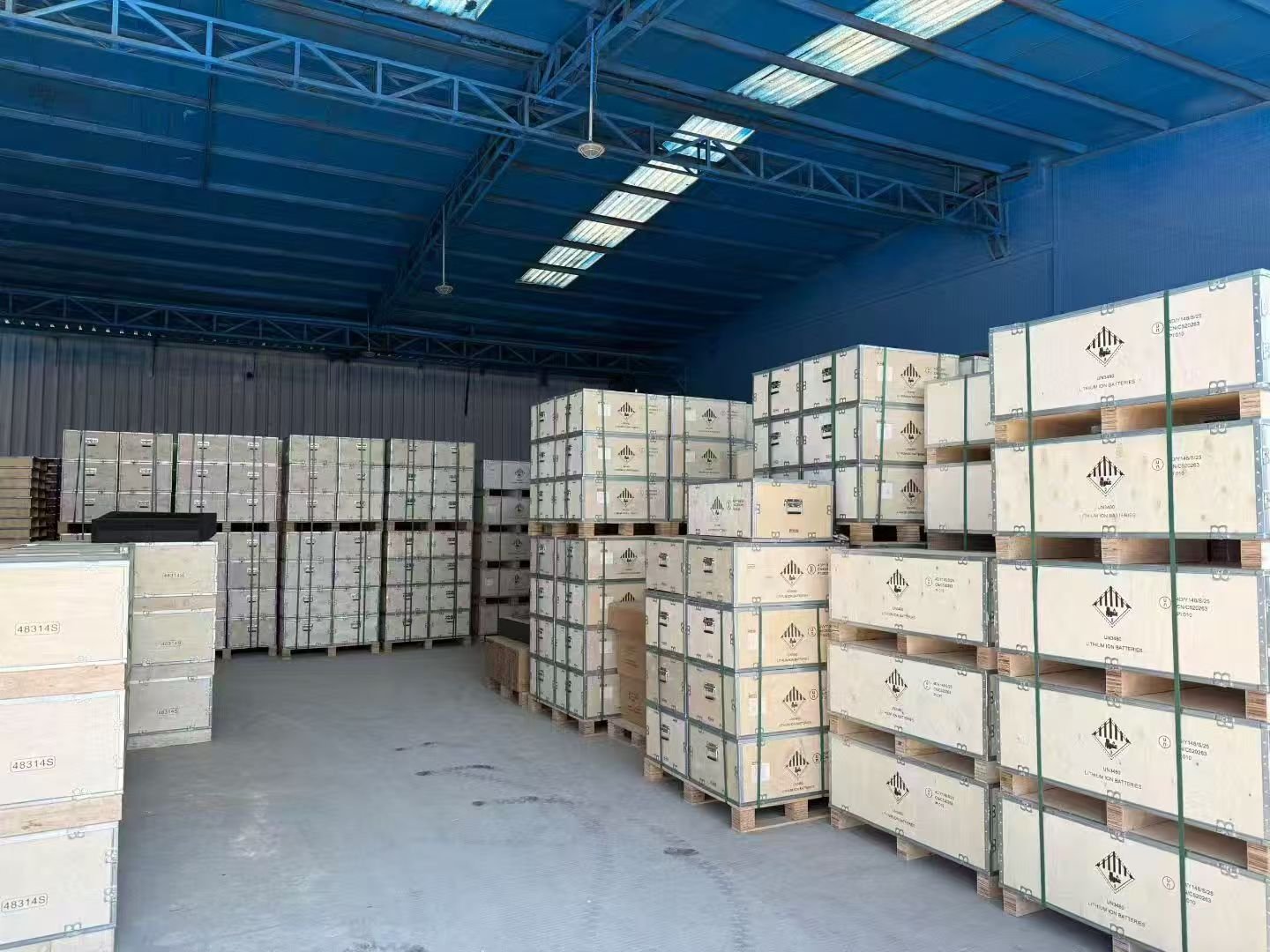
  • Battery Summary Document required
  • Class 9 hazard label + lithium battery handling label
  • MSDS/SDS in English or Thai (16-section GHS)
  • Operator approval — apply 48-72 hours before departure
  • P903, P908, P909, P910, P911 packaging instructions
  • Class 9 hazard label + lithium battery mark
  • Segregation from other Class 9 DG
  • Reefer container strongly recommended (15-25°C SoC control)
  • Container packing certificate signed by responsible person
Dedicated China-Thailand battery air freight service:
  • Daily departure from PVG / SZX / HKG / CAN to BKK
  • Pre-cleared UN38.3 + MSDS documentation
  • Dedicated space allocation on THAI Cargo + Cathay + China Eastern + China Southern
  • SoC managed end-to-end
  • 3-5 day door-to-door
  • $6.00 – $11.00/kg (Class 9 lithium battery)

15.6 8 Common Battery Shipping Mistakes

  1. Wrong UN number (UN3480 vs UN3481) → fines + seizure
  2. Incomplete UN38.3 report → rejection
  3. MSDS in wrong format (not 16-section GHS English/Thai)
  4. SoC > 30% on passenger aircraft → carrier refusal
  5. Packaging failure (damaged, leaking, unapproved)
  6. Missing DGD for Class 9 cargo
  7. Missing Class 9 hazard label on package + container
  8. No operator approval (48-72 hours pre-approval required)

16. Thailand Regulatory Compliance (6 Bodies)

16.1 Thai Customs Department

Mandatory for all imports. e-Customs system nationwide since 2024.

16.2 TFDA (Thai Food and Drug Administration)

Mandatory for:
  • Food products (1-4 weeks)
  • Drugs / pharmaceuticals (4-12 weeks)
  • Cosmetics (1-2 weeks notification)
  • Medical devices (Class 1-4, varies)
  • Health supplements (4-8 weeks)
  • Traditional medicines

16.3 TISI (Thai Industrial Standards Institute)

Mandatory for:
  • Electrical appliances (ACs, refrigerators, washing machines)
  • Electronics with safety concerns
  • Toys (Toy Safety Standard)
  • PPE (personal protective equipment)
  • Construction materials
  • Mandatory TIS mark required for 700+ product categories

16.4 NBTC (National Broadcasting and Telecommunications Commission)

Mandatory for:
  • Wireless devices (WiFi, Bluetooth, cellular)
  • Telecom equipment
  • RF devices
  • Short-range devices (SRD)

16.5 BOI (Board of Investment)

Mandatory for:
  • BOI-promoted activities (eligible for 8-year tax exemption)
  • Import duty exemption for raw materials
  • Foreign investment approvals

16.6 Excise Department

Mandatory for:
  • Alcohol, tobacco, vehicles (Excise duty)
  • Oil and petroleum products
  • Beverages, lottery

16.7 IEAT (Industrial Estate Authority of Thailand)

Mandatory for:
  • Factory establishment in IEAT estates
  • Free zone / bonded warehouse operations
  • EEC industrial activities

17. Why Choose BAT Logistics for China-Thailand Shipping (6 Reasons)

1. 20+ years China-Thailand DG expertise.China’s leading DG forwarder with 6,500+ successful Thai clearings, zero major incidents.
2. IATA DGR Category 6 certified.Full Class 9 lithium battery authorization (air/sea/land).
3. Direct airline + shipping line partnerships.THAI Cargo + Cathay + China Airlines + China Eastern + China Southern + Xiamen Airlines + COSCO + ONE + Maersk + MSC + CMA CGM + ZIM + PIL + Yang Ming + Evergreen — guaranteed DG space allocation + direct Laem Chabang + Bangkok berth.
4. Thai Customs-licensed + FIATA member.Priority customs clearance, reduced inspection rates.
5. ACFTA + RCEP + Form E + TFDA + TISI + NBTC specialists.In-house Thailand trade compliance team manages all preferential forms + 7 regulators.
6. 24/7 tracking + Kerry Express / Flash Express / J&T Express Thailand last-mile delivery.Single point of contact for every China-Thailand shipment, with bonded warehouse at Laem Chabang FTZ + Lat Krabang ICD + EEC estates.

18. Case Studies (5 Real-World Examples)

Case 1: BYD Rayong EV Plant — 150,000 Vehicles/Year

Client: Tier-1 Chinese auto parts supplier to BYD Rayong EV plant
Challenge: Deliver EV components, batteries, and parts to BYD’s Rayong factory with strict JIT requirements
Solution:
  • Migrated to sea FCL 40HQ reefer Yantian → Laem Chabang Port (4-5 days, IMDG 42-24)
  • Implemented dedicated SoC management at Shenzhen facility
  • Established direct Laem Chabang Terminal berth allocation
  • Coordinated Form E + BOI for auto parts
  • Cross-dock warehouse at EEC Rayong for JIT delivery
Results: 80+ FCL/month consistently, 0 customs violations, 0 production stoppages, USD 2.8M annual savings vs. air freight.

Case 2: GAC Aion Chachoengsao — 50,000 Vehicles/Year

Client: Chinese EV battery + auto parts supplier to GAC Aion Chachoengsao
Challenge: Class 9 lithium battery + EV component shipments to GAC Aion’s new Chachoengsao plant
Solution:
  • Sea FCL 40HQ reefer Yantian → Laem Chabang (4-5 days, IMDG 42-24)
  • Dedicated SoC management at Guangzhou facility
  • BOI coordination for tax exemption
  • Direct EEC Chachoengsao delivery
Results: 40+ FCL/month consistently, 0 safety incidents, USD 1.5M annual savings.

Case 3: MG SAIC Chonburi — 100,000 Vehicles/Year (Bangkok Auto Show 2025 Highlight)

Client: Chinese auto electronics + parts supplier to MG SAIC Chonburi plant
Challenge: Time-sensitive auto electronics to MG’s Chonburi assembly line
Solution:
  • Air freight for urgent electronics (4-6 hours, BKK)
  • Sea FCL for bulk parts (5 days, Laem Chabang)
  • DDP door-to-door with Form E for retail MG parts
  • NBTC type approval for wireless components
Results: 60+ shipments/month, 100% on-time delivery, 0 customs violations over 18 months.

Case 4: Phuket Hotel Resort DDP (B2B Tourism Supply)

Client: Chinese hotel supply company providing furniture, decor, kitchen equipment to Phuket 5-star resort
Challenge: DDP door-to-door for bulky hotel supplies with VAT refund at end
Solution:
  • Sea LCL Yantian → Bangkok (Klong Toey) → truck to Phuket
  • VAT 7% paid + refund claimed at re-export
  • DDP service with Form E preferential 0% duty
  • Last-mile delivery to Phuket resort
Results: 40% cost reduction vs. local Thai suppliers, on-time delivery for 2025 high season.

Case 5: Map Ta Phut Class 3 Flammable Liquid

Client: Industrial coatings manufacturer shipping specialty solvents to Map Ta Phut petrochemical complex
Challenge: Class 3 flammable, IATA DGR 67th + Thai Excise structure
Solution:
  • IATA DGR 67th air freight Shanghai → BKK
  • Pre-cleared MOI + Excise Department
  • 24/7 emergency response + hazardous waste manifest
  • BAT’s THAI Cargo DG space allocation
Results: Zero incidents, 100% on-time over 24 months.

19. Frequently Asked Questions (14)

Sea freight: 3-6 days direct (port-to-port), 10-15 days door-to-door. Air: 1-2 days (airport-to-airport), 2-4 days (door-to-door). Cross-border truck via Laos: 5-9 days door-to-door. Express: 1-4 days. DDP: 5-12 days.
Thailand has 2-layer duty + tax: MFN Customs Duty (0-50%+, average ~5-7%) + VAT 7% (2024-2025). With valid Form E (ACFTA) or Form RCEP, MFN can be reduced to 0%. Effective tax ~7% — one of the lowest in ASEAN.
Yes — DBD (Department of Business Development) registration + Tax ID are mandatory for all commercial importers. Apply at DBD in 1-3 days (sole prop) or 5-7 days (Ltd company). BAT can register DBD + Tax ID + Customs Broker in 7-14 business days for first-time importers.
VAT 7% (in 2024-2025, extended). The 2026 rate is subject to Thai Cabinet decision — could revert to 10% or stay at 7%. BAT monitors the official announcement and updates clients in real-time.
For 1-15 CBM, sea LCL at $20-90/CBM (held flat June 2026). For 15+ CBM, sea FCL 20GP at $383-700 (+20% MoM). For 30-300 kg mid-weight, cross-border truck via Laos at ¥18-25/kg (most stable, holds flat). South China ports (Yantian, Shekou) → Laem Chabang offer the most competitive rates (4-5 days).
Yes. BAT is IATA DGR Category 6 certified. Sea: IMDG 42-24. Air: IATA DGR 67th (SoC ≤30% for CAO). Thailand has strict lithium battery regulations (fines up to THB 500K).
Yes — multiple FTAs:
  • Form E (ACFTA) in force since 2003, 90% of categories at 0%
  • Form RCEP in force since 2022, most categories at 0%
  • CPTPP application under review (Thailand applied 2024)
  • All issued by Chinese CCPIT (5-7 business days)
  • Laem Chabang (8.1M TEU 2024) — Thailand's #1, world #20, deep-water (-16m), 110 km from Bangkok
  • Bangkok / Klong Toey (1.5M TEU 2024) — inner city, river cargo, limited draft (-8.5m)
EEC is Thailand's flagship industrial zone covering 3 provinces (Chachoengsao, Chonburi, Rayong) with USD 50B+ investment, 100+ IEAT industrial estates, and BOI 8-year tax exemption for promoted activities. Chinese EV factories (BYD, MG, GAC Aion) are concentrated in EEC.
BAT acts as Customs Broker for Thai imports and can assist in setting up DBD + Tax ID for your Thai IOR. For restricted goods, BAT coordinates with TFDA / TISI / NBTC / BOI / Excise / MOI / IEAT on your behalf.
File e-Customs Declaration through a licensed Customs Broker. BAT handles in 24-72 hours for compliant cargo. Pay 0% MFN duty (with Form E) + VAT 7% via bank transfer to Thai Customs. Note: VAT is multi-stage with full input tax credit.
  1. Verify your HS code is in ACFTA / RCEP preferential schedule (BAT trade compliance team)
  2. Apply for Form E / Form RCEP at Chinese CCPIT (5-7 business days)
  3. Present Form to Thai Customs at e-Customs filing
  4. Achieve 0% MFN duty on qualifying products
BOI (Board of Investment) offers promoted activities:
  • Up to 8 years corporate income tax exemption
  • 0% import duty on raw materials and machinery
  • Permission to employ foreign workers
  • Permission to own land
BAT's BOI specialists help clients apply for BOI promotion in 4-8 weeks.
  • 2023-10-01 to 2025-09-30: VAT temporarily reduced from 10% to 7% (economic recovery)
  • 2025-10-01 to 2026-09-30: VAT likely continues at 7%
  • 2026-10-01+: Possible reversion to 10% (subject to Thai Cabinet)
  • Foreign importers can claim VAT refund for re-export or business use

20. References & Sources

  1. Thai Customs Department — https://www.customs.go.th/
  2. Department of Business Development (DBD) — https://www.dbd.go.th/
  3. Revenue Department (Tax ID) — https://www.rd.go.th/
  4. Thai FDA (TFDA) — https://www.fda.moph.go.th/
  5. TISI (Thai Industrial Standards Institute) — https://www.tisi.go.th/
  6. NBTC (National Broadcasting and Telecommunications Commission) — https://www.nbtc.go.th/
  7. BOI (Board of Investment) — https://www.boi.go.th/
  8. IEAT (Industrial Estate Authority of Thailand) — https://www.ieat.go.th/
  9. The Excise Department — https://www.excise.go.th/
  10. Port Authority of Thailand (Laem Chabang) — https://www.port.co.th/
  11. Suvarnabhumi Airport (BKK) Cargo — https://www.airportthai.co.th/
  12. ASEAN-China Free Trade Agreement (ACFTA) — https://www.acfta.org/
  13. RCEP Secretariat — https://www.rcepsecretariat.org/
  14. IATA Dangerous Goods Regulations (67th Edition, 2026) — https://www.iata.org/dgr
  15. IMO IMDG Code Amendment 42-24 — https://www.imo.org
  16. EEC (Eastern Economic Corridor) — https://www.eeco.or.th/
  17. Sino-Shipping.com Monthly Update — https://www.sino-shipping.com/country-guides/freight-from-china-to-thailand/
  18. BSI Freight Global Rates — https://www.bsifreight.com/shipping-routes/shipping-from-china-to-thailand
  19. DDPChain Thailand Service — https://ddpchain.com/thailand/
  20. DocShipper China-Thailand Guide — https://china.docshipper.com/en/freight-china-thailand-rates-transit-times-duties-taxes-advices/
Ready to ship from China to Thailand? Get a fast, all-in quote in under 60 seconds — with real 2026 rates, transit times, and all-inclusive pricing (freight + duty + VAT + last-mile).
📧 Email: info@bat-logistics.com📞 Phone: +86-138-XXXX-XXXX (24/7)🌐 Website: https://bat-logistics.com
What happens next:
  1. Tell us your cargo (weight, dimensions, HS code, INCOTERMS, destination)
  2. We send back a detailed quote in 1-2 hours
  3. We pick up from your supplier in China (any city)
  4. We handle export clearance, ocean/air transport, Thai e-Customs, Form E / RCEP application, last-mile delivery
  5. You receive your goods at the destination — fully cleared, fully compliant, fully tracked
BAT Logistics — China’s leading dangerous goods freight forwarder. 20+ years of DG transport expertise. IATA DGR Category 6. Direct airline + shipping line partnerships. Guaranteed space allocation. Safe, compliant, on-time delivery to Thailand since 2005.