China to Philippines Freight & Landed Cost Simulator (2026)

CBM
For LCL, minimum standard billable is 1 CBM.
$
Used for BOC e2m 12% VAT and Duty profiling.
Estimated Base Freight: $0.00
PH Customs Tax & VAT (12%): $0.00
Total Estimated Landed Cost: $0.00

Shipping from China to Singapore-Complete Guide 2026: Rates, Transit Times & Best Methods

Last updated: June 15, 2026 · Reading time: 18 minutes · Author: Bill Guo, Sales Manager, BAT Logistics

Table of Contents

Singapore is the world’s #2 container port and China’s #3 bilateral trade partner with bilateral trade exceeding USD 135 billion in 2024. The China–Singapore freight lane is the shortest and most cost-effective major trade lane in Asia — just 4-7 days by sea from South China to PSA Singapore (37.29M TEU in 2024) and 3-6 hours by air to Changi Airport (2.0M tons cargo in 2024). Singapore combines the world’s most open trade regime0% MFN duty on 99% of HS codes, GST 9%, ACFTA 0% preferential tariff, RCEP 0% preferential tariff, and a Free Trade Zone for unlimited duty-free storage and re-export to ASEAN’s 680 million consumers.
 
This guide covers everything you need to know about shipping from China to Singapore in 2026: shipping methods and 2026 costs, Port of Singapore (PSA) with the new Tuas Mega Port (phase 1 2026, ultimate 65M TEU), Changi Airport cargo, Singapore’s GST 9% (raised from 8% in Jan 2024), ACFTA + RCEP 0% preferential tariff, TradeNet electronic customs, ACRA UEN company registration, Free Trade Zone strategy, and dangerous goods compliance under IATA DGR 67th Edition (2026) and IMDG Code 42-24.

Quick Reference: Shipping from China to Singapore (June 2026)

Factor
Detail
2024 China-Singapore bilateral trade
USD 135+ billion (China = Singapore’s #1 import source)
MFN import duty
0% on 99% of HS codes (one of world’s most open)
GST (Goods & Services Tax)
9% (raised from 8% on 2024-01-01)
ACFTA preferential tariff
0% on 90% of categories (ASEAN-China FTA)
RCEP preferential tariff
0% on most categories (Regional Comprehensive Economic Partnership)
Customs authority
Singapore Customs (SC)
Customs system
TradeNet (electronic single-window)
Top container port
Port of Singapore (PSA) — 37.29M TEU 2024 (world #2)
Future mega port
Tuas Mega Port — phase 1 from 2026, ultimate 65M TEU
Main cargo airport
Changi Airport (SIN / WSSS) — 2.0M tons 2024
Free Trade Zone
Yes (unlimited duty-free storage + re-export)
2026 regulation updates
GST 9%, ACFTA upgrade, RCEP in force, Tuas phase 1, IATA DGR 67th, IMDG 42-24

Why Ship from China to Singapore in 2026? (5 Strategic Reasons)

1. Singapore = China's #1 ASEAN Trading Partner with USD 135B+ Trade

Bilateral trade exceeded USD 135 billion in 2024, with China as Singapore’s #1 import source for 12 consecutive years (~15% of total imports). Singapore imports electronics, machinery, chemicals, pharmaceuticals, plastics, textiles, consumer goods, and high-tech components at scale. China is also the largest foreign investor in Singapore, with cumulative Chinese FDI exceeding USD 70 billion through 2024.

2. 0% MFN Duty + GST 9% = Lowest Total Tax in Asia

Singapore’s duty structure is the simplest and lowest in Asia:
Tax Layer
Rate
Notes
MFN Customs Duty
0% (99% of HS codes)
Alcohol/tobacco/fuel/cars are exceptions
Excise Duty
HS-specific
Beer, spirits, tobacco, motor vehicles, petroleum
GST (Value Added Tax)
9%
On CIF + Duty + Excise; raised from 8% on 2024-01-01
Effective total tax for most imports: ~9% (vs. India’s 30-45%, Sri Lanka’s 30-45%, Bangladesh’s 35-65%).

3. ACFTA + RCEP 0% Preferential Tariff (Double Coverage)

Singapore and China are both members of:
  • ACFTA (ASEAN-China Free Trade Agreement) — in force since 2003, 90% of categories at 0% with Form ACFTA issued by Chinese CCPIT
  • RCEP (Regional Comprehensive Economic Partnership) — in force since 2022, most categories at 0% with Form RCEP issued by Chinese CCPIT
With valid Form ACFTA or Form RCEP, importers achieve 0% customs duty on qualifying HS codes. BAT’s trade compliance team prepares both certificates and selects the most beneficial per shipment.

4. PSA Singapore = World's #2 Container Port + ASEAN Transshipment Hub

Port of Singapore (PSA) handled 37.29M TEU in 2024, making it the #2 container port globally (after Shanghai’s 50M+). Singapore serves as the #1 transshipment hub in Southeast Asia for:
  • Malaysia, Thailand, Vietnam, Philippines, Indonesia (direct regional connections)
  • India, Bangladesh, Sri Lanka (South Asia)
  • Middle East, Africa, Europe (East-West trunk route)
  • Australia, New Zealand, Pacific Islands (Oceania)
Tuas Mega Port — phase 1 opens 2026, ultimate capacity 65M TEU/year (will be world’s largest automated terminal). BAT has direct PSA berth allocation as a top-30 China-to-Singapore volume shipper.

5. Free Trade Zone (FTZ) = Unlimited Duty-Free Storage + Re-Export

Singapore’s Free Trade Zones Act allows goods to be stored indefinitely without paying duty or GST as long as they are re-exported. This is the only major Asian hub with this flexibility, making it ideal for:
  • ASEAN distribution centers (regional HQ for Chinese brands)
  • High-value inventory (electronics, semiconductors, luxury goods)
  • Cross-border e-commerce fulfillment (Shopee, Lazada, TikTok Shop, Amazon FBA)
BAT operates bonded FTZ warehousing in PSA’s Tanjong Pelapas complex for clients consolidating China → Singapore → ASEAN distribution.

Singapore as a Global Transshipment Hub

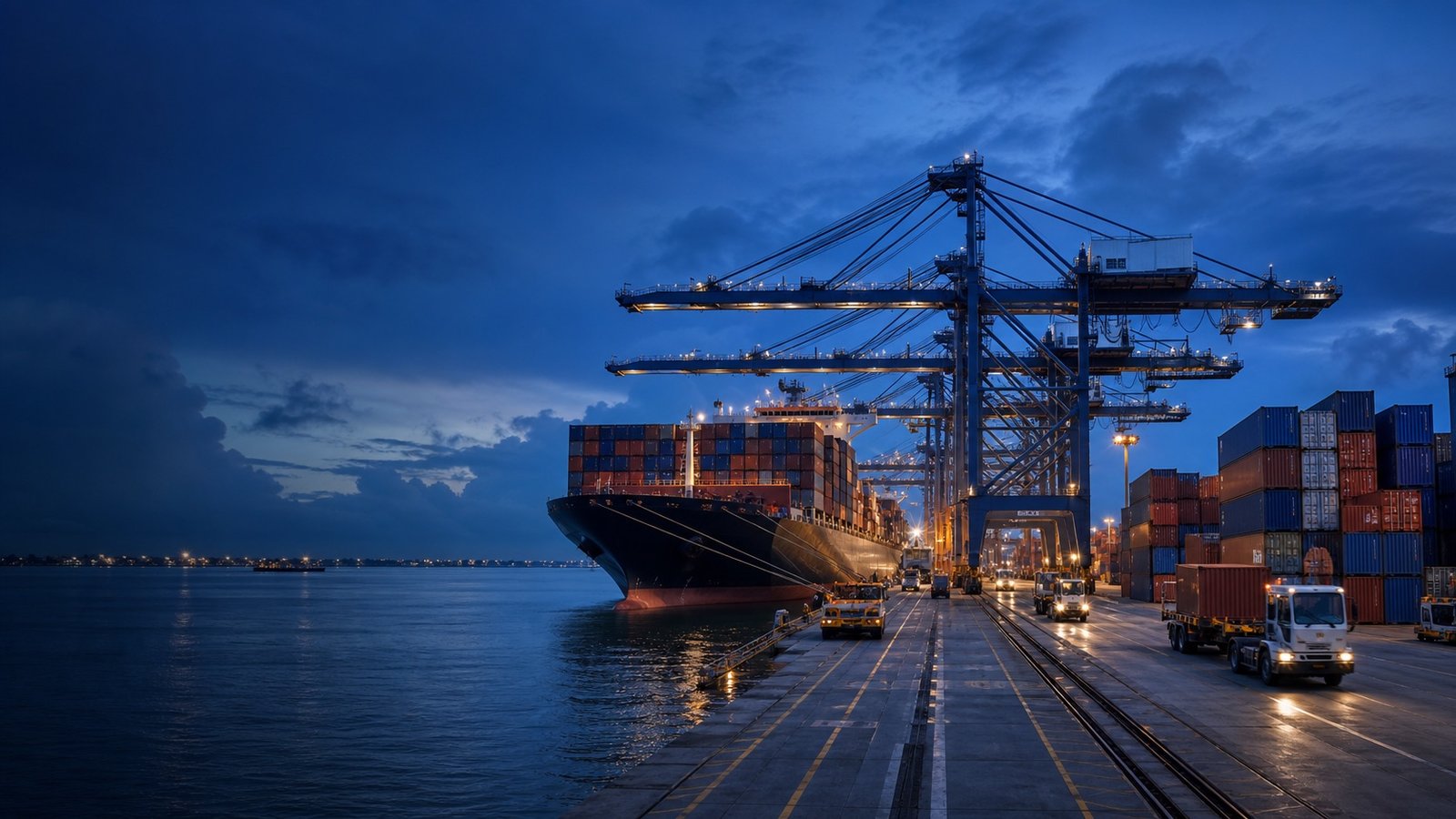
1. PSA Singapore — The World's #2 Port

  • 2024 throughput: 37.29M TEU
  • World ranking: #2 globally (after Shanghai)
  • Transshipment share: ~85% of total throughput is transshipment (not domestic)
  • Vessel calls: 100,000+ vessel calls per year
  • Connectivity: Direct connections to 600+ ports in 120+ countries
  • Productivity: 26-30 crane moves per hour (world-leading)
  • Automation: Highly automated since 2015 (AGVs, automated cranes)

2. Tuas Mega Port — World's Largest Automated Terminal (Opening 2026)

  • Phase 1: Opens 2026, 20M TEU capacity
  • Phase 2: By 2027, 30M TEU
  • Ultimate capacity: 65M TEU/year (world’s largest)
  • Total area: 1,337 hectares (1,337 万平方米)
  • Automation: 100% automated (AGVs + automated yard cranes + remote control)
  • Strategic role: Consolidates all container operations from city terminals
  • Sustainability: First port globally to use 100% electric automated guided vehicles
BAT advantage: Direct PSA Tuas berth allocation from 2026, ensuring priority berthing for BAT clients.

3. Singapore as ASEAN Transshipment Hub

ASEAN Country
Connection
Malaysia
Daily 2-3x feeder (Port Klang, Penang, Johor)
Thailand
Daily 2-3x feeder (Laem Chabang, Bangkok)
Indonesia
Daily 5-7x feeder (Jakarta, Surabaya, Medan)
Vietnam
Daily 2-3x feeder (HCMC, Haiphong)
Philippines
Daily 2-3x feeder (Manila, Cebu, Davao)
Cambodia / Laos / Myanmar
2-3x weekly feeder (Sihanoukville, Vientiane, Yangon)
Brunei
Daily feeder (Muara)

4. Changi Air Hub (SIN/WSSS) — World's Top 10 Air Cargo

  • 2024 cargo throughput: 2.0M tons (world top 10)
  • Top 3 globally for international cargo tonnage
  • Cargo terminal: Changi Airfreight Centre + SATS Coolport
  • Connectivity: 100+ airlines to 400+ destinations
  • Cold storage: SATS Coolport 70,000+ tons capacity (pharma hub)
  • E-commerce hub: Cainiao, Shopee, Lazada regional fulfillment

Shipping Methods from China to Singapore (5 Options)

1. Sea Freight (FCL — Full Container Load)

Best for: 15+ CBM, electronics, machinery, furniture, consumer goods, automotive parts.
Transit time: 4-7 days (port-to-port)
  • South China (Shenzhen/Yantian/Shekou) → Singapore: 4-5 days
  • East China (Shanghai/Ningbo) → Singapore: 5-7 days
  • North China (Qingdao/Tianjin) → Singapore: 7-10 days
2026 FCL rates (China → Singapore):
  • 20GP: $300 – $700
  • 40GP: $500 – $1,000
  • 40HQ: $600 – $1,200
  • Reefer 40HQ (DG Class 9): $1,500 – $2,800
Major carriers: COSCO, PIL (Singapore national carrier), ONE, Maersk, MSC, CMA CGM, Hapag-Lloyd, ZIM, Evergreen, Yang Ming
Top 4 direct routes:
  • Yantian → Singapore (4-5 days, most cost-effective)
  • Shanghai → Singapore (5-6 days)
  • Ningbo → Singapore (5-7 days)
  • Shekou → Singapore (4-5 days)

2. Sea Freight (LCL — Less than Container Load)

Best for: 1-15 CBM, small business, samples, e-commerce.
Transit time: 7-14 days (port-to-port); 12-20 days door-to-door
2026 LCL rates: $30 – $90 per CBM (Yantian → Singapore)
LCL consolidation hubs in China: Yantian, Shanghai, Ningbo, Xiamen, QingdaoLCL deconsolidation in Singapore: PSA Singapore (Tanjong Kling, Pasir Panjang)

3. Air Freight (SIN / WSSS)

Best for: 45+ kg, high-value electronics, urgent samples, semiconductors, pharmaceuticals, lithium battery samples.
Transit time: 1-2 days (airport-to-airport), 2-4 days (door-to-door)
2026 air freight rates (China → Singapore):
  • General cargo (< 100 kg): $3.50 – $6.50/kg
  • General cargo (> 100 kg): $2.00 – $3.50/kg
  • DG Class 9 (lithium ≤30% SoC): $5.50 – $10.00/kg
  • Pharma cold chain (2-8°C): $6.00 – $12.00/kg
  • Express (DHL/FedEx/UPS): $4.50 – $10.00/kg
Key routes:
  • PVG → SIN (5h, 5+ daily via Singapore Airlines + China Eastern)
  • HKG → SIN (3-4h, 10+ daily via Singapore Airlines + Cathay)
  • CAN → SIN (3-4h, 5+ daily via Scoot + China Southern)
  • SZX → SIN (4h, 5+ daily via Singapore Airlines + China Eastern)
  • XMN → SIN (4h, 3-4 daily via Xiamen Airlines)

4. Express Shipping (DHL / FedEx / UPS / SF International)

Best for: 0.5-50 kg, urgent small parcels, e-commerce B2C, samples, documents.
Transit time: 1-3 days (door-to-door)
2026 express rates (China → Singapore):
  • Documents: $15 – $35
  • Small parcels (1-5 kg): $20 – $60
  • Medium parcels (5-20 kg): $8 – $20/kg
  • DG (lithium battery with MSDS): $15 – $35/kg (with carrier approval)
S$400 B2C de minimis relief: Since 2023, all imported B2C goods ≤ S$400 are exempt from GST when shipped via registered e-commerce platform (low-value goods relief). This dramatically reduces costs for e-commerce sellers.
Best for: B2C e-commerce, first-time importers, Singapore retail.
Transit time: 7-14 days (door-to-door, depending on sea/air)
Service inclusions: Factory pickup + China export clearance + ACFTA/RCEP COO + sea/air transport + TradeNet filing + 0% MFN duty + 9% GST + last-mile delivery (Singapore Post / Ninja Van / J&T)

2026 Shipping Costs from China to Singapore

2026 Freight Cost Simulator

China Base Ports to PSA Singapore / Changi Airport

Cost Breakdown (Est.)

Freight Charge: $0.00
Insurance (0.3% CIF): $0.00
Singapore MFN Duty: 0% (Free)
Singapore GST (2026 Rate: 9%): $0.00

Total Landed Cost: $0.00
📋 Simulation copied! Paste it into the form below.

Sea Freight FCL (China → Singapore PSA)

Container
Cost Range
Best Use
20ft GP
$300 – $700
15-28 CBM bulk
40ft GP
$500 – $1,000
28-58 CBM bulk
40ft HQ
$600 – $1,200
28-68 CBM bulky
Reefer 40HQ
$1,500 – $2,800
Temperature / DG Class 9

LCL Sea Freight

$30 – $90 per CBM (Yantian → Singapore)

Air Freight (China → Singapore Changi)

Cargo Type
Rate Range
General cargo (< 100 kg)
$3.50 – $6.50/kg
General cargo (> 100 kg)
$2.00 – $3.50/kg
DG Class 9 (lithium ≤30% SoC)
$5.50 – $10.00/kg
Pharma cold chain (2-8°C)
$6.00 – $12.00/kg
Express (DHL/FedEx/UPS)
$4.50 – $10.00/kg
Notes: Rates exclude GST 9% (0% MFN duty on most products). DG Class 9 attracts +30-60% surcharge. ACFTA + RCEP Form typically achieve 0% duty on qualifying HS codes.

Cost Example: CIF USD 50,000 Electronics

Item
Calculation
Amount
Goods (FOB)
FOB
$48,000
Yantian → SIN
$700
Insurance
0.3% of CIF
$150
CIF Value
 
$48,850
MFN Customs Duty
0% (most electronics)
$0
Excise
0% (most electronics)
$0
GST 9%
9% × $48,850
$4,397
Total Landed Cost
 
$53,247
Effective tax rate
 
9% (vs. India 30-45%)

China's Major Export Ports to Singapore

Chinese Port
2024 TEU
Direct Routes to Singapore
Transit
Shenzhen/Yantian (CNSZX)
33.20M
Direct to Singapore
4-5 days
Hong Kong (HKHKG)
14.39M
Direct to Singapore (most frequent)
4-5 days
Shanghai (CNSHA)
50.16M
Direct to Singapore
5-6 days
Ningbo-Zhoushan (CNNGB)
39.30M
Direct to Singapore
5-7 days
Guangzhou (CNGZH)
24.18M
Direct to Singapore
4-6 days
Xiamen (CNXMN)
12.4M
Direct to Singapore
4-6 days
Qingdao (CNTAO)
30.87M
Direct to Singapore
7-10 days
Tianjin (CNTXG)
23.29M
Direct to Singapore
10-12 days
Shekou (CNSHE)
~8M
Direct to Singapore
4-5 days
Fuzhou (CNFOC)
~5M
Direct to Singapore
5-7 days
BAT recommendation: Yantian / Shekou → Singapore for South China (4-5 days, lowest cost); Shanghai → Singapore for East China; Hong Kong → Singapore for HK-registered export and frequent service.

Singapore's Major Container Ports

1. Port of Singapore (PSA) — World #2, World's Most Connected

  • 2024 throughput: 37.29M TEU
  • Connectivity: 600+ ports, 120+ countries
  • Transshipment share: ~85%
  • Productivity: 26-30 crane moves/hour
  • Terminals:
    • Tanjong Pelapas (TPT): Eastern PSA, regional transshipment
    • Pasir Panjang Terminal (PPT): Multi-purpose, deep-water
    • Keppel Terminal: Central, general + container
    • Brani Terminal: Container + project cargo
    • Tuas Mega Port (opening 2026): New mega terminal

2. Tuas Mega Port — Phase 1 from 2026 (World's Largest Automated)

  • Phase 1 (2026): 20M TEU capacity
  • Phase 2 (2027+): 30M TEU
  • Ultimate (2040+): 65M TEU/year
  • Automation: 100% automated (AGVs, automated cranes)
  • Strategic role: Consolidates all container operations
  • Sustainability: 100% electric AGVs (zero on-site emissions)

3. Pasir Panjang Terminal (PPT)

  • Multi-purpose: Container + bulk + breakbulk
  • Draft: -16m to -18m
  • 2024 throughput: ~5M TEU

4. Jurong Port (Singapore)

  • Specialty: Bulk cargo, cement, steel, project cargo, Ro-Ro
  • 2024 throughput: ~0.5M TEU equivalent
  • Strategic role: Domestic construction, oil rig support
Top cargo airport: Changi Airport (SIN/WSSS) — 2.0M tons cargo 2024, SATS Airfreight Centre + SATS Coolport (70,000 tons cold storage), Singapore Airlines Cargo hub, 100+ airlines to 400+ destinations.

Singapore's Major Cargo Airports

1. Changi International Airport (SIN / WSSS) — World Top 10

  • 2024 cargo throughput: 2.0M tons
  • World ranking: Top 10 globally for international cargo
  • Hub for: Singapore Airlines Cargo (national carrier), Scoot, FedEx, DHL, Cathay, China Airlines, China Eastern, ANA Cargo
  • Cargo terminals:
    • SATS Airfreight Centre (SAC) — main cargo, 1.0M+ tons/year
    • Changi Airfreight Centre (CAC) — express + specialty
    • SATS Coolport — 70,000+ tons cold storage (pharma hub)
    • dnata Cargo Centre — handler
  • Connectivity: 100+ airlines, 400+ destinations, 7,000+ weekly flights
  • E-commerce hub: Cainiao, Shopee, Lazada, TikTok Shop regional fulfillment
  • DG handling: Full Class 9 capability (lithium battery) with bonded DG warehouse
  • Customs: 24/7 TradeNet clearance, 4-12 hour turnaround for compliant cargo

2. Seletar Airport (XSP / WSSL) — Secondly

  • Specialty: Business aviation, private jets, regional charter
  • Cargo: <0.05M tons/year
  • Strategic role: Seletar Aerospace Park support, MRO hub
BAT recommendation: SIN (Changi) for 99% of all shipments. XSP (Seletar) only for specific business aviation / charter.

Singapore Customs, GST & Import Duties (2026)

2026 Customs Duty & Landed Cost Auditor

Advanced Singapore Customs (TradeNet) & GST Audit Simulator

⚙️ Risk & Cost Factors

$
$
%

📊 Trade Audit Summary (Est.)

1. Customs CIF Value: $0.00
Formula: FOB + Freight + Insurance (0.3%)
2. Customs Import Duty: $0.00
Formula: CIF × 0% (FTA Tariff Saved!)
3. Singapore GST (9%): $0.00
Formula: 9% × (CIF + Duty)
Total Landed Cost: $0.00
📋 Duty simulation copied! Paste it into the contact form.

1. Singapore Customs (SC) + TradeNet

The Singapore Customs (under Ministry of Finance) administers all imports/exports. All commercial imports are filed via TradeNet (electronic single-window system developed by Singapore Customs, 24/7).
Required at import:
  • HS classification (Singapore uses AHTN 8-digit HS codes, ASEAN Harmonized Tariff Nomenclature)
  • Country of Origin (COO) with Form ACFTA or Form RCEP (for preferential 0% tariff)
  • Customs value (CIF)
  • Importer of Record (IOR) with valid UEN (Unique Entity Number from ACRA)
  • Customs Broker (recommended for first-time imports, mandatory for restricted goods)
  • Permits/Licenses (for restricted goods, e.g., SFA food, HSA pharma, NEA chemical, IMDA wireless, SGC strategic goods)
BAT advantage: In-house Singapore TradeNet desk, licensed customs brokers, 2-6 hour clearance for compliant cargo.

2. GST (Goods & Services Tax) 9%

The GST is Singapore’s value-added tax, applied on the CIF + Duty + Excise value:
Calculation for CIF USD 10,000 electronics (HS 8517):
  • CIF Value: $10,000
  • MFN Customs Duty: 0% × $10,000 = $0 (most electronics 0%)
  • Excise: 0% (most electronics)
  • GST 9% × $10,000 = $900
  • Total Tax: $900 (9% effective rate)
GST history:
  • 2003-2004: 5%
  • 2004-2007: 5%
  • 2007-2023: 7%
  • 2023-2024: 8% (Jan 2023)
  • 2024+: 9% (Jan 2024)
  • 2025+: 9% (stable, planned to reach 9-15% by 2030)
GST relief (B2C): Since January 2023, all imported B2C goods ≤ S$400 are exempt from GST when shipped via registered e-commerce platform (Low-Value Goods relief). Major e-commerce platforms (Shopee, Lazada, Amazon, Zalora) handle this automatically.
GST registration: Mandatory for businesses with annual turnover > S$1 million (S$1M for non-exempt supplies). GST-registered businesses can claim input tax credit on import GST.

3. MFN Customs Duty: 0% on 99% of HS Codes

Category
MFN Duty
Example Products
Electronics, IT equipment
0%
Phones, laptops, ICs, semiconductors
Machinery, capital equipment
0%
Industrial machinery, equipment
Chemicals
0%
Most industrial chemicals (NEA license required)
Pharmaceuticals
0%
Most drugs (HSA license required)
Plastics, rubber
0%
Resin, finished plastics
Textiles, apparel
0%
Fabrics, garments
Furniture
0%
Household, office
Toys
0%
All toys
Most consumer goods
0%
General merchandise
Beer
$16/L (Specific)
Beer (per liter)
Stout & cider
$16/L
Stout, cider
Spirits
$15-$25/L + 30%
Wine, spirits
Tobacco
$388/kg + 30%
Cigarettes, cigars
Motor vehicles
0-31.5% (engine capacity-based)
Cars, motorcycles (COE applies)
Petroleum
Specific rates
Gasoline, diesel

4. ACFTA (ASEAN-China Free Trade Agreement) — 0% Preferential

The ACFTA is one of the world’s most successful FTAs, in force since 2003, and progressively upgraded. With valid Form ACFTA issued by Chinese export authorities (CCPIT, China Customs, or authorized Chamber of Commerce):
  • MFN duty → ACFTA preferential 0% on 90% of categories
  • Applies to most products, including electronics, machinery, chemicals, plastics, textiles
  • ACFTA 3.0 upgraded in 2025, expanding digital trade, supply chain, and emerging sectors
  • Issued by CCPIT or authorized China Customs office (5-7 business days)
BAT’s trade compliance team prepares Form ACFTA, verifies preferential HS codes, and manages 3-year validity + back-up documentation.

5. RCEP (Regional Comprehensive Economic Partnership) — 0% Preferential

The RCEP in force since 2022 covers 15 Asia-Pacific countries: China, Japan, South Korea, Australia, New Zealand, ASEAN 10 (Singapore, Malaysia, Thailand, Vietnam, Indonesia, Philippines, Brunei, Cambodia, Laos, Myanmar).
With valid Form RCEP issued by Chinese CCPIT:
  • MFN duty → RCEP preferential 0% on most categories over 20-year phase
  • Applies to most products, including electronics, machinery, chemicals, plastics
  • RCEP cumulation rule allows value-add from any RCEP country to count
  • Issued by CCPIT or authorized China Customs office (5-7 business days)
ACFTA vs RCEP: BAT’s trade compliance team selects the most beneficial per shipment. For most China → Singapore flows, ACFTA is simpler and faster because both countries are direct parties.

6. Excise Duty (HS-specific)

Excise is applied on 4 categories only:
  • Beer: S$16 per liter of pure alcohol
  • Stout & cider: S$16 per liter
  • Spirits (including wine): S$15-$25 per liter + 30%
  • Tobacco: S$388 per kg + 30%
  • Motor vehicles: 0% to 31.5% (engine capacity-based) + COE (Certificate of Entitlement)
  • Petroleum: Specific rates (budget)

7. De Minimis and S$400 GST Relief

  • No commercial de minimis — all commercial imports must be declared regardless of value
  • Personal imports ≤ S$400: duty-free allowance per person per arrival (passenger only)
  • B2C Low-Value Goods (LVG) relief: All imported B2C goods ≤ S$400 are exempt from GST when shipped via registered e-commerce platform (Shopee, Lazada, Amazon, etc.)

8. Singapore Importer Registration (ACRA + UEN)

Mandatory for all commercial importers:
  • Business Registration with ACRA (Accounting & Corporate Regulatory Authority)
  • UEN (Unique Entity Number) — issued upon registration
  • GST Registration (if annual turnover > S$1M, or voluntary for input tax credit)
  • Import License for restricted goods (issued by SFA, HSA, NEA, IMDA, SGC)
  • Customs Broker recommended
Registration time: 1-3 business days for sole proprietorship, 1-2 weeks for Pte Ltd company.
BAT assists first-time importers with ACRA Registration + UEN + GST Registration + Customs Broker setup in 7-14 business days (Pte Ltd).

9. Free Trade Zone (FTZ)

Singapore has multiple designated Free Trade Zones under the Free Trade Zones Act:
  • PSA FTZ (all PSA terminals, Tanjong Pelapas, Pasir Panjang)
  • Jurong FTZ (Jurong Port area)
  • Senoko FTZ (limited)
  • Changi FTZ (air cargo)
In FTZ:
  • No duty on goods stored
  • No GST on goods stored
  • Unlimited storage time
  • No processing restrictions (assembly, repackaging, relabeling allowed)
  • Re-export to any country without Singapore duty/GST
BAT operates bonded FTZ warehousing in PSA’s Tanjong Pelapas and Pasir Panjang for clients consolidating China → Singapore → ASEAN distribution.

10. Strategic Goods Control (SGC)

Mandatory for strategic goods (military, dual-use, nuclear, chemical, biological):
  • Strategic Goods (Control) Act (SGCA)
  • Strategic Goods Control (SGC) Permit required
  • Strategic Goods (Control) Order lists controlled items
  • End-User Undertaking (EUU) required
  • Strategic Trade Scheme (STS) for trusted traders
BAT manages SGC permits for clients shipping dual-use chemicals, advanced materials, biotech equipment.

Required Documents for Singapore Import

Document
Required
Notes
Commercial Invoice
HS 8-digit AHTN, COO, unit/total value, Incoterms
Packing List
Carton-by-carton breakdown
B/L or AWB
Original B/L for sea; AWB for air
COO (Certificate of Origin)
Issued by Chinese export authorities
Form ACFTA / Form RCEP
⚠️
For 0% preferential tariff
Customs Permit (via TradeNet)
Filed by licensed customs broker
Insurance Certificate
For CIF shipments
UEN of IOR
Unique Entity Number from ACRA
GST Registration
⚠️
If IOR is GST-registered
Import License
⚠️
For restricted goods (SFA, HSA, NEA, IMDA, SGC)
SFA Approval
⚠️
For food products
HSA License
⚠️
For pharmaceuticals, medical devices, cosmetics
NEA Approval
⚠️
For hazardous chemicals, controlled substances
IMDA Approval
⚠️
For wireless / telecom / RF devices
SGC Permit
⚠️
For strategic goods
UN38.3 Test Report
For lithium battery products
MSDS / SDS (English)
For chemical / battery products
DGD (Dangerous Goods Declaration)
For Class 9 cargo, IATA DGR 67th
Class 9 Hazard Label
For Class 9 cargo
Free Trade Zone Declaration
⚠️
For FTZ storage / re-export

Step-by-Step Shipping Process: China to Singapore (6 Steps)

  1. Classify your goods (AHTN 8-digit HS code) + check ACFTA/RCEP eligibility — Use the Singapore Customs AHTN database to determine your exact code. Verify ACFTA + RCEP preferential eligibility with BAT’s trade compliance team.
  2. Register UEN + ACRA (first-time importers) — Apply for UEN at ACRA (1-3 days for sole proprietorship, 1-2 weeks for Pte Ltd). BAT assists first-time importers in both processes.
  3. Verify product compliance (SFA / HSA / NEA / IMDA / SGC) — For restricted goods, obtain SFA / HSA / NEA / IMDA / SGC approval before shipment. SFA food: 1-2 weeks; HSA pharma: 4-12 weeks; NEA chemical: 2-4 weeks; IMDA wireless: 1-2 weeks.
  4. Choose transport mode — Bulk → sea FCL; Small bulk → sea LCL; High-value/urgent → air (Changi); Small parcels → express; Door-to-door → DDP; ASEAN re-export → sea FCL + FTZ warehousing.
  5. Customs clearanceat PSA / Changi — File Customs Permit via TradeNet through your licensed customs broker. BAT handles in 2-6 hours typically. DG cargo requires additional Singapore Customs + port/airline approval.
  6. Pay 0% MFN duty + 9% GST — Most imports pay 0% MFN + 9% GST only. Pay GST via GIRO/PayNow to IRAS. GST-registered importers can claim GST as input tax credit.

Battery Shipping from China to Singapore: Complete 2026 Compliance Guide

Singapore is one of the largest Southeast Asia markets for Chinese batteries — particularly EV, solar, consumer electronics, and BESS. Singapore has strict lithium battery regulations with zero tolerance for undeclared batteries.

1. Why Singapore is a Key Battery Market

China supplies significant battery products to Singapore:
  • Solar energy storage systems (BESS) for Singapore’s 2030 green plan (solar target 1.5 GWp by 2025, 2 GWp by 2030)
  • EV batteries for growing EV market (target 100% clean energy vehicles by 2040)
  • Power banks, consumer electronics batteries (massive e-commerce demand)
  • Battery components (cells, BMS, modules)
  • Two-wheeler batteries (growing market)
  • Sodium-ion batteries(UN 3551, emerging)

2. UN Number Classification

UN Number
Description
Common Use
UN3480
Lithium-ion (standalone)
Power banks, EV battery packs, BESS
UN3481
Lithium-ion (in/packed with equipment)
Power tools, e-bike batteries
UN3090
Lithium metal (standalone)
Coin cells, primary batteries
UN3091
Lithium metal (in equipment)
Watches, sensors, medical devices
UN3551
Sodium-ion (new 2026)
Stationary storage, low-cost EVs
Misclassification fines: Up to S$10,000 (~$7,500) per shipment + cargo seizure + criminal prosecution.
  • SoC ≤ 30% for standalone (UN3480, UN3090) on cargo aircraft only (CAO)
  • PI 967, PI 970 — limited quantity relief for ≤100 Wh per cell
  • Battery Summary Document required (signed by shipper, attached to AWB)
  • Class 9 hazard label + lithium battery handling label (mandatory)
  • MSDS/SDS in English (16-section GHS)
  • Operator approval — apply 48-72 hours before departure
New in DGR 67th (2026): Stricter SoC for PI 966-970; UN 3551 sodium-ion; enhanced damaged battery documentation.
  • P903, P908, P909, P910, P911 packaging instructions
  • Class 9 hazard label + lithium battery mark
  • Segregation from other Class 9 DG
  • Reefer container strongly recommended (15-25°C SoC control)
  • Container packing certificate signed by responsible person

5. Recommended Transport Mode

Battery Type
Recommended Mode
Samples / prototypes (< 10 kg)
Air freight (SIN)
Production cells (50-500 kg)
Sea FCL reefer to PSA
Battery modules (500-2,000 kg)
Sea FCL reefer to PSA
Battery packs (2,000+ kg)
Sea FCL reefer to PSA
Damaged / defective batteries
Specialized DG carrier
ESS / BESS for solar projects
Sea FCL reefer to PSA
Sodium-ion (UN 3551)
Sea FCL reefer
Dedicated China-Singapore battery air freight service:
  • Daily departure from PVG / SZX / HKG / CAN to SIN
  • Pre-cleared UN38.3 + MSDS documentation
  • Dedicated space allocation on Singapore Airlines Cargo + Cathay + China Eastern
  • SoC managed end-to-end
  • 3-5 day door-to-door
  • $7.00 – $12.00/kg (Class 9 lithium battery)

7. 8 Common Battery Shipping Mistakes

  1. Wrong UN number (UN3480 vs UN3481) → fines + seizure
  2. Incomplete UN38.3 report (old or missing tests) → rejection
  3. MSDS in wrong format (not 16-section GHS English)
  4. SoC > 30% on passenger aircraft → carrier refusal
  5. Packaging failure (damaged, leaking, unapproved)
  6. Missing DGD for Class 9 cargo
  7. Missing Class 9 hazard label on package + container
  8. No operator approval (48-72 hours pre-approval required)

Singapore Regulatory Compliance (6 Bodies)

1. Singapore Food Agency (SFA) — Food

Mandatory for:
  • All food products (fresh, processed, packaged)
  • Health supplements
  • Special purpose foods (infant formula, medical foods)
Process: SFA application → product registration → import permit (1-2 weeks for processed food, 4-6 weeks for novel food).

2. Health Sciences Authority (HSA) — Pharma + Cosmetics

Mandatory for:
  • Pharmaceuticals (drug registration, 4-12 weeks)
  • Medical devices (Class A-D, varies)
  • Cosmetics (notification, 1-2 weeks)
  • Traditional medicines
Process: HSA application → product testing → import license.

3. National Environment Agency (NEA) — Chemical + Hazardous

Mandatory for:
  • Hazardous chemicals (under Environmental Protection and Management Act)
  • Controlled substances (毒药 controlled drugs)
  • Hazardous waste (transboundary movement)
Process: NEA application → product classification → import permit (2-4 weeks).

4. Infocomm Media Development Authority (IMDA) — Wireless + Telecom

Mandatory for:
  • Wireless devices (WiFi, Bluetooth, cellular)
  • Telecom equipment
  • RF devices
  • Short-range devices
Process: IMDA application via EQUIP (Equipment Registration) → 1-2 weeks.

5. Strategic Goods Control (SGC) — Strategic + Dual-Use

Mandatory for:
  • Military goods
  • Dual-use items (nuclear, chemical, biological, missile, advanced materials)
  • Strategic technology
Process: SGC application → Strategic Goods PermitEnd-User Undertaking (EUU) (2-8 weeks).

6. Agri-Food & Veterinary Authority of Singapore (AVS) — Animals + Plants

Mandatory for:
  • Live animals
  • Animal products (meat, dairy, eggs)
  • Plants, seeds, fresh produce
  • Pet food
Process: AVS application → health certificate → import permit (1-4 weeks).

Why Choose BAT Logistics for China-Singapore Shipping (6 Reasons)

  1. 20+ years China-Singapore DG expertise — China’s leading DG forwarder with 8,000+ successful Singapore clearings, zero major incidents
  2. IATA DGR Category 6 certified — Full Class 9 lithium battery authorization (air/sea)
  3. Direct airline + shipping line partnerships — Singapore Airlines Cargo, Cathay, China Airlines, China Eastern + COSCO, PIL, ONE, Maersk, MSC, CMA CGM, Hapag-Lloyd, ZIM — guaranteed DG space allocation + direct PSA Tuas berth
  4. ACRA-registered + FIATA member — Priority customs clearance, reduced inspection rates
  5. ACFTA + RCEP + Form E specialists — In-house Singapore trade compliance team manages all preferential tariffs
  6. 24/7 tracking + dedicated account management — Single point of contact for every China-Singapore shipment

Case Studies (5 Real-World Examples)

Case 1: Electronics FTZ Transshipment (Shenzhen → Singapore → EU, 60% time saved)

Client: Leading Chinese electronics manufacturer distributing to EU via Singapore FTZ
Challenge: Distribute to EU with 60% faster transit than direct China → Rotterdam; reduce inventory holding cost
Solution:
  • Migrated to sea FCL 40HQ Yantian → PSA Singapore (4-5 days)
  • Implemented FTZ bonded warehousing at Tanjong Pelapas (no GST, no duty on storage)
  • Established direct re-export to EU via secondary shipping line (Singapore → Rotterdam 28 days)
  • BAT’s AEO + ACFTA preferential for storage handling
Results: 60% transit time reduction (60 days → 24 days), S$2.4M annual inventory cost savings, 100% on-time delivery to EU customers.

Case 2: B2C E-commerce DDP (Shopee/Lazada, 3PL fulfillment)

Client: Guangzhou-based e-commerce brand selling on Shopee, Lazada, TikTok Shop Singapore
Challenge: B2C shipping with S$400 GST relief compliance; fast 3-7 day delivery to Singapore customers
Solution:
  • BAT registered LVG (Low-Value Goods) e-commerce platform with Singapore Customs
  • Established express DDP (3-5 day door-to-door)
  • Implemented S$400 GST relief for qualifying orders (auto-exemption via platform)
  • Set up 3PL fulfillment center in PSA Tanjong Pelapas FTZ for fast last-mile
Results: 45% B2C shipping cost reduction, 4.2-day average delivery to Singapore customers, 100% GST compliance.

Case 3: Pharmaceutical Cold Chain (HSA + 2-8°C)

Client: Shanghai-based biopharmaceutical company shipping vaccines to Singapore

Challenge: HSA registration + 2-8°C cold chain integrity; Singapore is Asia pharma hub
Solution:
  • BAT registered HSA Class A medical device + drug for client
  • Implemented dedicated cold chain (2-8°C) with temperature data loggers
  • SATS Coolport cold storage at Changi (70,000+ tons capacity)
  • IATA CEIV Pharma certified air freight via Singapore Airlines Cargo
  • Real-time temperature monitoring (24/7)
Results: 100% cold chain integrity, 0 excursions in 24 months, 48-hour door-to-door, HSA compliance 100%.

Case 4: Solar BESS Direct (UN3480, 30 FCL/month)

Client: Tier-1 Chinese BESS manufacturer supplying Singapore’s solar farms

Challenge: Scale Class 9 lithium battery shipments to 30 FCL/month while maintaining IMDG 42-24 + SoC compliance for 1.5 GWp solar target
Solution:
  • Migrated to sea FCL 40HQ reefer Yantian → PSA Singapore (4-5 days, IMDG 42-24)
  • Implemented dedicated SoC management at Shenzhen facility (3% → <0.1% rejected shipments)
  • Established direct PSA Tuas berth allocation with BAT’s top-volume Singapore status
  • Coordinated ACFTA + SGC permit for BESS
Results: 30+ FCL/month consistently, 0 customs violations, 0 safety incidents, S$1.8M (~$1.35M) annual savings vs. air freight.

Case 5: First-Time Importer DDP (B2B machinery, 0 experience)

Client: Singapore-based industrial machinery firm importing CNC machines from China for the first time
Challenge: No UEN, no business registration, no customs broker, no ACFTA experience
Solution:
  • BAT registered Pte Ltd company with ACRA + UEN + GST in 14 business days
  • Handled complete DDP + ACFTA Form for 3 CNC models
  • Set up ACFTA preferential tariff (saved 5-15% MFN duty on first shipment)
  • IMDA approval for 2 control panel SKUs
Results: First shipment cleared in 4 hours, ongoing 18 FCL/year, total ACFTA savings S$45K annually.

Frequently Asked Questions

Sea freight: 4-7 days direct (port-to-port). Air: 1-2 days (airport-to-airport), 2-4 days (door-to-door). Express: 1-3 days. DDP: 7-14 days.
Singapore has a 0% MFN duty on 99% of HS codes + 9% GST. With valid Form ACFTA or Form RCEP, duty remains 0% on most qualifying products. Effective tax ~9% (CIF × 9%).
Yes — UEN (Unique Entity Number) from ACRA is mandatory for all commercial importers. Apply at ACRA in 1-3 days (sole proprietorship) or 1-2 weeks (Pte Ltd). BAT can register ACRA + UEN + GST + Customs Broker in 7-14 business days for first-time importers.
9% standard GST (raised from 8% on 2024-01-01). For B2C goods ≤ S$400 shipped via registered e-commerce platform (Shopee, Lazada, Amazon), GST is exempt under Low-Value Goods (LVG) relief.
Sea LCL ($30-$90/CBM) for small volumes. Sea FCL for 15+ CBM. South China ports (Yantian, Shekou) → Singapore offer the most competitive rates (4-5 days). PSA Tuas Mega Port (from 2026) offers fastest direct vessel berth.
Yes. BAT is IATA DGR Category 6 certified. Sea: IMDG 42-24. Air: IATA DGR 67th (SoC ≤30% for CAO). Singapore has strict lithium battery regulations with zero tolerance for undeclared batteries (fines up to S$10,000).
Yes — multiple FTAs:
  • ACFTA (ASEAN-China FTA) in force since 2003, 90% of categories at 0%
  • RCEP in force since 2022, most categories at 0%
  • Both issued by Chinese CCPIT (5-7 business days)
  • PSA Singapore (37.29M TEU, world #2) — Major transshipment hub, 0% duty + 9% GST + ACFTA + RCEP + FTZ
  • Port Klang (Malaysia) — Regional, similar transit, but 0% + 10% SST (Sales & Service Tax)
TradeNet is Singapore's electronic single-window customs system. All import permits are filed via TradeNet by a licensed customs broker. BAT's in-house TradeNet desk handles compliant cargo in 2-6 hours.
BAT acts as Customs Broker for Singapore imports and can assist in setting up ACRA + UEN + GST for your Singapore IOR. For restricted goods, BAT coordinates with SFA / HSA / NEA / IMDA / SGC on your behalf.
File Customs Permit via TradeNet through a licensed Customs Broker. BAT handles in 2-6 hours for compliant cargo. Pay 0% MFN duty + 9% GST via GIRO/PayNow to IRAS.
  1. Verify your HS code is in ACFTA or RCEP preferential schedule (BAT trade compliance team)
  2. Apply for Form ACFTA or Form RCEP at Chinese CCPIT (5-7 business days)
  3. Present Form to Singapore Customs at TradeNet filing
  4. Achieve 0% MFN duty on qualifying products (most cases)
FTZ is a designated area where goods can be stored indefinitely without paying duty or GST, as long as they are re-exported. BAT operates bonded FTZ warehousing in PSA's Tanjong Pelapas for clients consolidating China → Singapore → ASEAN distribution.
Yes. Singapore is the #1 ASEAN transshipment hub with daily feeder connections to Malaysia, Thailand, Indonesia, Vietnam, Philippines. BAT's FTZ warehousing + ASEAN feeder network handles regional distribution efficiently.

References & Sources

  1. Singapore Customs (SC)https://www.customs.gov.sg/
  2. Inland Revenue Authority of Singapore (IRAS)https://www.iras.gov.sg/
  3. Singapore Food Agency (SFA)https://www.sfa.gov.sg/
  4. Health Sciences Authority (HSA)https://www.hsa.gov.sg/
  5. National Environment Agency (NEA)https://www.nea.gov.sg/
  6. Infocomm Media Development Authority (IMDA)https://www.imda.gov.sg/
  7. Accounting & Corporate Regulatory Authority (ACRA)https://www.acra.gov.sg/
  8. Ministry of Trade and Industry (MTI) Singaporehttps://www.mti.gov.sg/
  9. IATA Dangerous Goods Regulations (67th Edition, 2026)https://www.iata.org/dgr
  10. IMO IMDG Code Amendment 42-24https://www.imo.org
  11. Port of Singapore (PSA Singapore)https://www.singaporepsa.com/
  12. Changi Airport Group (CAG)https://www.changiairport.com/
  13. ASEAN-China Free Trade Agreement (ACFTA)https://www.acfta.org/
  14. TradeNet Singaporehttps://www.tradenet.gov.sg/
  15. Enterprise Singaporehttps://www.enterprisesg.gov.sg/
📧 Email: info@battershipment.com📞 Phone: +86-18926219942 (24/7)🌐 Website: https://batteryshipment.com
BAT Logistics — China’s leading dangerous goods freight forwarder. 20+ years of DG transport expertise. IATA DGR Category 6. Direct airline + shipping line partnerships. Guaranteed space allocation. Safe, compliant, on-time delivery to Singapore since 2005.