China to Philippines Freight & Landed Cost Simulator (2026)

CBM
For LCL, minimum standard billable is 1 CBM.
$
Used for BOC e2m 12% VAT and Duty profiling.
Estimated Base Freight: $0.00
PH Customs Tax & VAT (12%): $0.00
Total Estimated Landed Cost: $0.00

Shipping from China to South Korea-Complete Guide 2026: Rates, Transit Times & Best Methods

Last updated: June 13, 2026 · Reading time: 18 minutes · Author: Bill Guo, Sales Manager, BAT Logistics

Table of Contents

South Korea is China’s third-largest trading partner with bilateral trade exceeding USD 310 billion in 2024. The China–Korea freight lane is one of the shortest and most competitive in the world — just 360-1,300 nautical miles from major Chinese ports to Busan and Incheon, with 15+ daily direct cargo flights to ICN and comprehensive trade agreements (China-Korea FTA + RCEP) making most Chinese exports enter Korea duty-free.
 
This guide covers everything you need to know about shipping from China to South Korea in 2026: shipping methods and 2026 costs, Busan Port and Incheon International Airport (ICN), 10% Korean VAT with China-Korea FTA preferential rates, KC certification for lithium batteries, Amazon FBA Korea, and dangerous goods compliance under IATA DGR 67th Edition (2026) and IMDG Code 42-24.
Premium Freight Lane

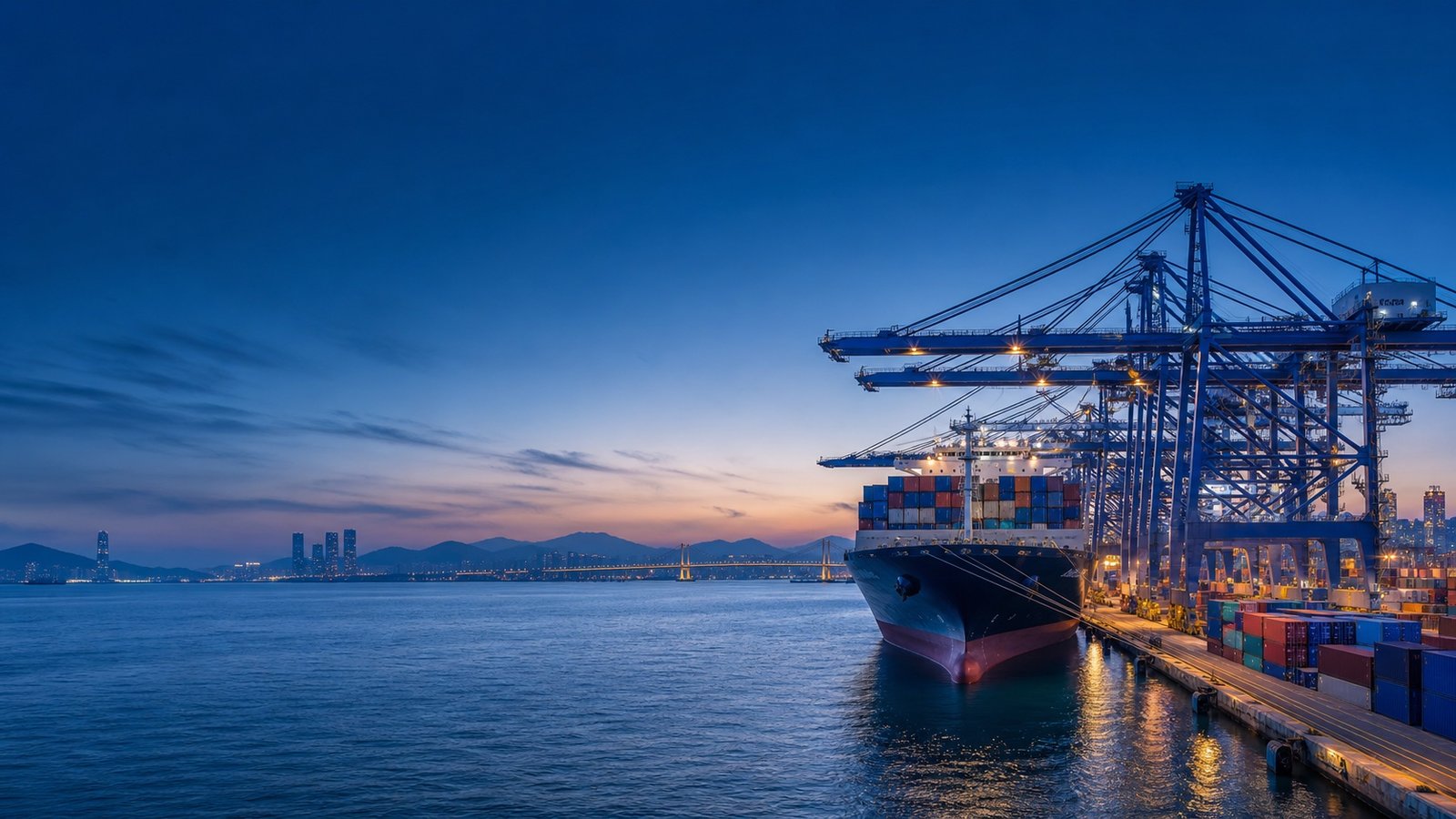
Efficient Shipping Solutions from China to South Korea

Fast, Reliable, and Cost-Effective Logistics Corridor

China
South Korea

Geographical Edge: Rapid Transit

The China-Korea maritime and air corridors are among the shortest in global trade. Shipments from Yantai/Weihai to Incheon take just 1 day, and Shanghai to Busan only 2-3 days, ensuring unmatched speed and competitive freight rates.

Trade Agreements: 0% Duty Potential

Benefiting from the China-Korea FTA and RCEP, providing a valid Certificate of Origin (Form E) allows the vast majority of qualifying Chinese exports to enjoy 0% preferential tariff rates upon entering Korea.

Full-Channel: Tailored Logistics

Whether you require Sea Freight (FCL/LCL) for bulk cargo, Air Freight for high-value semiconductors, or specialized cross-border E-commerce fulfillment (DDP) directly to Amazon FBA or Coupang, we have you covered.

Shipping Channels & Transit Times Quick Guide
Sea Freight (FCL/LCL)
2 – 7 Days (Port-to-Port)
Best for oversized freight, machinery, furniture, and non-urgent e-commerce stock. Highly cost-effective for large volumes.
Air Freight
1 – 3 Days (Airport-to-Airport)
Ideal for semiconductors, emergency parts, and high-value electronics. Over 15+ direct daily flights operating to Incheon (ICN).
Door-to-Door DDP
5 – 12 Days (All-In Customs Paid)
Tailored for online sellers (Coupang/FBA). Includes China export clearance, Korean UNI-PASS declaration, 10% import VAT, and final-mile delivery.

Quick Reference: Shipping from China to South Korea (June 2026)

Factor
Detail
2024 China-Korea bilateral trade
USD 310+ billion
Standard VAT rate
10% (Korean 부가세)
De minimis threshold
USD 150 (US $200 under KORUS FTA)
Customs authority
Korea Customs Service (KCS, 관세청)
Top container port
Busan (21.9M TEU 2024, world #6)
Top cargo airport
Incheon International Airport (ICN, 2.94M tons 2024)
Major trade agreements
China-Korea FTA (2015), RCEP (2022)
2026 regulation updates
IATA DGR 67th Ed, IMDG 42-24, KC Battery

Why Ship from China to South Korea in 2026? (4 Strategic Reasons)

1. Korea = China's #3 Trading Partner

Bilateral trade of USD 310+ billion in 2024 makes Korea one of the largest bilateral trade relationships in the world. Korean conglomerates (Samsung, LG, Hyundai, SK, POSCO) drive continuous, year-round shipping demand with stable rates.

2. The shortest Asia-Pacific lane

The China-Korea lane is among the shortest in international trade:
  • Yantai → Incheon: 360 nautical miles (1 day port-to-port)
  • Qingdao → Incheon: 480 nautical miles (1-2 days)
  • Shanghai → Busan: 540 nautical miles (2-3 days)
Short distance = competitive rates, frequent sailings, low carbon footprint.

3. China-Korea FTA + RCEP = 0% duty for most products

Two major trade agreements make Korean imports from China highly cost-effective:
  • China-Korea FTA (2015): Eliminates or reduces tariffs on 90%+ of HS chapters — most Chinese exports enter Korea duty-free with proper Certificate of Origin (Form E)
  • RCEP (2022): Uniform rules of origin across 15 Asia-Pacific economies
BAT FTA specialization: In-house trade compliance team prepares Form E and Form RCEP, reducing duty rates from MFN 5-13% to 0% on qualifying products.

4. BAT's 20-year China-Korea DG track record

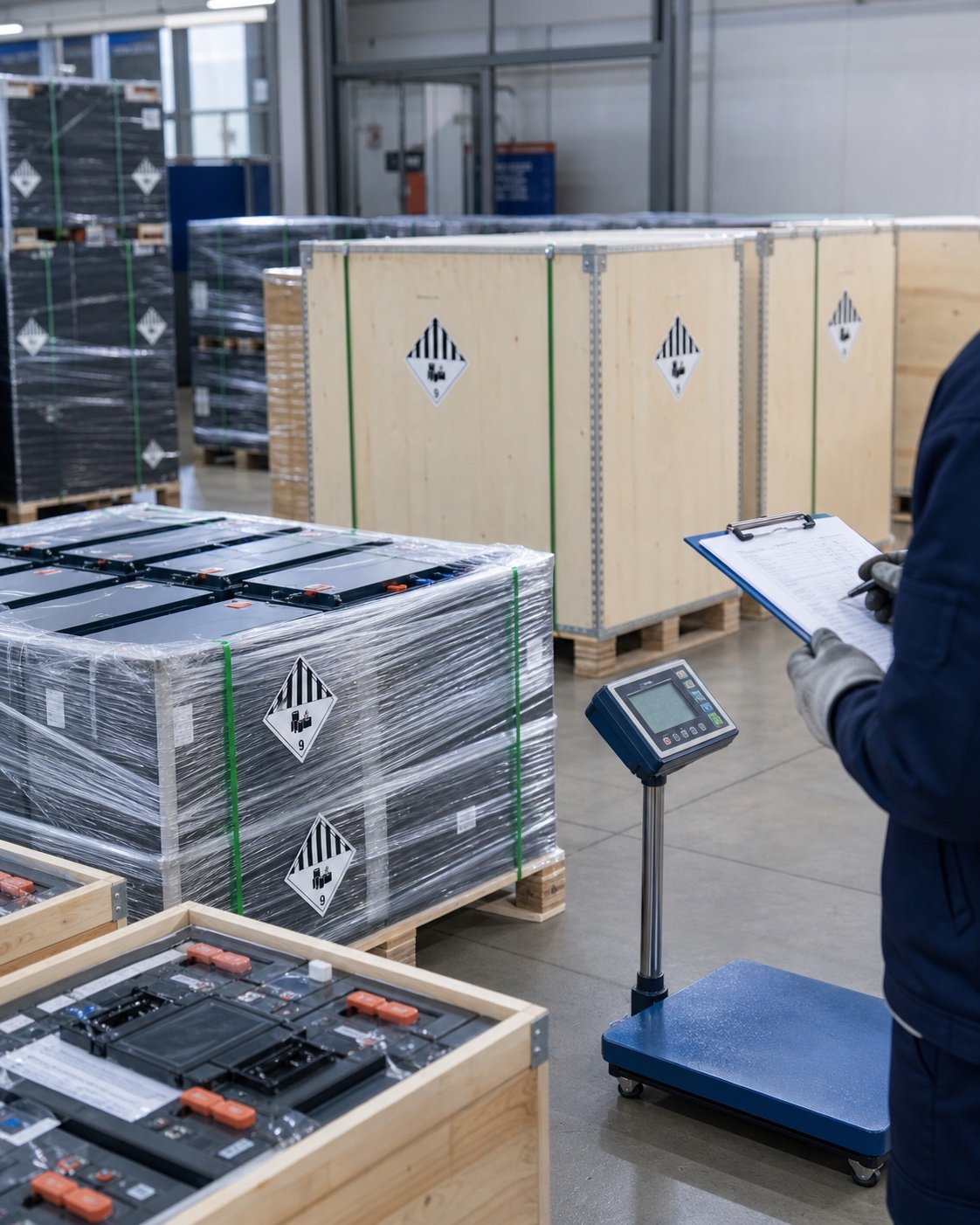
Korea is one of the strictest DG-regulated Asia-Pacific destinations. BAT’s 20-year DG specialization, with direct partnerships with Korean Air Cargo, Asiana Cargo, Cathay Cargo, Lufthansa Cargo, COSCO, HMM, Maersk, MSC, ensures guaranteed space allocation and compliant handling for lithium batteries, energy storage systems, semiconductors, chemicals, and other Class 3 / Class 8 / Class 9 cargo.

Shipping Methods from China to South Korea (4 Options)

Most Popular for Bulk

1. Sea Freight (FCL)

Best for: Large volume shipments (15+ CBM), bulk machinery, furniture, automotive parts, and non-time-sensitive general/DG cargo.

  • Transit Time: 2 – 7 Days (Port-to-Port)
  • Ideal Volume: Full 20ft / 40ft / 40ft HQ Containers
  • Key Advantage: Maximum cost-efficiency for heavy or large-scale freight with stable weekly allocations.
Cost-Effective

2. Sea Freight (LCL)

Best for: Small business cargo, shipment volumes between 1 – 15 CBM, product samples, and smaller e-commerce stock batches.

  • Transit Time: 5 – 10 Days (Shared Container)
  • Ideal Volume: 1 to 15 CBM (Shared Space)
  • Key Advantage: Pay only for the precise volume you occupy, significantly lowering costs for small bulk cargo.
Time-Critical

3. Air Freight & Express

Best for: High-value electronics, semiconductors, urgent manufacturing components, pharmaceuticals, and tight deadlines.

  • Transit Time: 1 – 3 Days (Airport-to-Airport)
  • Ideal Volume: 45+ kg (Standard) or smaller parcels (Express)
  • Key Advantage: Unmatched delivery speed and maximum cargo security with 15+ daily flights straight to Incheon (ICN).
100% Hassle-Free

4. Door-to-Door DDP

Best for: Cross-border E-commerce sellers (Coupang Rocket Delivery / Amazon FBA Korea) and hands-off B2B importers.

  • Transit Time: 5 – 12 Days (Air or Sea DDP)
  • Ideal Volume: Small cartons to large palletized stock
  • Key Advantage: All-inclusive pricing covering China export, Korean UNI-PASS customs clearance, import duties, and final mile delivery.

1. Sea Freight (FCL — Full Container Load)

Best for: 15+ CBM, bulk machinery, furniture, automotive parts, electronics, non-time-sensitive cargo.
Transit time: 2-7 days (port-to-port)
2026 Sea Freight FCL rates (China → Busan):
  • 20GP: $315 – $600
  • 40GP: $378 – $850
  • 40HQ: $560 – $1,000
  • Reefer 40HQ (DG Class 9): $1,200 – $2,500
Major carriers: COSCO, HMM, Maersk, MSC, ONE, Evergreen, Yang Ming, ZIM

2. Sea Freight (LCL — Less than Container Load)

Best for: 1-15 CBM, small business, samples, e-commerce consolidation.
Transit time: 5-10 days
2026 rates: $10 – $55 per CBM

3. Air Freight (ICN + GMP + PUS)

Best for: 45+ kg, high-value electronics, urgent samples, semiconductors, pharmaceuticals.
Transit time: 1-3 days (airport-to-airport), 3-5 days (door-to-door)
2026 Air Freight rates:
  • General cargo: $1.80 – $7.00/kg
  • DG Class 9 (≤30% SoC): $5.50 – $11.00/kg
  • Express (DHL/FedEx/UPS): $4.00 – $10.00/kg
Key routes: PVG → ICN (2h, 15+ daily), PEK → ICN, CAN → ICN, SZX → ICN, HKG → ICN
Best for: B2C e-commerce, first-time importers, Amazon FBA KR sellers.
Transit time: 5-12 days (door-to-door)
Service inclusions: Factory pickup + China export clearance + sea/air transport + KCS import clearance + 10% VAT + MFN/FTA duty + KC certification + Korean-language labeling + final delivery

2026 Shipping Costs from China to South Korea

🚢 Sea Freight FCL Rates (China to Busan)
20ft GP Container
$315 – $600
Best for 15–28 CBM bulk cargo, machinery, and heavy industrial goods.
40ft GP Container
$378 – $850
Best for 28–58 CBM bulk general merchandise, apparel, and furniture.
40ft HQ Container
$560 – $1,000
Best for 28–68 CBM oversized or bulky freight maximizing vertical space.
Reefer 40HQ Class 9 DG Capable
$1,200 – $2,500
Strict temperature & segregation control for Lithium Batteries, ESS, and hazardous chemicals.
📦

LCL Sea Freight

Shared container consolidation space to Busan or Incheon Ports.

$10 – $55 per CBM
✈️

Air Freight (Standard Bulk)

Airport-to-Airport direct routing to Incheon International Airport (ICN) for cargo > 100 kg.

$1.80 – $3.50 per kg

DG Class 9 Air Freight

Compliant transport for standalone lithium batteries adhering to strict SoC limits (≤30%).

$5.50 – $11.00 per kg

Sea Freight FCL (China → Busan)

Container
Cost Range
Best Use
20ft GP
$315 – $600
15-28 CBM bulk
40ft GP
$378 – $850
28-58 CBM bulk
40ft HQ
$560 – $1,000
28-68 CBM bulky
Reefer 40HQ
$1,200 – $2,500
Temperature / DG Class 9

LCL Sea Freight

$10 – $55 per CBM (Busan or Incheon)

Air Freight (China → ICN)

Cargo Type
Rate Range
General cargo (< 100 kg)
$4.00 – $7.00/kg
General cargo (> 100 kg)
$1.80 – $3.50/kg
DG Class 9 (lithium ≤30% SoC)
$5.50 – $11.00/kg
Express (DHL/FedEx/UPS)
$4.00 – $10.00/kg
Notes: Rates exclude 10% VAT and MFN duty. DG Class 9 attracts +20-50% surcharge. China-Korea FTA Form E = 0% duty for most products.

China's Major Export Ports to Korea

Chinese Port
2024 TEU
Direct Routes to Korea
Shanghai
50.16M
Direct to Busan (2-3 days), Incheon (3-4 days)
Ningbo-Zhoushan
39.30M
Direct to Busan (2-3 days), Incheon (3-4 days)
Qingdao
30.87M
Direct to Incheon (1-2 days), Busan (2 days)
Yantai
~4M
Closest to Incheon (1 day), Pyeongtaek
Weihai
~1M
Closest to Incheon (1 day), Donghae
Shenzhen
33.20M
Direct to Busan (4-5 days)
Dalian
~5M
Direct to Busan (1-2 days), Incheon (2 days)
BAT recommendation: Yantai/Weihai → Incheon for fastest transit; Shanghai/Ningbo → Busan for cost-effective bulk; Yantai/Weihai → Incheon for lithium battery DG.

Korea's Major Container Ports

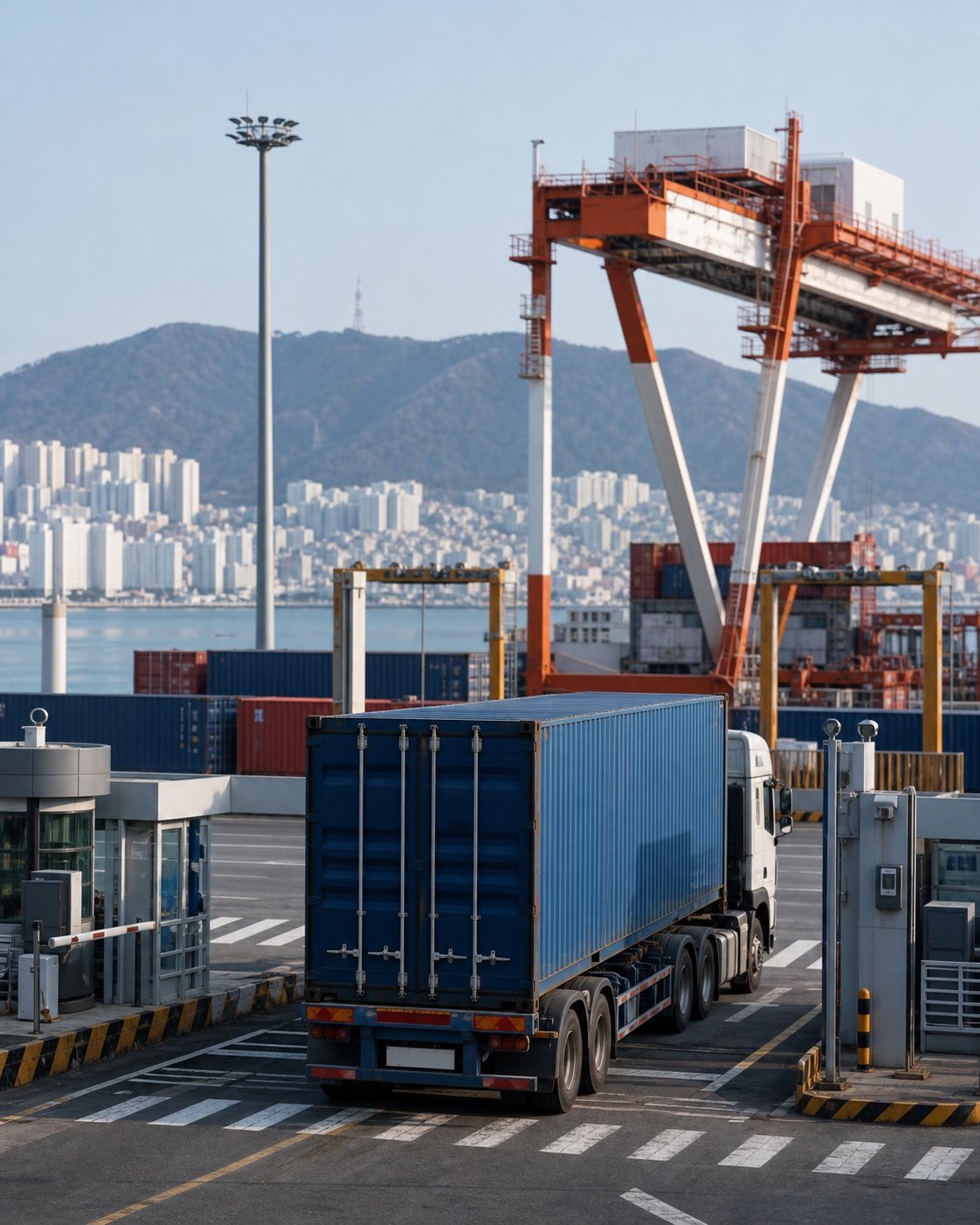
1. Port of Busan (KRPUS)

Global Hub (#6 Worldwide)
21.9M 2024 TEU Volume
3,000+ Reefer Plugs
  • Logistics Centerpiece: Serves as South Korea’s absolute number one port, handling over 75% of the nation’s total container throughput.
  • Class 9 Capable: Equipped with massive reefer capacity and strict segregation zones optimized for temperature-controlled Lithium Battery packs and ESS containers.

2. Port of Incheon (KRINC)

Seoul Gateway
3.5M 2024 TEU Volume
60 km To Seoul Core
  • Metropolitan Proximity: Located right next to the capital, making it the primary maritime link for the massive Seoul National Capital Area market.
  • Shortest Lane Link: Perfect destination for ultra-fast, 1-day direct sailings originating from northern Chinese hubs like Yantai and Weihai.

3. Port of Gwangyang (KRKUV)

Petrochemical Hub
3.0M 2024 TEU Volume
GFEZ Free Economic Zone
  • Industrial Specialization: Heavily integrated with major chemical clusters, steel mills, and automotive manufacturing bases across the Gwangyang Bay area.
  • Advanced Infrastructure: Features highly automated deep-water container berths minimizing port congestion delays.

4. Port of Pyeongtaek (KRPTK)

High-Tech Corridor
2.5M 2024 TEU Volume
JIT Just-In-Time Supply
  • Tech Supply Chain: Directly anchors the automotive and electronics heartlands, serving massive nearby factory campuses like Samsung Semiconductor and LG Display.
  • Strategic Ro-Ro Routing: Widely recognized as a prime destination for finished vehicles, complex components, and high-value manufacturing machinery inputs.

1. Port of Busan (KRPUS) — Korea's #1

  • 2024 throughput: 21.9M TEU (world’s 6th largest)
  • Reefer plugs: 3,000+ (Class 9 capable with segregation)
  • Rail: Direct daily freight to Seoul, Daegu, Daejeon, Gwangju
  • Customs: 24/7 KCS, AEO-certified operators

2. Port of Incheon (KRINC) — Seoul gateway

  • 2024 throughput: 3.5M TEU
  • Advantage: 60 km direct to Seoul via rail/highway
  • Specialty: Northern Korea / Seoul metropolitan distribution

3. Port of Gwangyang (KRKUV) — Petrochemical hub

  • 2024 throughput: 3.0M TEU
  • Specialty: Petrochemicals, steel, automotive, Gwangyang Bay FEZ

4. Port of Pyeongtaek (KRPTK) — Samsung Semiconductor

  • 2024 throughput: 2.5M TEU
  • Specialty: Samsung Semiconductor, LG Display, automotive
Top cargo airport: Incheon International Airport (ICN) — 2.94M tons cargo 2024, 15+ daily flights from China, dedicated Cargo Terminal 3 with full Class 9 handling.

Korea Customs, VAT & Import Duties (2026)

📊 Cargo & Valuation Details
$
$
$
%
Form E / RCEP might qualify for 0%
%
Standard South Korea VAT is 10%
📋 Landed Cost Breakdown
TOTAL LANDED COST (CIF + TAX)
$0.00
CIF Value (Tax Base) $0.00
Import Customs Duty $0.00
Import VAT (Recoverable) $0.00
Pure Logistics Subtotal $0.00
*Estimates are calculated using standard 2026 formulas: CIF = Cargo + Freight + Insurance. Duty = CIF × Rate. VAT = (CIF + Duty) × VAT Rate. Final clearance fees are excluded.

1. Korea Customs Service (KCS, 관세청)

KCS operates the UNI-PASS electronic customs system. All commercial imports require:
  • HS-K 10-digit code (Korean extension of WCO HS)
  • Country of origin (COO)
  • Customs value (CIF)
  • Importer of Record (IOR) with Korean Business Registration Number (BRN, 사업자등록번호)
  • Customs broker representation
BAT advantage: In-house KCS desk with licensed brokers in Seoul and Busan, 4-24 hour clearance for compliant cargo.

2. 10% Korean VAT

Applied to customs value (CIF) + import duty + clearance fees. VAT can be reclaimed as input VAT credit by VAT-registered Korean businesses.

3. MFN Customs Duty (0-25%+)

Category
MFN Rate
Example Products
Electronics, semiconductors
0%
Laptops, smartphones, chips
Machinery, lithium batteries
0-8%
Industrial equipment, EV cells
Furniture, automotive parts
0-8%
Wooden furniture, parts
Textiles, clothing, footwear
8-13%
Apparel, shoes
Food products
5-30%+
Various categories

4. China-Korea FTA Form E — 0% duty for most products

The China-Korea FTA (2015) eliminates tariffs on 90%+ of HS chapters. With valid Form E Certificate of Origin:
  • MFN 5-13% → 0% for qualifying products
  • Issued by Chinese export customs (GACC)
  • Must meet Rules of Origin (ROO) — usually 40%+ China value-add
  • Korean importer presents Form E to KCS at import declaration

5. RCEP (2022)

Uniform rules of origin across 15 Asia-Pacific economies. Best for products with multi-country value-add (e.g., Japanese components assembled in China).

6. De Minimis: USD 150

  • $150 CIF — duty and VAT exempt (personal use)
  • $200 CIF — for US-origin goods (KORUS FTA)
  • Commercial B2B imports: always require full customs declaration regardless of value

7. Korean BRN

Required for VAT-registered Korean importers. Format: XXX-XX-XXXXX (10 digits). Foreign exporters can use BAT as Importer of Record (IOR) without Korean business registration.

8. KC Certification

Mandatory for many product categories in Korea:
  • KC Battery: Mandatory for all lithium battery imports since 2024 (testing at KTL/KOSHA labs, 8-12 weeks)
  • KC Safety: Electrical/electronic products, machinery
  • KC EMC: Electromagnetic compatibility
  • KC Radio: Wireless / RF devices
  • K-REACH: Pre-market registration for chemical substances; Korean-language SDS required
  • KFDA/MFDS: Food, cosmetics, medical devices, pharmaceuticals — pre-market approval + Korean labeling

Required Documents for Korea Import

Document
Required
Notes
Commercial Invoice
HS-K 10-digit, COO, unit/total value, Incoterms
Packing List
Carton-by-carton breakdown
B/L or AWB
Original B/L for sea; AWB for air
Form E (FTA Certificate)
⚠️
For 0% FTA preferential rate
Korean BRN of IOR
For VAT-registered Korean importer
KC Certificate
⚠️
For electronics, batteries, wireless
UN38.3 Test Report
For lithium battery products
MSDS / SDS (Korean + English)
For chemical / battery products
DGD (Dangerous Goods Declaration)
For Class 9 cargo, IATA DGR 67th
Korean-language label
⚠️
For consumer products

Step-by-Step Shipping Process: China to South Korea (6 Steps)

Step 01

HS Code Classification & Tariff Verification

Determine your product’s 10-digit HS-K code via the Korea Customs Service database. This classification dictates the baseline Most-Favored-Nation (MFN) duty rate and checks if your cargo requires specific regulatory pre-approvals.

Step 02

FTA Optimization & Origin Certification

Verify Rules of Origin (ROO) criteria under the China-Korea FTA or RCEP frameworks. Your forwarder coordinates with China Customs (GACC) to issue a valid Form E Certificate of Origin, dropping standard 5-13% duties down to 0% for qualifying tariff lines.

Step 03

Korean IOR Status & Compliance Verification

Confirm that the Korean Importer of Record (IOR) possesses a valid 10-digit Business Registration Number (BRN). If importing electronics or batteries, ensure complete KC Certification and compliant 16-section Korean GHS MSDS are finalized prior to cargo departure.

Step 04

Cargo Booking & Multi-Mode Transport Execution

Secure space allocations across major regional carriers. Bulk shipments utilize Sea FCL/LCL directly to Busan (KRPUS) or Incheon (KRINC), while high-value electronics or Class 9 battery standalone lots route via Air Freight directly into Incheon Cargo Terminals (ICN).

Step 05

UNI-PASS Electronic Customs Declaration

Manifests and commercial clearing documents are submitted digitally to the Korea Customs Service via the UNI-PASS system. Standard compliance screening completes in 4 to 24 hours, while specialized dangerous goods (DG) undergo swift, dedicated port authority safety verification.

Step 06

Tax Settlement & Final Mile Door Delivery

The standard 10% Korean VAT and any adjusted customs tariffs are paid to release the cargo. Cleared shipments are picked up and distributed through local networks directly to domestic warehouses, manufacturing hubs, or Coupang / Amazon FBA Korea centers.

 
  1. Classify your goods (HS-K 10-digit code) — Use the Korea Customs HS-K database to determine your exact code. This determines MFN duty rate or FTA eligibility.
  2. Verify FTA + prepare Form E — BAT’s trade compliance team verifies ROO and pre-clears Form E with Chinese export customs (GACC).
  3. Confirm Korean IOR + KC certification — Your Korean importer (or BAT as IOR) must have valid BRN. Many categories require KC certification before customs clearance.
  4. Choose transport mode — Bulk → sea FCL; Small bulk → sea LCL; High-value/urgent → air; Door-to-door → DDP; Small parcels → express.
  5. Customs clearance at Busan / Incheon / ICN — Submit via UNI-PASS. BAT handles in 4-24 hours typically. DG cargo requires additional KCS + port/airline approval.
  6. VAT + duty + last-mile delivery — Pay 10% VAT + MFN/FTA duty. Final delivery to Korean warehouse, distribution center, or Amazon FBA KR FC.

Amazon FBA Korea: Fulfillment Centers & Shipping

Incheon / Seoul Hubs

4 Active FCs
ICN1 ICN2 ICN3 ICN4

The primary logistical anchor for northern South Korea, providing direct proximity to the massive Seoul National Capital Area market.

Gimpo Terminals

2 Active FCs
GMP1 GMP2

Strategically positioned near Gimpo, optimizing rapid transit sorting for high-density metropolitan retail streams.

Gimhae / Busan Hubs

2 Active FCs
PUS1 PUS2

Anchoring the southern high-volume maritime corridors, perfectly aligned with direct intermodal port freight arrivals.

📋 Critical Amazon FBA Korea Requirements (2026)
Mandatory

KC Certification Verification

Compulsory for electronics, appliances, and wireless products. Standalone lithium battery imports require full KTL/KOSHA lab testing approvals before custom admission.
Mandatory

Korean VAT & BRN Registration

All sellers targeting Amazon FBA KR must maintain active domestic VAT registration and present a valid 10-digit Korean Business Registration Number (BRN).
Compliance

Local Language Product Labeling

Physical packaging, technical warnings, and user safety instructions must clear strict KCS standards with clear, compliant Korean-language print placement.
Omnichannel

Coupang Rocket Integration

Cross-docking ready options available. Inventory packaging specifications can be seamlessly configured to support dual Amazon FBA KR and Coupang Rocket Delivery fulfillment streams.
South Korea has 8+ active Amazon FBA FCs plus the dominant Korean e-commerce platform Coupang (Rocket Delivery). Major Amazon FBA KR FCs:
  • ICN1, ICN2, ICN3, ICN4 (Incheon / Seoul area)
  • GMP1, GMP2 (Gimpo, Seoul)
  • PUS1, PUS2 (Gimhae / Busan)
2026 FBA KR requirements:
  • KC certification mandatory for many categories
  • Korean-language product listings required
  • VAT registration in Korea
  • Coupang-compatible packaging for many SKUs
  • DG (lithium battery) requires KC Battery + UN38.3
  • Food/cosmetics/medical requires KFDA/MFDS approval
Coupang Rocket Delivery is Korea’s leading fulfillment network. BAT can integrate inventory with Coupang + Amazon FBA KR via multi-channel fulfillment.

Battery Shipping from China to South Korea: Complete 2026 Compliance Guide

2026 Regulation Alert: South Korea enforces some of the world’s absolute strictest protocols on lithium batteries. Misclassification or missing certifications can trigger customs fines up to ₩100M (~$75,000) and immediate cargo seizure.
UN 3480 Standalone

Lithium-Ion Batteries

Power banks, EV battery packs, industrial Energy Storage Systems (BESS), and cell lots.

Air Rule: Cargo Aircraft Only (CAO) & strictly ≤30% SoC limits.
UN 3481 In/With Equipment

Lithium-Ion with Equipment

Smartphones, laptops, power tools, and e-bikes packed with or integrated into devices.

Air Rule: Allowed on passenger planes if under specific Wh thresholds.
UN 3551 New for 2026

Sodium-Ion Batteries

Emerging stationary storage solutions, green energy links, and low-cost EV prototype cells.

Framework: Governed under the newly updated IATA DGR 67th Edition.
🛡️ KC Battery Certification (Mandatory Since 2024)

All lithium-ion cells/packs imported into South Korea for commercial or retail distribution must clear testing through official Korean labs (KTL, KOSHA).

01
Documentation & Sample Submission

Forwarding complete UN38.3 test reports (T1-T8) and English factory blueprints directly to KTL/KOSHA labs.

02
Laboratory Safety Testing

Submitting sample cells to rigorous environmental and electrical impact tests (IEC 62133 / KC 62133 safety cycles) over 4–8 weeks.

03
KATS Registration & KC Marking

Final certificate issuance by the Korean Agency for Technology and Standards (KATS). The physical **KC Mark** must be clearly printed on the retail product label before clearing customs entry.

📋 International Multi-Mode Logistics Standards
✈️ Air Freight (IATA DGR 67th Edition)
  • Strict State of Charge (SoC): Standalone cells (UN3480) must be pre-charged and verified at **≤30% SoC** before airport delivery.
  • Language Protocol: Complete 16-section GHS Safety Data Sheets (SDS/MSDS) must be provided in **both bilingual English and Korean** formats.
  • Pre-Clearance Window: Commercial airline operator approvals must be filed **48 to 72 hours** prior to plane departure.
🚢 Sea Freight (IMDG Code Amendment 42-24)
  • Packaging Instructions: Strict compliance with P903, P908, or P910 heavy-duty outer drum configurations.
  • Thermal Segregation: Utilizing specialized **Reefer Containers** set at stable ranges (15°C–25°C) is highly recommended for massive bulk cells to eliminate thermal runaway risks.
  • Hazard Marking: Proper Class 9 Dangerous Goods placards must be affixed to all 4 corners of the ocean container.
Korea is home to three of the world’s top 5 battery manufacturers — LG Energy Solution, Samsung SDI, and SK On — making Korea the #2 EV battery producer globally and the gold standard for lithium battery imports in Asia. This section covers the complete compliance chain for shipping batteries from China to Korea in 2026.

1. Why Korea is a Key Battery Market

China supplies billions of dollars of battery-related products to Korea annually:
  • Battery cells (cylindrical 18650/21700, prismatic, pouch)
  • Battery packs (assembled, for testing)
  • Battery components (cathode, anode, electrolyte, separator, BMS)
  • Battery production equipment (coating, winding, formation)
  • Energy storage systems (BESS, residential storage)
  • EV battery modules (for testing, prototype, sample)
  • Sodium-ion batteries (emerging, UN 3551)

2. UN Number Classification

UN Number
Description
Common Use
UN3480
Lithium-ion (standalone)
Power banks, EV battery packs, BESS
UN3481
Lithium-ion (in/packed with equipment)
Power tools, e-bike batteries
UN3090
Lithium metal (standalone)
Coin cells, primary batteries
UN3091
Lithium metal (in equipment)
Watches, sensors, medical devices
UN3551
Sodium-ion (new 2026)
Stationary storage, low-cost EVs
Misclassification fines: Up to ₩100M (~$75,000) per shipment + cargo seizure.

3. KC Battery Certification (Mandatory 2024+)

Process: Documentation review → sample testing at KTL/KOSHA (4-8 weeks) → factory audit → KATS application → certificate (8-12 weeks total) → KC mark on product.
Test cycle: UN38.3 (T1-T8) + IEC 62133 / KC 62133
BAT KC service: Full application management, 10-12 weeks for first certification.

4. IATA DGR 67th Edition (2026) — Air Shipping

  • SoC ≤ 30% for standalone (UN3480, UN3090) on cargo aircraft only (CAO)
  • PI 967, PI 970 — limited quantity relief for ≤100 Wh per cell
  • Battery Summary Document required (signed by shipper, attached to AWB)
  • Class 9 hazard label + lithium battery handling label (mandatory)
  • MSDS/SDS in Korean + English (16-section GHS)
  • Operator approval — apply 48-72 hours before departure
New in DGR 67th (2026): Stricter SoC for PI 966-970; UN 3551 sodium-ion; enhanced damaged battery documentation.

5. IMDG Code 42-24 — Sea Shipping

  • P903, P908, P909, P910, P911 packaging instructions
  • Class 9 hazard label + lithium battery mark
  • Segregation from other Class 9 DG
  • Reefer container strongly recommended (15-25°C SoC control)
  • Container packing certificate signed by responsible person

6. RID 2025 + ADR 2025 — Rail/Road

For shipments via China-Europe rail → Europe → Korea by sea/air:
  • No SoC ≤30% restriction (rail accepts up to 100%)
  • Higher per-wagon weight limits
  • Lower CO₂ footprint

7. Recommended Transport Mode

Battery Type
Recommended Mode
Samples / prototypes (< 10 kg)
Air freight
Production cells (50-500 kg)
Sea FCL reefer
Battery modules (500-2,000 kg)
Sea FCL reefer
Battery packs (2,000+ kg)
Sea FCL reefer
Damaged / defective batteries
Specialized DG carrier
EV battery production equipment
Sea FCL or rail
ESS / BESS
Sea FCL reefer
Sodium-ion (UN 3551)
Sea FCL reefer
Dedicated China-Korea battery air freight service:
  • Daily departure from PVG / SZX / HKG to ICN
  • Pre-cleared KC + UN38.3 + MSDS documentation
  • Dedicated space allocation on Korean Air Cargo + Asiana + Cathay
  • SoC managed end-to-end
  • 4-7 day door-to-door
  • $7.50 – $12.00/kg (Class 9 lithium battery)

9. 10 Common Battery Shipping Mistakes

  1. Wrong UN number (UN3480 vs UN3481) → fines up to ₩100M
  2. Missing KC certificate → cargo seizure by KCS
  3. Incomplete UN38.3 report (old or missing tests) → rejection
  4. MSDS in wrong format (not Korean K-REACH or 16-section GHS)
  5. SoC > 30% on passenger aircraft → carrier refusal
  6. Packaging failure (damaged, leaking, unapproved)
  7. Missing DGD for Class 9 cargo
  8. Missing Korean-language labels for retail
  9. Missing Class 9 hazard label on package + container
  10. No operator approval (48-72 hours pre-approval required)
BAT pre-shipment audit reviews every shipment against this 10-point checklist.

Why Choose BAT Logistics for China-South Korea Shipping (6 Reasons)

  1. 20+ years China-Korea DG expertise — China’s leading DG forwarder with 100,000+ successful Korean clearings, zero major incidents
  2. IATA DGR Category 6 certified — Full Class 9 lithium battery authorization (air/sea/rail)
  3. Direct airline + shipping line partnerships — Korean Air, Asiana, Cathay, Lufthansa, Air China + COSCO, HMM, Maersk, MSC, ONE — guaranteed DG space allocation
  4. AEO-certified + FIATA member — Priority customs clearance, reduced inspection rates
  5. KC + FTA + K-REACH specialists — In-house Korean compliance team manages Form E, KC Battery, K-REACH
  6. 24/7 tracking + dedicated account management — Single point of contact for every China-Korea shipment

Case Studies (5 Real-World Examples)

Case 1: Lithium Energy Storage from Shenzhen to Busan (15 → 75 FCL/year, 5× growth)

Client: Leading Chinese ESS manufacturer with rapidly growing Korean demand
Challenge: Scale Class 9 lithium battery shipments from 15 → 75 FCL/year while maintaining IMDG 42-24 + KC Battery + SoC compliance
Solution:
  • Migrated to sea FCL 40HQ reefer Yantian → Busan (50% cost reduction vs. air)
  • Implemented dedicated SoC management at Shenzhen facility (3% → <0.1% rejected shipments)
  • Pre-cleared KC Battery certification for 4 product lines (10-12 weeks)
  • Established direct HMM allocation with BAT’s top-volume Korea status
Results: 5× volume growth, 0 customs violations, 0 safety incidents, ₩320M (~$240K) annual savings.

Case 2: Consumer Electronics DDP (DHL Express → Sea LCL DDP switching)

Client: Shenzhen-based brand selling on Coupang, Amazon KR, 11Street
Challenge: DHL Express $8.50/kg unsustainable for $30-$50 unit prices on price-competitive Korean e-commerce
Solution:
  • Migrated to sea LCL DDP Yantian → Busan ($45/CBM)
  • Implemented Coupang Rocket Delivery integration
  • BAT registered Korean IOR + BRN
  • Leveraged Form E to reduce 8% MFN duty → 0% (saved ₩28M annually)
Results: 76% freight cost reduction ($8.50/kg → $2.05/kg), Coupang ranking top 3% in category.

Case 3: Semiconductor Equipment Air → Sea (₩85M monthly savings)

Client: Tier-1 semiconductor equipment supplier to Samsung Pyeongtaek and SK Hynix Icheon
Challenge: Air freight to ICN was 2 days but ₩6,500/kg unsustainable; sea freight 4-5 days borderline for JIT
Solution:
  • Switched to sea FCL Yantai → Incheon (2-3 days, ₩4,200/kg)
  • Established dedicated Yantai-Incheon schedule aligned with Samsung/SK production
  • BAT’s AEO fast-track Korean customs (24h → 4h clearance)
  • Bonded warehouse at Pyeongtaek for inventory buffering
Results: ₩85M (~$63K)/month savings, no production disruptions, Samsung supplier rating improved to “Strategic Partner” tier.

Case 4: First-Time Importer DDP (B2B machinery, 0 experience)

Client: Busan-based industrial machinery firm importing CNC machines from China for the first time
Challenge: No Korean BRN, no IOR, no KCS or FTA experience
Solution:
  • BAT registered Korean IOR + BRN in 18 business days
  • Handled complete DDP + KC Safety verification for 3 CNC models
  • Prepared Form E to eliminate 8% MFN duty (saved ₩4.2M on first shipment)
  • Set up K-REACH compliance for cutting fluids and lubricants
Results: First shipment cleared in 36 hours, ongoing 22 FCL/year, total FTA savings ₩35M annually.

Case 5: Hazardous Chemical (Class 3 Flammable) Air to Incheon

Client: Industrial coatings manufacturer shipping specialty solvents
Challenge: Class 3 flammable, IATA DGR 67th + K-REACH compliance
Solution:
  • IATA DGR 67th air freight Shenzhen → ICN
  • K-REACH-compliant trucking ICN → destination
  • 24/7 emergency response + Korean hazardous waste manifest
  • BAT’s Korean Air Cargo DG space allocation (avoided 5-day waitlist)
Results: Zero incidents, 0.3% freight premium for full compliance, 100% on-time over 30 months.

Frequently Asked Questions

Sea freight: 2-7 days (port-to-port). Air: 1-3 days (airport-to-airport), 3-5 days (door-to-door). Express: 1-3 days. DDP: 5-12 days.
Sea LCL ($10-$55/CBM) for small volumes. Sea FCL for 15+ CBM. North China ports (Yantai, Weihai, Qingdao) → Incheon offer the most competitive rates.
Yes, if VAT-registered. Foreign exporters can use a Korean customs broker as Importer of Record (IOR). BAT can act as your IOR.
10% standard rate on customs value + duty. Korean VAT can be reclaimed as input VAT credit by VAT-registered businesses.
MFN rates range from 0% to 25%+. With valid Form E (China-Korea FTA), the preferential rate is 0% for most products.
Yes. BAT is IATA DGR Category 6 certified. Sea: IMDG 42-24. Air: IATA DGR 67th (SoC ≤30% for CAO). KC Battery certification mandatory since 2024.
  • Form E: Bilateral, best for direct China-Korea, often 0% duty
  • Form RCEP: Multi-party, best for products with multi-country value-add
  • Yantai/Weihai → Incheon — 1 day, best for northern China
  • Qingdao/Dalian → Incheon — 1-2 days
  • Shanghai/Ningbo → Busan — 2-3 days, best for central/southern China
Yes. BAT arranges direct-to-FC delivery to Amazon FBA KR (ICN, GMP, PUS) and Coupang Rocket Delivery. Amazon KR requires KC certification + Korean listings + Korean VAT. Coupang requires Rocket Delivery integration.
  • < 100 kg urgent restocking → air freight or express
  • 100-1,000 kg regular restocking → sea LCL DDP
  • 1,000+ kg bulk FBA restocking → sea FCL

References & Sources

  1. Korea Customs Service (KCS, 관세청)https://www.customs.go.kr/english/
  2. UNI-PASS (KCS Electronic Customs System)https://unipass.customs.go.kr/
  3. IATA Dangerous Goods Regulations (67th Edition, 2026)https://www.iata.org/dgr
  4. IMO IMDG Code Amendment 42-24https://www.imo.org
  5. Port of Incheonhttps://www.icpa.or.kr/eng/
  6. Incheon International Airport (ICN)https://www.airport.kr/ap/en/index.do
  7. KOSHA / KATS (KC Certification)https://www.kats.go.kr/en/
  8. MFDS / KFDA (Food, Drugs, Cosmetics)https://www.mfds.go.kr/eng/
  9. Coupang Partner Portalhttps://partners.coupang.com/
  10. Amazon FBA Korea (Seller Central KR)https://sellercentral.amazon.co.kr/
  11. China-Korea FTA Text (MOFCOM)https://fta.mofcom.gov.cn/korea/
📧 Email: info@batteryshipment.com
📞 Phone: +86-18926219942
🌐 Website: https://batteryshipment.com
BAT Logistics — China’s leading dangerous goods freight forwarder. 20+ years of DG transport expertise. IATA DGR Category 6. Direct airline + shipping line partnerships. Guaranteed space allocation. Safe, compliant, on-time delivery to South Korea since 2005.