
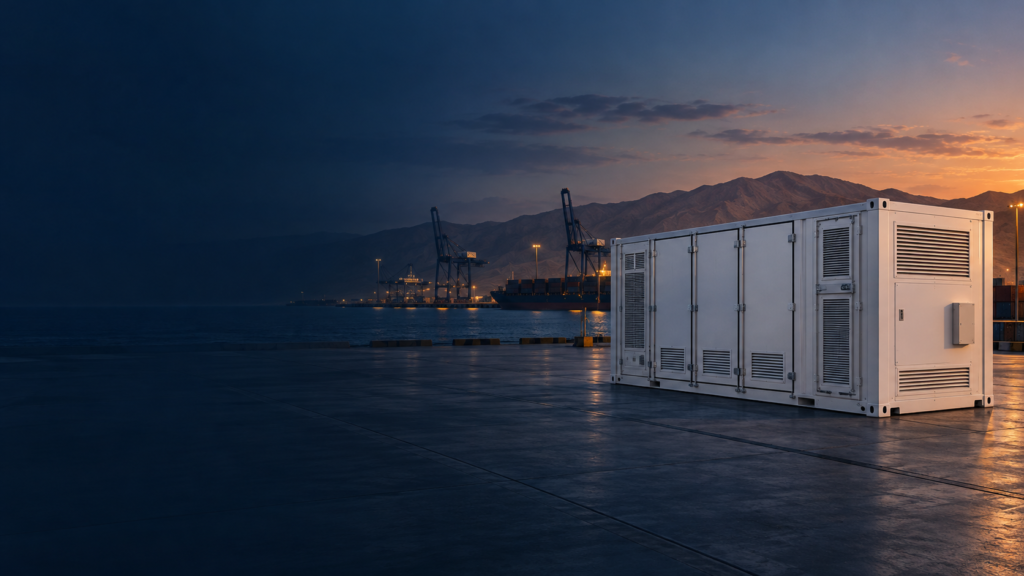
Shipping BESS Containers from China to Chile
Shipping a battery energy storage system from China to Chile starts with two decisions: how the equipment can be transported, and where it must be delivered. The ocean gateway, discharge arrangement and inland vehicle need to work as one plan. For a project in northern Chile, the receiving site's location and access conditions can be as important as the sea-freight quotation.
BAT Logistics can review your cargo information and discuss a proposed forwarding scope. Send the China pickup address, BESS configuration, shipping dimensions and gross weight, together with the Chilean destination and ready date. Collection, ocean transport, customs-document coordination and site delivery should be identified individually in the written quotation.
Define the BESS Configuration and Final Delivery Site
Describe the equipment as it will leave the factory. An integrated BESS enclosure, separately packed storage cabinets and spare battery modules are different cargo configurations. A capacity figure in MWh does not establish the shipping weight, transport classification or lifting method.
For an integrated unit, prepare a general arrangement drawing showing its external dimensions, gross shipping weight, centre of gravity and designated lifting points. Include the manufacturer's lifting and securing instructions. Identify anything shipped separately, such as power-conversion equipment, cooling components or accessories, so it can be included in the transport and document review.
A container-shaped enclosure is not automatically suitable to move as a freight container. Establish whether the unit itself is intended to function as the transport unit or whether it needs to be carried on other equipment. The carrier and handling providers should review the proposed arrangement before the factory plans dispatch.
Give the receiving location the same level of detail. A company address in Santiago may not be the delivery site. Provide the project address or coordinates, region, receiving contact and intended handover point. Explain whether the scope ends at the port, a storage yard, the site gate or an agreed unloading area.
For a site still under construction, identify who will confirm access and readiness. If delivery is phased, supply the required sequence and the number of units the site can receive at each appointment. This helps avoid sending cargo faster than the receiving team can unload it.
Compare Chilean Gateways Against the Inland Delivery Plan
Use San Antonio and Valparaíso as candidate gateways to investigate, not automatic answers for every Chilean project. For a northern destination, compare a central-port arrival with a feasible northern alternative. A proposed discharge through Antofagasta or another northern port still needs an accepted shipping service, a suitable terminal and a workable road movement.
The useful comparison is the complete journey from discharge to handover. A lower ocean rate may be offset by a longer road movement, extra handling or storage while the receiving site becomes ready. Equally, proximity to a project does not prove that a port can handle the particular unit.
Ask each proposed route provider to identify:
- The ocean service and exact discharge terminal under consideration.
- The acceptance conditions for the declared cargo, weight and dimensions.
- The discharge, lifting and transfer method, including any change of transport equipment.
- The proposed road route and the party responsible for assessing special-transport permissions.
- Storage options and charges if customs release or site reception is delayed.
For cargo enquiries at San Antonio, contact the relevant terminal concessionaire identified by the port authority (in Spanish) and obtain confirmation for the proposed cargo and handling plan.
Choose the China departure port around the factory location and accepted service. Include any extra domestic transfer, lift or storage period in the route comparison.
Confirm Carrier Acceptance and Handling Before Dispatch
Provide the proposed carrier with a clear description of the battery system, its configuration and condition, and the supporting technical information. Have the responsible shipper and qualified dangerous-goods personnel confirm the applicable transport classification and requirements. Do not select a UN number from the equipment's commercial name alone.
Keep the manufacturer's information consistent with the booking submission. If the model, installed batteries, shipping weight or packing arrangement changes after review, refer the revised details back to the relevant providers before dispatch. Acceptance based on an earlier configuration should not be assumed to cover the revised cargo.
The maritime booking is only one part of the handling plan. Confirm how the unit will leave the factory, enter the origin terminal, be discharged in Chile and transfer to the inland vehicle. Clarify whether lifting equipment or a specialist handling arrangement must be booked separately.
For oversized or heavy units, ask the providers to assess the appropriate carriage arrangement using the actual drawings and weights. Separately packed cabinets or accessories may require a different solution from the integrated unit they support.
Treat urgent spare parts as a separate shipment assessment. An air-freight proposal for a component does not establish that a complete BESS is eligible for air transport. Battery content, configuration, packing and operator acceptance still need their own review.
Assign Chilean Import and Technical Responsibilities
The project needs clear owners for import clearance and for the equipment's technical use in Chile. These responsibilities may involve different organisations and should not be compressed into a single promise of “BESS certification.”
Importer and Customs Classification
Identify the Chilean importing entity and its customs representative early. Give them the commercial description, equipment specifications, component breakdown and intended supply arrangement so they can assess the import procedure and tariff classification.
Transport classification and customs classification answer different questions. A battery UN number does not replace a customs tariff code. Ask the customs representative how the complete system and any separately imported components should be declared, and what additional information is needed from the supplier.
Agree who supplies the import instructions, approves the declaration and arranges payments. These arrangements should be settled before the shipment reaches the point where missing information creates storage or delivery problems.
Origin Evidence and Preferential Treatment
The China–Chile trade agreement provides a framework for preferential treatment, but shipment from a Chinese port is not itself proof that the goods qualify. SUBREI publishes the agreement's tariff and origin provisions and certificate information on its China agreement page (in Spanish).
Before pricing the shipment on a preferential-duty basis, ask the customs representative to check the actual goods, tariff classification, origin qualification and evidence required for the transaction. Coordinate the relevant certificate information with the supplier. Confirm the tariff treatment for each separately declared item and that the origin evidence covers the goods and shipment for which preference is claimed. If delivery is split across shipments, ask the customs representative how the origin documents should be issued and presented.
Have the importer and its tax adviser confirm the applicable tax calculation and any recovery treatment. A freight quotation should identify who pays import charges and which amounts remain estimates, rather than treating tax recovery as a guaranteed reduction in landed cost.
Product Requirements and Grid Connection
Assign the destination technical review to the appropriate Chilean project team. The equipment's intended use, installation arrangement and connection type matter when determining the applicable requirements.
SEC publishes Technical Instruction RGR No. 06/2024 and its updates (in Spanish) for battery energy storage installations within its defined regulatory scope. The updated instruction expressly limits its application to systems operating under Decreto Supremo No. 57/2019 and Article 149 bis of Chile's General Electricity Services Law. Have the responsible Chilean technical team identify the regime applicable to the actual project, including any separate product, installation and connection requirements. Do not use this instruction as a universal import-approval checklist for every BESS.
Keep any applicable product, installation and grid-connection work separate from the transport-document review. Customs release does not, by itself, confirm that equipment is ready to be installed or energised. Identify any project approvals that affect the receiving schedule and who will obtain them. BAT's forwarding quotation should not be read as an undertaking to issue technical approvals or perform commissioning.
Prepare a Consistent Shipping Document Set
Build a document set that describes the same shipment from commercial sale through to delivery. The supplier, shipper, importer and customs representative should agree on the model references, quantities, package identifiers and descriptions before final documents are issued.
For review, assemble the relevant items:
- Commercial invoice and packing list, including separately packed equipment and accessories.
- Proposed transport-document instructions, with the correct receiving-party details.
- Technical specifications, shipping drawings, gross weights and lifting information.
- Battery test summaries and other technical records applicable to the batteries being shipped.
- Dangerous-goods documentation required for the confirmed classification and transport arrangement.
- Origin evidence where preferential treatment will be claimed.
- Additional import or technical documents identified by the Chilean customs representative and project team.
Not every item has the same owner or purpose. A transport record is not a substitute for the technical documentation needed at the installation, and a product approval does not replace the carrier's booking requirements. Keep the two sets connected through consistent model and equipment identifiers.
For split deliveries, map each package to its shipment and commercial records, and confirm the documentation with the customs representative. Account for accessories and critical installation components travelling outside the main enclosure.
Plan Heavy Transport and Unloading at the Chilean Site
Assess the road movement using the loaded vehicle, not only the BESS dimensions. Trailer configuration, overall height and width, gross vehicle weight and axle loads can affect the route and permission assessment.
Chile's Dirección de Vialidad provides guidance on special-transport permissions (in Spanish). Its application guidance calls for origin and destination details and the dimensions and weights of both the cargo and transport equipment. The inland provider should establish which permissions and supporting assessments are needed for the proposed movement. Where a permit is required, name the party responsible for the application and confirm any route, operating-window or escort conditions specified for the authorized movement before dispatching the loaded vehicle.
For a northern Chilean project, request the actual route and site information rather than treating the region name as sufficient. The final approach to an energy or mining site may need its own access review. Ask the receiving team about road surfaces, gradients, turning space, gate restrictions and any site-specific vehicle or personnel requirements. Where relevant, give the manufacturer the destination's environmental conditions for its technical assessment.
Unloading needs an agreed method and a named responsible party. Before fixing the delivery appointment, confirm the lifting instructions, crane and rigging arrangements, ground suitability and the space available for the vehicle and equipment. Identify who can approve changes if weather, access or the unloading area prevents the planned operation.
Define the handover precisely. Delivery to the gate, unloading to a laydown area and positioning the unit on its foundation are different tasks. State which are included, who signs for receipt and how visible damage or discrepancies will be recorded. Installation and commissioning should be assigned to the responsible project contractors under their own defined scope. BAT's forwarding quotation should specify the agreed transport handover and any included unloading or positioning work.
Compare Quotation Scope, Costs and Schedule Assumptions
Compare quotations against the same cargo description and delivery point. Ask for the included services, assumptions and exclusions to be shown clearly, especially when one proposal ends at the port and another includes inland transport.
The cost review should cover origin collection and handling, ocean carriage, destination terminal charges, customs-representation scope, import charges, road transport and unloading. Identify any additional allowance for permits, lifting equipment, waiting time or temporary storage. Ask when storage or equipment-related charges start and which party is responsible if the site cannot receive the cargo.
Read the sales contract's Incoterms rule alongside the forwarding quotation. The contract between seller and buyer and the services purchased from a forwarder are not interchangeable. A “door-to-door” request still needs a named delivery point, import-payment arrangements and a clear unloading responsibility.
Build the schedule from the individual stages: factory readiness, document review, booking acceptance, origin handover, departure, sea passage, destination release and inland delivery. Ask whether the proposed service involves transshipment and what happens if the booked sailing or delivery appointment changes.
A vessel ETA should not be treated as a confirmed site-unloading date. For phased projects, match delivery appointments to the site's receiving capacity. Confirm rate validity and schedule assumptions again when the cargo is ready to book.
Chile BESS Shipping Questions
Should the Shipment Enter Through San Antonio or a Northern Gateway?
Compare the complete port-to-site movement. San Antonio or Valparaíso may be candidates, while a northern alternative may deserve assessment for a northern project. The decision depends on accepted service, terminal handling, inland equipment and the exact receiving site, not distance alone.
Does a Published Port Service Confirm Acceptance of My BESS?
No. Ask for a review of the actual equipment configuration, declared classification, dimensions and weight. The proposed carrier and relevant handling providers need to confirm their respective arrangements before dispatch.
Does Shipment from China Automatically Qualify for Preferential Duty?
No. Ask the customs representative to establish the applicable tariff treatment and origin evidence for the goods and transaction. The country of departure alone does not settle eligibility, and separately declared components should not automatically be assigned the same treatment.
Does Customs Release Mean the BESS Can Be Energised?
No. Import clearance and permission to install or operate the equipment are separate matters. The responsible Chilean technical team should confirm the applicable installation and connection requirements and the project's readiness to proceed.
Who Arranges Road Permissions and Crane Unloading?
Assign both responsibilities before booking. The inland provider should assess the proposed vehicle and route. Where a permit is needed, identify the applicant and confirm its operating conditions before dispatch. The agreed unloading party should confirm the lifting plan and site readiness. Check that the quotation includes the requested work; neither item should be inferred from “site delivery.”
What Is Needed for a Chile BESS Route Review?
Provide the pickup address, BESS model and configuration, package count, shipping dimensions, gross weights, ready date and exact Chilean destination. Add the receiving entity, available technical documents, drawings and intended unloading arrangement. Identify any information that is still provisional.
Request a Chile BESS Route Review
Send BAT Logistics the shipment details and the service scope you need, from origin collection to the agreed handover in Chile. If the importer, discharge gateway or unloading plan is not yet decided, explain what remains open so the review can focus on those decisions.
Start with your contact details, cargo description, China pickup address and Chilean delivery location. Available drawings and battery documentation can be reviewed during follow-up.