
Air-package capability evidence guide
Lithium Battery 3 m Stack Test: When It Applies to Air Shipments
A lithium-battery air package requires 3 m stack capability only when the applicable packing instruction and section include that condition. Under the current 2026 IATA guidance, the requirement appears in PI 965 and PI 968 Section IB and in specified packing-instruction branches for lithium batteries packed with or contained in equipment, added from 2025 for non-UN Specification packaging.
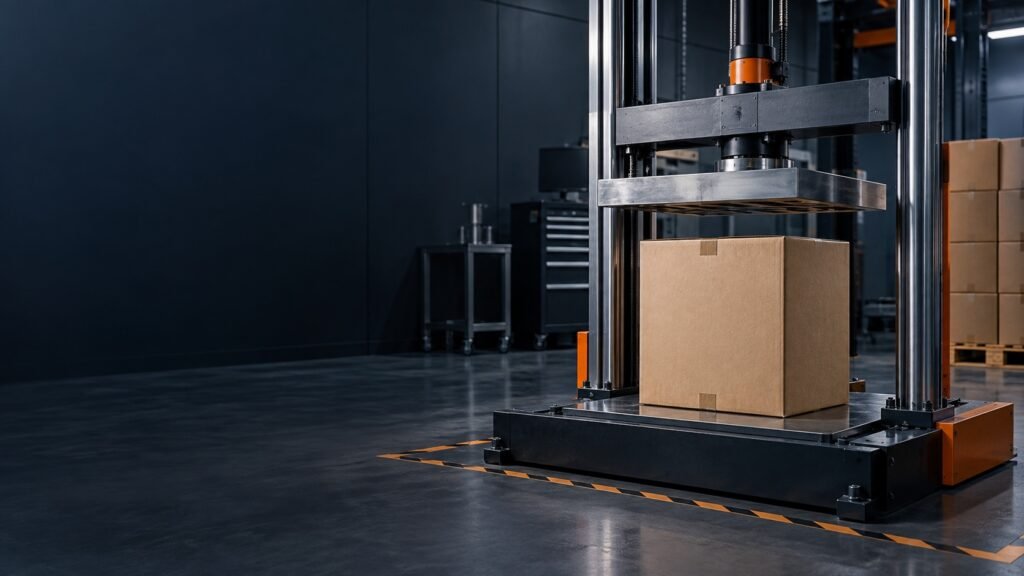
For an applicable branch, each package of cells or batteries—or the completed package identified by the packing instruction—must be capable of withstanding a force on its top surface equivalent to the total weight of identical packages stacked to a height of 3 m, including the package being evaluated, for 24 hours. The cells or batteries must not be damaged, and the package must not lose effectiveness.
That wording describes a package capability. IATA explains that the capability may be demonstrated by testing, assessment or experience. It does not prescribe a universal independent-laboratory certificate. The shipper remains responsible for the package and should be able to show the basis of the evaluation if the appropriate authority asks for it. See IATA's dedicated Packaging Requirement—Lithium Batteries: Navigating the 3m Stack Test.
Direct answer: First confirm the battery chemistry, configuration, packing instruction, section and exact completed package. Then determine whether the 3 m condition applies and whether the retained evidence actually represents that package. A test report, carton specification, designer statement or record of prior stacking is useful only to the extent that its design, contents, orientation, gross mass and limiting conditions match the package being offered.
Rule-date note: This article was technically reviewed on 14 September 2026. The 2025–2026 ICAO Technical Instructions apply to operations from 1 January 2025 through 31 December 2026. The IATA 2026 Battery Guidance Document is guidance based on those ICAO Instructions and the 67th Edition of the IATA Dangerous Goods Regulations; IATA says it is not itself a source of regulatory compliance. Always check the complete edition in force, ICAO addenda and corrigenda, State variations, operator variations and the actual route before preparing a shipment.
Four Facts to Confirm Before Reviewing Stack Capability
Do not start by asking whether a carton has a “3 m certificate.” Start with four shipment-specific facts:
- Chemistry and UN entry: lithium ion or lithium metal, with the responsible party's supplied UN classification.
- Physical configuration: batteries shipped alone, packed with the equipment they power, or contained in that equipment.
- Packing instruction and section: the branch identified under the complete rules by appropriately trained personnel.
- Completed-package identity: outer packaging, dimensions, material, closure, inner arrangement, orientation, contents and gross mass as prepared for transport.
A product name, stock-keeping unit, carton code or previous airline booking cannot determine the applicable rule by itself. For help separating the main configurations, see UN3480 vs UN3481 for lithium ion and UN3090 vs UN3091 for lithium metal.
What the Lithium Battery 3 m Stack Requirement Means
The requirement is intended to establish that an applicable package can sustain a defined top load without allowing the batteries to be damaged or the packaging to become less effective. Five elements belong together:
- the package or completed package specified by the applicable branch;
- a force applied to the top surface;
- a force equivalent to the total weight of identical packages stacked to 3 m, including the package under evaluation;
- a duration of 24 hours; and
- no battery damage and no reduction in package effectiveness.
The wording does not necessarily require a warehouse to build a physical tower exactly 3 m high. IATA gives both physical stacking and an equivalent applied top load as possible testing examples. It also recognizes assessment and relevant experience as possible ways to establish capability. What matters is an objective, traceable basis tied to the actual package and the conditions it represents.
Do not reduce the requirement to a carton compression number without technical comparison. A supplier's box specification may be part of the evidence, but the completed package also depends on closures, inserts, cushioning, equipment, battery position, orientation, gross mass and how the load is transferred through the structure.
Which Lithium Battery Air Packing Branches Require It?
The following table is an orientation map for the current 2026 context. It is not the complete text of any packing instruction and does not authorize a shipper to select a section without competent review.
| Chemistry and configuration | Air branch to confirm | Why it appears here | Separate decisions still required |
|---|---|---|---|
| Standalone lithium-ion cells or batteries | PI 965 Section IB | Current IATA guidance identifies a 3 m stack-capability condition | Classification, UN 38.3 status, state of charge, quantity, aircraft and documentation |
| Standalone lithium-metal cells or batteries | PI 968 Section IB | Companion Section IB stack-capability condition | Classification, lithium content, quantity, aircraft and documentation |
| Lithium-ion batteries packed with equipment | PI 966 Section II | Included in the equipment-related addition effective from January 2025 for specified non-UN Specification packaging | Equipment relationship, battery count, drop capability, quantity and marks |
| Lithium-ion batteries contained in equipment | PI 967 Sections I and II | Included in the 2025 equipment-related addition for specified non-UN Specification packaging | Equipment protection, quantity, activation controls and marking exceptions |
| Lithium-metal batteries packed with equipment | PI 969 Section II | Lithium-metal companion in the 2025 addition | Equipment relationship, battery count, drop capability, lithium content and marks |
| Lithium-metal batteries contained in equipment | PI 970 Sections I and II | Lithium-metal contained-in-equipment companion in the 2025 addition | Equipment protection, quantity, activation controls and marking exceptions |
Sources: IATA's 2025 interpretation of the lithium-battery 3 m stack requirement and its 2026 Battery Guidance Document.
The table deliberately does not reproduce every threshold, exception or packaging condition. A branch can change because of battery chemistry, Watt-hour rating, lithium content, configuration, quantity, test status or another provision. The complete effective instructions and applicable variations control the shipment.
Section IB and the 2025 Equipment-Package Addition Are Different Pathways
Two histories are often collapsed into one statement.
First, the 2026 IATA battery FAQ identifies the 3 m stack-capability condition for PI 965 and PI 968 Section IB—standalone lithium-ion and standalone lithium-metal batteries within those branches.
Second, IATA issued a dedicated interpretation for an additional condition effective in January 2025 for specified non-UN Specification packaging used for lithium batteries packed with or contained in equipment: PI 966 Section II, PI 967 Sections I and II, PI 969 Section II, and PI 970 Sections I and II.
Therefore, “new in 2025” should not be used as though the entire lithium-battery stack requirement began then. Nor should the equipment-package addition be applied to every lithium-battery package. Identify the applicable branch first, then read the requirement that belongs to that branch.
This distinction also matters for version control. The ICAO 2025–2026 edition expires at the end of 2026. Any publication or shipment prepared under a later edition must be rechecked against the new text rather than relying on this dated map.
Which Package Must Be Capable?
In dangerous-goods language, IATA's 2026 packaging FAQ defines a package as the complete product of the packing operation that satisfies the applicable instruction and is ready to be presented for transport. For this review, identify the exact physical unit to which the applicable instruction attaches the capability condition.
That description should include:
- the outer packaging manufacturer, style, material and dimensions;
- the closure method, including tape, staples, straps or other specified components;
- inner packaging, trays, dividers, cushioning and void fill;
- battery and equipment arrangement;
- package orientation during the evaluation;
- representative or limiting contents; and
- gross mass of the completed package.
Gross package mass is not the same as net battery quantity. Gross mass includes the batteries, equipment, inner materials and outer packaging. Net battery quantity is a separate regulatory input discussed in the guide to lithium battery air shipping quantity limits.
Evidence for an empty carton does not automatically represent a completed package. Evidence for a light product may not represent a denser product in the same carton. A change to the insert or closure can also change how the load is transferred. For broader guidance on terminal protection, cushioning, movement prevention and package photographs, use the separate lithium battery packaging guide.
Testing, Assessment and Experience Are Three Possible Evidence Routes
IATA's dedicated interpretation does not prescribe one universal route. It names testing, assessment and experience. Each route still needs a documented connection to the package being offered.
1. Testing
A testing route may use representative packages prepared for transport and stacked for 24 hours, or apply an equivalent force to the top of a representative package. The record should identify the complete design, contents, orientation, gross mass, applied load, duration and observations.
For a family of products, define the limiting basis. IATA's example says a retailer using several representative product lines should use the products with the greatest density or restrict the per-package weight to the tested basis. “We tested one box” is not enough if no one can show which box, contents or weight the result covers.
2. Assessment
For packaging designed for a specific product, the original packaging designer or manufacturer may provide an expert assessment. The assessment should identify the exact packaging, product arrangement, material specifications, closures, orientation, mass limit and assumptions. A generic marketing statement about carton strength is not automatically a package-specific assessment.
3. Experience
Documented experience from comparable warehousing or transport operations may support capability when the same or genuinely representative packages have routinely been stacked under equal or more demanding conditions. Record the package design, contents, orientation, stack conditions, duration, dates and any damage or deformation observations.
A sentence saying “this product shipped before” is not comparable evidence unless the underlying conditions can be traced. A prior shipment might have used a different supplier, carton grade, gross mass, pallet pattern or storage duration.
Whichever route is selected, retain the evaluation basis. IATA says the shipper should be able to provide that basis if requested by the appropriate regulatory authority.
Does the Package Need an Independent Laboratory Certificate?
Not as a universal requirement under the cited IATA interpretation. IATA states that there is no formal universal requirement for the test to be conducted by an independent testing authority, and it does not prescribe a special conditioning method for this capability demonstration.
That does not mean evidence is optional, that any self-declaration is sufficient or that a carrier must accept the record. The shipper remains responsible for ensuring that the packaging and completed package meet the applicable dangerous-goods requirements.
Independent help may still be sensible when:
- the design is new or technically complex;
- the package family covers a wide range of dimensions or masses;
- the supplier's specification cannot be linked to the completed package;
- material performance may be affected by moisture, storage or reuse;
- a customer, authority, operator or internal quality system asks for more formal evidence; or
- the consequences of an incorrect assessment justify a packaging engineer or laboratory review.
Use accurate names for the resulting records. A laboratory report, designer assessment or internal capability record should not be advertised as an “IATA certificate” unless an official document with that exact status actually exists. BAT Logistics does not issue an IATA, ICAO or government stack-test certificate.
Building the Equivalent Top-Load Basis
The load basis starts with identical packages, the package height in the assessed orientation and the gross mass of the representative completed package. The 3 m concept includes the package being evaluated; when a separate equivalent weight is applied to its top, the weight representing packages above it is derived from the documented stack basis.
Do not use an online calculator before the design assumptions are fixed. Small differences in package height, orientation, gross mass and how partial layers are treated can change the proposed load. The responsible technical reviewer should document the method and any conservative rounding.
Fictional arithmetic example—not a pass/fail decision
Assume a representative completed package is 0.40 m high in the assessed orientation and has a gross mass of 18 kg.
- Nominal number of package heights in 3 m:
3.00 ÷ 0.40 = 7.5 - A documented conservative stack basis might round this to 8 identical package positions, including the sample.
- Packages represented above the sample:
8 − 1 = 7 - Equivalent mass placed above the sample:
7 × 18 kg = 126 kg
Arithmetic check: 0.40 m × 8 = 3.20 m, and 18 kg × 7 = 126 kg.
This example shows how assumptions can be recorded. It does not prescribe the rounding method, convert mass to an engineered force, account for load-distribution fixtures or prove that the package passes. A responsible packaging or dangerous-goods professional must determine the applicable method and acceptance observations for the actual package.
A useful record should state the package height, orientation, gross mass, stack-count logic, applied top load or force, loading arrangement, start and finish times, and the condition of the package and batteries after the evaluation.
3 m Stack Capability Is Not the 1.2 m Drop Requirement
Stack and drop conditions answer different physical questions. Evidence for one should not be substituted for the other.
| Check | Main question | Evidence object | What it does not prove |
|---|---|---|---|
| 3 m stack capability | Can the applicable completed package withstand the stated sustained top load for 24 hours? | Package-specific test, assessment or relevant experience | Impact performance, classification, UN 38.3 status or acceptance |
| 1.2 m drop capability | Can the specified completed package withstand the applicable drop condition? | Completed-package evidence for the relevant branch | Sustained 24-hour stack capability |
| UN Specification packaging performance | Does the marked packaging meet its applicable design and performance basis? | Valid specification and use matching that design | Every completed-package, State, route or operator condition |
The IATA 2026 packaging FAQ discusses the 1.2 m drop question separately from the 3 m Section IB question. It explains that the completed package prepared under the relevant packed-with-equipment instruction must meet the applicable drop capability. That separate discussion is a warning against treating one result as universal packaging proof.
UN 38.3 is different again. It concerns the cell or battery design type under the UN Manual of Tests and Criteria, not the transport package's 3 m top-load capability. A valid UN 38.3 test summary cannot replace the package evidence discussed here.
Package, Pallet and Overpack Are Not Interchangeable
A package is the completed unit produced by the packing operation and prepared for transport. An overpack is an enclosure used by one shipper to contain one or more packages and form a convenient handling unit. A palletized load may be an overpack, but the exact status depends on how it is prepared.
An overpack does not repair an inadequate package. Each package inside must already meet its applicable packing requirements and remain in proper condition. Securing packages to a pallet must not crush them, obscure required information without correct repetition or otherwise impair their intended function.
Routine pallet stacking can be relevant to an experience-based capability case only when the package and conditions are comparable and documented. A photograph of a pallet that is 1.5 m high does not by itself establish the equivalent 3 m condition. Nor does stacking two pallets prove that the load reached each package in the same way as the assessed configuration.
Marks, labels and information repeated on an overpack are separate hazard-communication decisions. See the guide to lithium battery marks and labels rather than using a stack record to infer marking relief.
What a Defensible Capability Record Should Contain
The following 14 fields provide a practical internal evidence record. They are not an official IATA form or a certificate template.
- Product or shipment identifier linking the record to the item being offered.
- Responsible classification input, including chemistry, supplied UN entry and physical configuration.
- Packing instruction and section identified under the effective rules by appropriately trained personnel.
- Exact package design and supplier, including model, style or drawing number.
- Dimensions and material, including relevant grade or construction specification.
- Closure method and any required tape, staples, straps or fasteners.
- Inner arrangement, including battery, equipment, tray, divider, cushioning and void-fill positions.
- Package orientation used for the evaluation and intended transport preparation.
- Representative contents and gross mass, including any limiting-density or maximum-weight basis.
- Evidence route: testing, assessment or relevant experience.
- Load and duration basis, with the identical-package logic, applied load or force and 24-hour period.
- Result or assessment statement, including observed damage, deformation and package-effectiveness criteria.
- Supporting records, such as photographs, drawings, supplier statements, dates, versions and responsible reviewer.
- Change and re-evaluation triggers for design, material, contents, mass, supplier or regulatory changes.
Store this record with the broader lithium battery shipping documents for the shipment or approved package family. Keep the scope visible so that users do not apply the evidence to a different package by convenience.
When the Package Should Be Re-Evaluated
Re-evaluate the basis when a change could affect the load path, package strength, battery protection or rule applicability. Common triggers include:
- a different carton grade, material, construction method or supplier;
- changed external dimensions, closure, tape specification, strap pattern or orientation;
- a new inner tray, divider, cushioning system, equipment arrangement or void-fill method;
- a higher product density or completed-package gross mass;
- a changed battery model, chemistry, configuration, UN entry, packing instruction or section;
- moisture exposure, storage damage, repeated reuse or another condition not represented by the evidence;
- an untraceable report or assessment that cannot be connected to the offered package;
- a new ICAO/IATA edition, addendum, corrigendum, State variation or operator requirement; or
- a carrier, handler, authority or internal quality reviewer requesting updated support.
Not every minor administrative change demands a new physical test. The responsible reviewer should assess whether the change affects the documented design or its limiting assumptions and record that decision.
Common 3 m Stack-Test Errors
Assuming every lithium-battery package uses the same requirement
Applicability follows the current packing instruction and section, not the fact that a product contains a lithium battery.
Using a product name to select a packing section
“Laptop battery,” “power bank” or “battery-powered tool” is not enough. Chemistry, configuration, rating or content, test status and other conditions affect the branch.
Treating 3 m as only the height of the shipped pallet
The condition describes an equivalent stack load on the applicable package. The actual pallet height is not the complete question.
Evaluating an empty box or a non-representative light package
The completed package, contents and limiting gross mass determine whether evidence represents the offered configuration.
Ignoring orientation, closures or inner arrangement
Changing any of these can change the load path and the protection provided to the batteries.
Substituting a 1.2 m drop record
Impact capability does not establish sustained top-load capability for 24 hours.
Calling a generic carton certificate an IATA stack-test certificate
The cited IATA interpretation does not create a universal independent-certificate format.
Applying evidence from one design or supplier to another
Similar dimensions do not prove equivalent materials, joints, manufacturing quality or completed-package performance.
Using an old successful shipment as undocumented experience
Experience is useful only when the comparable package and conditions can be traced.
Confusing gross package mass with net battery quantity
The stack basis and the regulatory net battery limit use different values for different purposes.
Treating an overpack as a cure for an inadequate package
Packages inside an overpack must already comply with their applicable preparation requirements.
Assuming capability evidence guarantees airline acceptance
Authorities, States, operators, handlers and routes may impose or apply additional conditions. Evidence addresses one package question, not the complete acceptance decision.
What the Stack-Capability Result Cannot Decide
A package-capability record does not by itself determine:
- final classification, UN number, packing instruction or section;
- UN 38.3 design-type status or the availability of a test summary;
- Watt-hour rating or lithium-content inputs;
- required state of charge;
- battery count or net quantity per package;
- short-circuit protection, cushioning or prevention of unintended activation;
- marks, labels, declarations or air-waybill statements;
- State or operator variations, approvals or exemptions;
- route, facility, handler or airline acceptance; or
- customs and destination requirements.
Treat stack capability as one controlled field in the shipment record. It cannot make an otherwise ineligible battery, package or route acceptable.
Pre-Enquiry Package-Capability Checklist
Before asking a forwarder, dangerous-goods specialist, packaging professional or airline to review the shipment, confirm that:
- the exact battery chemistry and physical configuration are known;
- the responsible party has identified the current packing instruction and section;
- the offered package matches the documented package design and supplier;
- the contents, orientation, closure and gross mass are recorded;
- the applicable 3 m stack-capability condition has been checked;
- testing, assessment or experience is identified as the evidence route;
- the equivalent load basis and 24-hour duration are traceable;
- any designer or manufacturer assessment identifies the covered design and limits;
- any experience record describes comparable package and stacking conditions;
- 1.2 m drop and UN Specification evidence are kept separate;
- package, pallet and overpack levels are not confused;
- changes since the evidence date have been reviewed; and
- current State/operator variations and route acceptance remain open until confirmed.
Lithium Battery 3 m Stack-Test Questions
Does every lithium-battery air package need a 3 m stack test?
No. The capability applies only where the current packing instruction and section include it. Confirm the exact battery configuration and branch before asking for evidence.
Which IATA packing instructions include 3 m stack capability?
For the current 2026 orientation, IATA identifies PI 965 and PI 968 Section IB. Its dedicated 2025 interpretation also identifies PI 966 Section II, PI 967 Sections I and II, PI 969 Section II, and PI 970 Sections I and II for the specified non-UN Specification equipment-packaging context. Check the complete effective rules before shipment.
What changed in 2025 for batteries packed with or contained in equipment?
From January 2025, IATA's interpretation identifies an additional 3 m stack-capability condition for specified non-UN Specification packaging under the equipment-related branches listed above. The change should not be described as applying to every lithium-battery package.
Must the package be physically stacked 3 m high?
Not necessarily. IATA gives physical stacking and an equivalent top-load method as testing examples. It also recognizes assessment and relevant experience. The evidence must still objectively represent the required capability and the actual package.
Does the capability have to cover 24 hours?
Yes, for the requirement discussed here. The stated equivalent 3 m top-load capability is for a duration of 24 hours, without battery damage or reduced package effectiveness.
Is an independent laboratory certificate mandatory?
Not universally under IATA's cited interpretation. An independent laboratory may still be appropriate or requested in a particular situation, but the shipper remains responsible for retaining an adequate evaluation basis.
Can a packaging designer’s assessment be used?
IATA lists an expert assessment from the original packaging designer or manufacturer as a possible route for product-specific packaging. The assessment should identify the exact design, contents, mass limit and assumptions it covers.
Can previous warehouse stacking experience be used?
Potentially. The experience should involve comparable packages and equal or more demanding conditions, and it should be documented. A vague statement that the package was shipped before is not enough.
Which package should be assessed when batteries are packed with equipment?
Identify the completed package required by the applicable instruction. Depending on how the shipment is prepared, that may include the batteries in compliant inner packaging together with the equipment in the strong rigid outer packaging. The competent reviewer must confirm the exact object for the chosen branch.
Is the 3 m stack requirement the same as the 1.2 m drop requirement?
No. One addresses sustained top load for 24 hours; the other addresses drop impact for specified completed packages. Evidence for one does not prove the other.
Does a UN Specification box automatically answer the question?
No. UN Specification packaging and its performance basis are separate from the completed-package question. The 2025 equipment-related addition is expressly framed for specified non-UN Specification packaging, while every actual branch and package still need review.
Can an overpack replace package-level capability?
No. An overpack groups packages for handling. It does not cure a package that fails to meet its own applicable preparation and capability requirements.
When should the evidence be updated?
Recheck it when package material, supplier, dimensions, closure, inner arrangement, orientation, contents, gross mass, battery configuration or applicable rules change, or when the evidence can no longer be traced to the package offered.
Can BAT Logistics certify the package or guarantee airline acceptance?
No. BAT Logistics may compare supplied package data, photographs and records for obvious inconsistencies and coordinate questions with appropriately trained parties. It does not issue IATA/ICAO certificates, approve dangerous-goods compliance or guarantee authority, handler or airline acceptance.
Start with the exact completed package
Request a Package-Evidence Review
For a shipment-specific enquiry, provide:
- battery chemistry, model and physical configuration;
- the responsible party's supplied UN entry, packing instruction and section;
- package supplier and style, material, dimensions, closure and orientation;
- contents, inner arrangement, gross mass and package count;
- available stack test, assessment or experience records;
- clear package and pallet photographs;
- separate drop-test or UN Specification packaging evidence when applicable; and
- China pickup point, destination, requested timing and proposed air service.
BAT Logistics can help identify obvious gaps between the supplied package data and supporting records, then coordinate a shipment-specific enquiry with the appropriate parties. Final classification, preparation, testing, technical approval, regulatory compliance and carrier acceptance remain with the responsible parties under the effective rules and actual route.
- Battery chemistry, model and configuration
- Supplied UN entry, packing instruction and section
- Package design, material, closure and orientation
- Contents, inner arrangement and gross mass
- Evidence record, pickup point and destination