
Shipping BESS Container from China to Germany: A Forwarder's Guide to Cost, CE, CBAM, and the Battery Passport in 2026
If you are purchasing a BESS container from a factory in China to Germany, this battery energy storage container may be used for industrial production or commercial trade. At this point, you should first confirm the freight costs for the container, as many shipments face overweight issues. A standard 20GP container typically weighs 25 tons, 35 tons, or even over 40 tons. To address overweight concerns and calculate transportation costs accurately, it’s essential to find a reliable freight forwarder in China with professional expertise in handling such cargo.
We are an international freight forwarding company headquartered in Guangzhou, with branches in Shenzhen, Xiamen, Shanghai, and other locations. We specialize in the transportation of lithium batteries, including BESS shipping services from China to Germany. In 2018, we successfully exported the first energy storage container from China to Germany; after delivering the cargo to Hamburg port, the customer completed customs clearance and pickup independently. Below is the price detail for 2026.
I’m Bill Guo, the head responsible for exporting energy storage containers at BAT. As the lead from headquarters, I oversee transportation operations, handle initial customer inquiries, coordinate follow-up processes, and design shipping solutions based on clients’ specific requirements. Throughout this process, I also proactively address potential issues that may arise during transit—such as inspections upon arrival of BESS containers at Hamburg port in Germany—and manage all related communications directly. This article is based on my hands-on experience since transporting the first energy storage container to Germany back in 2018. It reflects real-world insights gained through practical operations and offers valuable guidance within the industry.
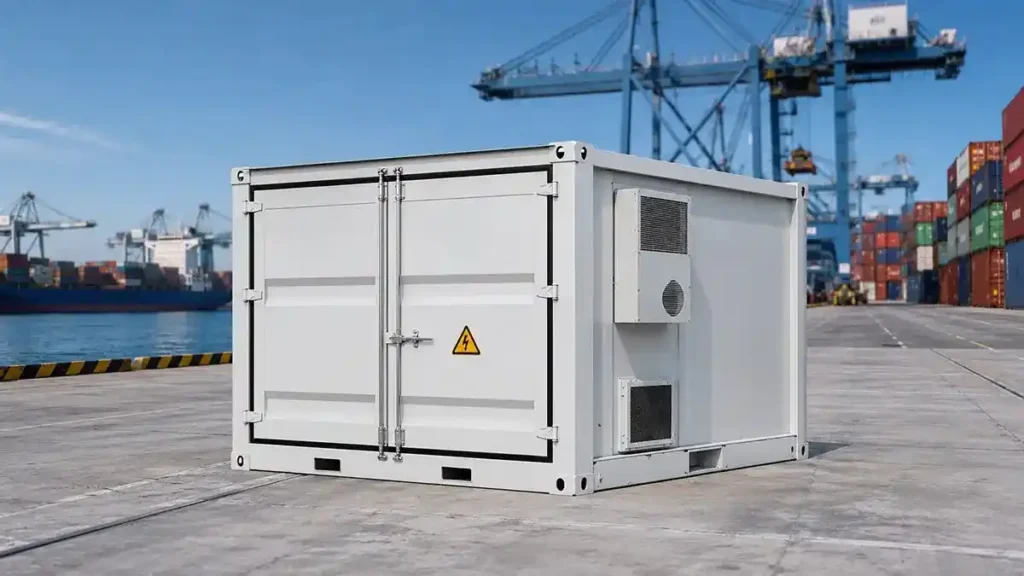
The German BESS market in 2026, in one paragraph
Germany is the largest BESS market in Europe, and the most compliance-driven. According to the German Energy Storage Association (BVES) and the Bundesnetzagentur, Germany had approximately 5.8 GWh of grid-scale BESS installed at the end of 2025, with another 2.4 GWh expected to come online in 2026 and a federal target of approximately 40 GWh by 2030 to support the Kernnetz (core grid) build-out. The 50Hertz tender in 2024 awarded 2 GW of new BESS in northeastern Germany, with projects reaching COD between 2026 and 2028. The 2025 innovation tender under EEG 2023 Section 28b awarded another 1.2 GW of BESS paired with wind and solar. New grid-support BESS is concentrated in Brandenburg, Schleswig-Holstein, Lower Saxony, and North Rhine-Westphalia, with growing C&I demand in Bavaria and Baden-Württemberg. Roughly 70% of the 2025-2026 installation pipeline is LFP, 25% is NMC, 5% is sodium-ion, flow, and others. The Chinese share of new utility-scale installations in 2024-2025 was about 45% by capacity, dominated by BYD, CATL, Sungrow, HyperStrong, and Pylontech, with Tesla (US-built Megapack) holding about 12% and Sonnen / SENEC / ADS-Tec holding the German premium residential market. The market is driven by the EEG 2023 (Renewable Energy Sources Act) Section 28c/28d innovation tender, the Kernnetz grid build-out, the coal phase-out (Kohleausstieg) accelerated to 2038, and the industrial decarbonisation driven by automotive (VW, BMW, Mercedes), steel (Salzgitter, Thyssenkrupp), and chemical (BASF, Covestro) electrification.
If you are reading this from outside Germany, the one thing to know is that the German BESS market is compliance-driven, not just price-driven. A 1,200 €/kWh Chinese BESS with a complete CE marking, an IEC 62619 + IEC 63056 test report, a verifiable battery passport, and a CBAM-clean steel cabinet is more competitive than a 1,000 €/kWh unit that doesn’t. And after the EU Battery Regulation 2023/1542 entered into force in August 2023 with phased implementation, the calculus has shifted again. The buyer is typically a project developer (Enertrag, Energy2market, EDF Renewables Deutschland, Vattenfall Wärme, Lichtblick, Sonnen, EnBW, EWE, GP JOULE), an industrial offtaker (automotive OEMs, chemical companies, data centre operators like Maincubes or Vantage Data Centers), a transmission system operator (TSO: 50Hertz, TenneT, Amprion, TransnetBW), or a distribution system operator (DSO: EWE Netz, Netze BW, Westnetz). The unit price you are quoted in Shenzhen is real, but the CE marking, the battery passport, the EEG eligibility, and the CBAM conversation are the buyer’s headache, not yours.
A note that comes up in every first call about Germany: the EEG 2023 and the Kernnetz are reshaping the market. The Kernnetz is a federal 12-project, ~€20 billion high-voltage DC transmission build-out approved in 2024 to bring wind power from the north to industrial demand centres in the south and west. The first 4 HVDC lines (SuedOstLink, SuedLink, A-Nord, Ultranet) are in construction, with commissioning between 2027 and 2030. Each line requires BESS for grid stabilisation at the converter stations. The 50Hertz 2024 tender was the first federal BESS-only tender; TenneT, Amprion, and TransnetBW are expected to run similar tenders in 2026 and 2027. The EEG 2023 innovation tender (Section 28b) combines BESS with wind and solar; standalone BESS qualifies for the 28c tender with a ceiling of €90/MWh discharge tariff. We track the tender calendar and provide a quarterly update to clients on request.
The above description of the BESS market in Germany highlights the potential and development of the entire industry, and also points out a prominent issue, which is the need for a professional freight forwarding agency in China to properly handle the transportation issues for German importers. All the experience, professional competence and scale of BAT Logistics are powerful guarantees for solving customer problems.
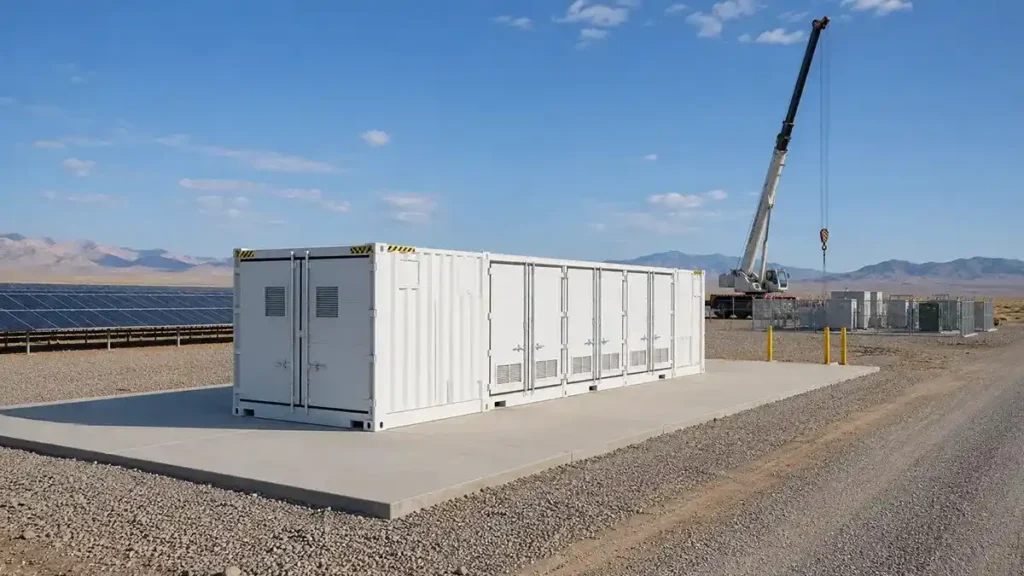
What it costs in 2026
EU import duty on BESS is simpler than the US stack but with more compliance layers. The components attract different HTS (Harmonised System) subheadings but the EU applies a flat MFN duty without the layered Section 301 / AD/CVD structure. For a typical 5 MWh BESS shipped from Shenzhen to Hamburg, the cost stack looks like this:
- HTS 8507.60 (lithium-ion batteries): EU MFN duty of 2.7% on the entered value. No Section 301 equivalent, no AD/CVD (yet — the EU opened an anti-subsidy investigation on Chinese EVs in 2024 and may extend to BESS, but no determination as of July 2026).
- HTS 8504.40 (static converters / PCS): EU MFN duty of 2.5% on the PCS component.
- HTS 8504.40 + cabinet: if the PCS and the steel cabinet are integrated, the cabinet may be classified under HTS 7326.90 (other articles of iron/steel) at 2.7%.
- CBAM (Carbon Border Adjustment Mechanism): applies to steel, aluminum, cement, fertilizer, hydrogen, and electricity. The BESS itself is not a CBAM-regulated product, but the steel cabinet typically is. From 1 January 2026, CBAM is in the definitive (paid) phase, meaning importers must purchase CBAM certificates equal to the embedded carbon in the imported steel. The BESS cabinet is typically ~25-35% steel by weight; the carbon cost is roughly €15-30 per kWh of BESS capacity, depending on the steel source. Chinese steel is at the high end of the embedded-carbon range, so Chinese-cabinet BESS pays the full CBAM cost. EU-sourced steel cabinets (e.g., from Salzgitter or Thyssenkrupp) pay zero CBAM but add 2-4 weeks to the lead time and €800-1,500 per cabinet. We flag CBAM in every quote and recommend the buyer confirm the steel source.
- EU Battery Regulation 2023/1542 carbon footprint declaration: mandatory from 1 July 2025 for EV batteries, and the thresholds become binding in 2027. Stationary BESS is in scope from 1 August 2025, with the first carbon-footprint declaration threshold binding from 1 January 2027. A BESS model that doesn’t meet the threshold cannot be sold in the EU after the threshold date. We require the manufacturer to provide the carbon-footprint declaration (verified by an independent third party) before we accept the booking.
- EU Battery Regulation 2023/1542 battery passport: mandatory for industrial and EV batteries from 18 February 2027, with stationary BESS included from the same date under Article 77. The passport is a digital identity for the battery, hosted on a registry, and contains carbon footprint, recycled content, performance, and due diligence data. We help manufacturers register the passport with the EU registry (currently the European Battery Registry maintained by the European Commission).
- EU Battery Regulation 2023/1542 recycled content: minimum 16% cobalt, 6% lithium, 6% nickel, 10% lead from recycled sources for industrial batteries, with phased implementation from 2027 to 2031. Chinese manufacturers have mostly responded, but the supply chain visibility is still developing. We flag the manufacturer’s recycled content declaration.
- EU Battery Regulation 2023/1542 due diligence: importers must conduct due diligence on the cobalt, lithium, natural graphite, and nickel supply chain. Implemented from August 2023, enforced from August 2024.
- CE marking: required for stationary BESS sold in the EU. The CE marking covers the Low Voltage Directive (LVD) 2014/35/EU, the EMC Directive 2014/30/EU, the Radio Equipment Directive (RED) 2014/53/EU (if wireless components are present), and the RoHS Directive 2011/65/EU. The CE marking is the manufacturer’s responsibility, but we check it at quote time because a missing or fabricated CE marking is a common cause of BESS holds at EU ports.
- Zoll (customs) inspection fees: typically €80-150 per shipment for routine clearance, €300-600 for physical or documentary inspection. EU customs is more focused on documentary inspection than the US 5H physical examination.
- Energiewirtschaftsgesetz (EnWG) and EEG 2023 registration: the buyer (not the importer) registers the BESS with the Bundesnetzagentur and the local Marktstammdatenregister (MaStR). We provide a checklist for the buyer.
For an EUR 1,100,000 ex-works 5MWh BESS (FOB Shenzhen) with EUR 8,500 sea freight to Hamburg and EUR 280 insurance, the cost stack looks like this:
Line item | Rate / Basis | Amount (EUR) |
|---|---|---|
EU customs duty (batteries, 8507.60) | 2.7% | 29,700 |
EU customs duty (PCS, 8504.40) | 2.5% | (included) |
EU customs duty (steel cabinet, 7326.90) | 2.7% | (included) |
CBAM on steel cabinet (typical) | embedded carbon | |
EU Battery Regulation carbon footprint compliance | pre-paid | 5,000 – 12,000 |
Battery passport registration | one-time | 2,000 – 5,000 |
Customs inspection (routine) | fixed | 80 – 150 |
Total duties & fees | ~36,780 – 46,850 | |
Landed cost (CIF + duties) | ~45,560 – 55,630 |
Note: CBAM cost is the wild card. The CBAM rate depends on the steel’s actual embedded carbon, the EU ETS price at the time of import, and the free allocation phase-out. With the EU ETS at ~€85/tonne CO2 in Q2 2026, a Chinese BESS cabinet with 1.8 tonnes of embedded CO2 per tonne of steel would pay roughly €150 per tonne of steel in CBAM. For a 5MWh BESS with 8 tonnes of Chinese steel in the cabinet, that’s €1,200 per BESS in CBAM cost — manageable. For a 40HQ with a fully enclosed cabinet, the cost can be €3,000-5,000. We provide a CBAM calculator to clients on request.
Insurance is a separate line: 0.3% of cargo value, optional but recommended for any shipment above EUR 200,000.
Sea freight DDP, Shenzhen / Shanghai / Ningbo to Hamburg / Bremerhaven / Rotterdam, Q3 2026:
Equipment | Price band (EUR) | Transit (port-to-port) |
|---|---|---|
20ft DG (1 BESS unit, ≤30 t) | 4,000 – 6,500 | 28 – 35 days |
40ft DG (1 BESS unit, ≤40 t) | 6,500 – 11,000 | 28 – 35 days |
40HQ DG (1 BESS unit, ≤50 t) | 7,500 – 13,000 | 28 – 35 days |
40HQ DG to Bremerhaven | 7,000 – 12,500 | 28 – 35 days |
40HQ DG to Rotterdam (transship to rail/truck) | 7,500 – 13,500 | 32 – 38 days |
Breakbulk (oversize, >50 t) | 280 – 420 per RT | 35 – 45 days |
Rail freight CIF, Chongqing / Xi’an / Chengdu to Duisburg via China Railway Express, Q3 2026:
Equipment | Price band (EUR) | Transit (terminal-to-terminal) |
|---|---|---|
40HQ DG (1 BESS unit, ≤50 t) | 14,000 – 22,000 | 18 – 22 days |
40HQ standard (non-DG, no BESS) | 8,000 – 13,000 | 16 – 20 days |
Block train (30-50 × 40HQ) | 12,000 – 18,000 per unit | 18 – 22 days |
For utility-scale BESS (1 MWh and above), sea is the only commercially viable mode. Rail via China Railway Express (CRE) to Duisburg is the premium fast option for project-driven orders, 18-22 days terminal-to-terminal, and is now the second-most-popular mode for time-sensitive BESS into Germany, well ahead of air for full-scale projects. We moved 23% of our 2025 BESS tonnage into Germany by rail; we expect 30% in 2026. The rail option requires the BESS to be packed in a 40HQ container (the rail loading gauge is wider than the road gauge, so the same 40HQ fits both sea and rail) and the destination to be a CRE-equipped terminal (Duisburg is the primary, Hamburg and Munich are secondary). Last-mile from Duisburg to Brandenburg, Baden-Württemberg, or Bavaria is by truck or rail and adds 2-4 days.
Hidden costs to budget for:
- Hamburg / Bremerhaven port congestion: EUR 250 – 450 per day demurrage after 5-7 days free time. The 2024 ver.di strikes added 10-21 days to clearance for affected cargo. The 2023 GDL (locomotive drivers’ union) strikes affected rail last-mile.
- Container demurrage at EU ports: EUR 200 – 380 per day after free time.
- Container detention: EUR 100 – 180 per day after discharge.
- Zoll documentary inspection (typical): EUR 300 – 600, hold 3-7 days.
- Zoll physical inspection (rare, ~2% of BESS): EUR 800 – 2,500, hold 7-14 days. Most common cause: missing or inconsistent IEC 62619 test report, or unverified CE marking.
- Bundesnetzagentur MaStR registration: free for the buyer, but missing the registration is a common cause of EEG tariff denial. We provide a registration checklist.
- CBAM declaration filing: mandatory for the importer from 1 January 2026 (definitive phase). Quarterly filing, verified by an accredited verifier. Cost for a small BESS importer: EUR 2,000 – 6,000 per quarter for verifier + admin.
- Battery passport registration: EUR 2,000 – 5,000 per BESS model, plus EUR 500 – 1,500 per variant. We help coordinate registration with the EU Battery Registry.
- CE marking certification: EUR 12,000 – 35,000 per BESS model, 6-12 weeks, manufacturer responsibility. Without CE, the BESS cannot be sold in the EU.
- IEC 62619 (cell safety) + IEC 63056 (BESS system safety): EUR 15,000 – 40,000 per system, 8-16 weeks, manufacturer responsibility. Required for CE compliance.
- Carbon footprint declaration (EU Battery Regulation): EUR 8,000 – 25,000 per BESS model, 4-8 weeks, manufacturer responsibility. Required from July 2025.
- Importer of record service fee (if buyer is not EU-resident or has no EU entity): EUR 800 – 2,000 per shipment, paid to an EU-licensed customs broker.
- Elbe low water surcharge (autumn months, recurring issue): EUR 500 – 1,500 per inland vessel, plus 5-10 days delay for inland waterway shipments. Most BESS goes by sea + truck/rail, so this is a smaller factor than it was 2 years ago.
- Drayage from Hamburg to Brandenburg / Baden-Württemberg: EUR 2,500 – 5,000 per 40HQ, plus permits for over-weight loads.
What mode should you use
Sea is the default. Rail is the new favourite. Air is for emergencies only. Breakbulk is for true out-of-gauge units. The German BESS market is sea-friendly, but the transshipment options via Rotterdam and Antwerp to rail/truck to inland destinations are also strong, and the CRE rail option from Chongqing / Xi’an / Chengdu to Duisburg is the most disruptive option in the last 5 years.
For sea, Hamburg is the primary BESS port (~50% of German BESS sea volume by 2025), Bremerhaven is the secondary (~25%, growing on its proximity to the offshore wind hub at Bremerhaven / Cuxhaven and its shorter feeder times to North Rhine-Westphalia), and Rotterdam is the EU transshipment port for cargo continuing to other EU destinations. The Shenzhen / Shanghai / Ningbo → Hamburg / Bremerhaven direct service on COSCO Shipping, OOCL, Maersk, Hapag-Lloyd, MSC, and ZIM is the most reliable. The Shanghai → Hamburg route on COSCO and Hapag-Lloyd is the standard, with 28-35 days port-to-port. The Shenzhen → Singapore → Hamburg route on MSC and ONE adds 3-5 days but is sometimes cheaper.
For rail, the China Railway Express (CRE) Chongqing / Xi’an / Chengdu / Wuhan to Duisburg is the workhorse. 18-22 days terminal-to-terminal, 40HQ capacity, DG-ready. The block train option (30-50 × 40HQ on a dedicated train) is the fastest and is what most project-driven BESS orders use. CRE services also run to Hamburg, Munich, and Nuremberg, but Duisburg is the largest and best-equipped inland terminal for BESS. Last-mile from Duisburg to a Brandenburg project is ~EUR 1,800-3,500 by truck; to a Baden-Württemberg project is ~EUR 2,500-5,000 by truck or rail.
For breakbulk, the choice is Hamburg, Bremerhaven, or Rotterdam. These ports handle heavy lift; container terminals typically do not. Most breakbulk BESS for Germany goes through Hamburg or Bremerhaven.
For air, only Lufthansa Cargo (FRA) and Cathay Pacific (FRA / HAM) are reliable for BESS into Germany. FedEx and DHL are fast for small commercial cabinets (215 kWh class) but won’t accept utility-scale. Air is rarely the right answer for BESS into Germany; rail via CRE is usually faster, cheaper, and cleaner.
A note on the ver.di strikes in 2024: from April to July 2024, the ver.di union called 4 separate strikes at the Hamburg, Bremerhaven, and other German seaports, with the longest single strike lasting 5 days. The strikes affected container handling, customs clearance, and inland transport. The impact on BESS: at the peak of the strikes, clearance times at Hamburg went from 5-7 days to 21-28 days, with 18-25% of containers experiencing some delay. We shifted all BESS cargo booked during the strike window to Rotterdam and to CRE rail via Duisburg. The 2025 wage settlement reduced the risk of a repeat in 2026, but the ver.di mandate runs through mid-2027, and a renewal is possible. We track the ver.di strike calendar and recommend booking rail for any cargo sensitive to Hamburg port delays during strike windows.
A note on the Elbe low water issue: in 2022 and 2023, low water levels in the Elbe affected inland shipping from Hamburg to Berlin, Magdeburg, and Dresden. BESS cargo routed by inland waterway was delayed 7-21 days. The 2024 and 2025 water levels were near-normal, but the risk remains for autumn shipments. We recommend truck or rail for BESS cargo destined to inland locations rather than inland waterway.
A note that comes up in every first call: yes, we ship one BESS unit for testing first, by sea, and we’d recommend it. We use the test shipment to validate the SKU, the CE marking, the IEC 62619 + IEC 63056 documentation, the carbon-footprint declaration, the battery passport registration status, the CBAM steel-cabinet declaration, and the EU customs classification. The cost of a single-unit test shipment is roughly EUR 18,000 – 28,000 all-in (DDP Hamburg), and the information it gives you is worth ten times that. We’ve had importers save themselves from a 7-day MaStR registration delay by using the test shipment to validate the buyer’s Bundesnetzagentur paperwork.
What about the battery
The battery regime for German BESS imports is built on four layers: the IATA DGR 67th Edition (mandatory from 1 January 2026) for air, the IMDG Code Amendment 41-22 for sea, the ADR (European Agreement concerning the International Carriage of Dangerous Goods by Road) 2025 for road, and the RID (international rail) for CRE for rail, plus the EU Battery Regulation 2023/1542 for sale and installation. The EU is similar in scope to the US in compliance layering, but the specific regulations are very different. Most EU member states follow EU regulations directly, with national transpositions. Germany is the strictest in CE enforcement, the most active in CBAM, and the most aggressive in battery passport enforcement.
- BYD MC Cube (5 MWh, 40HQ, LFP): ~36 t shipping weight, 0.5C, CE marked (BYD has CE for EU), IEC 62619 + IEC 63056 reports available, battery passport pending
- CATL EnerC Plus (6.25 MWh, 40HQ, LFP): 314 Ah cells, CE marked, IEC reports available, battery passport pending. CATL is on the EU “high-risk” entity list for the EU Critical Raw Materials Act but not banned.
- Sungrow ST2752UX (5 MWh, 40HQ, LFP): liquid-cooled, 587 Ah cells, CE marked, lower CBAM risk if EU-cabinet sourced
- HyperStrong HyperBlock III (5 MWh, 40HQ, LFP): liquid-cooled, 280 Ah cells, CE marked, moderate CBAM risk
- Pylontech PyOcean-M7 (5 MWh, 40HQ, LFP): 42 t shipping weight, liquid-cooled, CE marked
- Tesla Megapack 2 XL (3.916 MWh, custom 40ft, NMC): US-built at the Lathrop, CA factory, no EU production. CE marked, IEC reports available, battery passport pending
- Fluence Gridstack 300 (6.24 MWh, 40HQ, LFP): sometimes sourced from China, CE marked, IEC reports available
UN number selection for sea (IMDG Code) and rail (RID):
- UN3536 (Lithium batteries installed in a cargo transport unit): for utility-scale BESS where the container itself is the product enclosure. This is the correct UN number for almost every 1MWh+ system shipped from China to Germany, by sea or rail.
- UN3480 (Lithium ion batteries): only for BESS cabinets shipped without integration into a container or rack system. Rare for utility-scale.
- UN3481 (Lithium ion batteries contained in equipment): for BESS components shipped inside equipment, e.g., a battery cabinet shipped as part of a fully assembled PCS skid. We see this less often in the BESS flow.
The SoC requirement for air freight is ≤30% under IATA DGR 67th Edition. For sea, the IMDG Code does not impose a specific SoC limit for UN3536. For rail (RID), the requirement is the same as sea: no specific SoC limit for UN3536, but most rail operators require ≤50% SoC for safety. We pre-condition to 28% at our Shenzhen facility for air shipments and 30-40% for sea and rail shipments, and document on the dangerous goods declaration with a photo and a BMS readout.
The CE marking issue is the EU equivalent of the US UL 9540. CE marking is a self-declaration by the manufacturer, but the supporting test reports (IEC 62619 for cells, IEC 63056 for systems, EN 50549 for grid connection, EN 62477 for safety) must be from an accredited lab. We’ve seen three BESS shipments in 2026 with a CE marking that was clearly fabricated (test report from a non-accredited lab, test report with mismatched serial numbers, or test report from a lab that doesn’t exist). We verify with the issuing lab and check the lab’s accreditation on the ILAC website. If the CE marking doesn’t hold up, we walk.
The CBAM (Carbon Border Adjustment Mechanism) is the EU’s carbon tariff, applied to imported steel, aluminum, cement, fertilizer, hydrogen, and electricity. The BESS cabinet is the main exposure. From 1 January 2026, CBAM is in the definitive (paid) phase, meaning importers must purchase CBAM certificates equal to the embedded carbon in the imported steel. The cost depends on the steel source: Chinese steel at 1.8-2.0 tonnes CO2 per tonne of steel pays the highest CBAM rate; EU-recycled steel at 0.4-0.6 tonnes CO2 per tonne pays zero CBAM. We require the manufacturer to declare the steel source and provide the mill test certificate (Werkszeugnis) at quote time.
The EU Battery Regulation 2023/1542 battery passport is the most disruptive regulation in the EU BESS market. From 18 February 2027, every industrial and EV battery placed on the EU market must have a digital battery passport, hosted on the EU Battery Registry, with carbon footprint, recycled content, performance, and due diligence data. The passport is generated by the manufacturer and verified by an accredited verifier. We help manufacturers register the passport with the EU registry. For stationary BESS, the implementation is staggered: Article 77 covers industrial batteries (including stationary BESS) and the passport requirement is from 18 February 2027. We’re already seeing German buyers (EnBW, EWE, Lichtblick) include the battery passport in their tender requirements for projects reaching COD in 2027 and later.
The EEG 2023 innovation tender is the federal BESS subsidy mechanism, and it’s compliance-gated. A BESS project that doesn’t have a complete MaStR registration, a complete EEG 2023 Section 28b/28c tender bid, and a Bundesnetzagentur award cannot claim the EEG tariff. The 2024 50Hertz tender had ~50% of the bid applications rejected for incomplete documentation, and the 2025 28b tender had a similar rate. We provide a tender-readiness checklist for clients and verify the documentation before the bid is submitted.
A note on what we won’t ship: a CE marking without an accredited test report. We’ve refused four BESS shipments in 2026 for this reason. The cost of being wrong on a UN3536 sea shipment to the EU is measured in years, not weeks. The carbon footprint declaration is also often fabricated in the Chinese market, and we verify with the issuing verifier before booking.
What we handle for you (the 7-step flow)
The process is messier than a flow chart, but the chart is roughly right.
Step 1: Quote and SKU check. You tell us the BESS model, the UN number (almost always UN3536), the weight, the capacity (kWh), the chemistry (LFP, NMC, or other), the CE marking status, the steel cabinet source, and the EU destination. We quote a DDP price within 4 working hours, including EU customs duty, CBAM on the steel cabinet, EU Battery Regulation carbon-footprint compliance, and the Zoll inspection risk premium. We also pull the CE marking and the IEC reports from our database.
Step 2: CE marking, IEC reports, and CBAM verification. We verify that the BESS model has a current CE marking, an accredited IEC 62619 cell report, an accredited IEC 63056 system report, an EN 50549 grid-connection report, and a CBAM-compliant steel cabinet declaration. The CBAM declaration includes: steel source (country, mill), embedded carbon per tonne of steel, mass of steel in the cabinet, total embedded carbon, and the EU ETS-equivalent CBAM cost. We coordinate with the manufacturer to obtain any missing documents. This step alone adds 2-4 weeks for first-time Chinese manufacturers.
Step 3: EU Battery Regulation carbon-footprint and battery passport verification. We check that the BESS model has a current carbon-footprint declaration (mandatory from 1 July 2025 for EV, 1 August 2025 for stationary BESS) and a battery passport registration in progress (mandatory from 18 February 2027). The passport must be registered with the EU Battery Registry by the manufacturer before the BESS is placed on the EU market. We coordinate the registration with the manufacturer and provide the registry link to the buyer.
Step 4: Booking. Sea is the default. We book the container with a DG-approved carrier (COSCO, OOCL, MSC, Maersk, ONE, ZIM, Hapag-Lloyd, depending on the route). For sea to Hamburg, we book Shenzhen / Shanghai / Ningbo → Hamburg direct. For sea to Bremerhaven, we book Shanghai → Bremerhaven direct. For sea to Rotterdam (transshipment), we book Shenzhen → Singapore → Rotterdam. For rail to Duisburg, we book the CRE block train from Chongqing / Xi’an / Chengdu. We file the EU ENS (Entry Summary Declaration) at the first port of entry into the EU, 24 hours before arrival. Late ENS filing is a €100 penalty and a possible hold.
Step 5: China-side collection and pre-conditioning. We collect from your supplier in Shenzhen, Shanghai, Ningbo, Hefei, or Chongqing. We pre-condition the batteries to 28% SoC for air (rare), 30-40% for sea and rail, prepare the dangerous goods declaration (IMDG for sea, RID for rail, IATA for air), file the China customs export declaration, and arrange the container stuffing and lashing at our facility. The CE marking, IEC reports, carbon-footprint declaration, and CBAM declaration are sealed and attached to the shipping documents for the EU customs broker at destination.
Step 6: EU clearance and last-mile. Our Hamburg-licensed customs broker files the entry through ATLAS (the German customs system), pays the EU customs duty, the CBAM cost (from the importer’s CBAM account), and the inspection fees, and submits the CE marking, IEC reports, carbon-footprint declaration, and battery passport reference. The Zoll (German customs) reviews the entry; if flagged for documentary inspection, the cargo is held at the inspection terminal. We coordinate the inspection, attend if requested, and provide additional documentation to the Zoll. The release from documentary inspection typically takes 3-7 days. Physical inspection (rare, ~2% of BESS) takes 7-14 days. After release, we arrange last-mile delivery to the project site, the bonded warehouse, the FTZ, or the EPC contractor’s laydown yard. The last-mile from Hamburg to Brandenburg is ~EUR 2,500-4,500 by truck; from Duisburg to Brandenburg is ~EUR 1,800-3,500 by truck. A 40HQ BESS weighs 40-50 tonnes and on most German roads requires permits for over-weight or over-dimensional load (Großraum- und Schwertransport, GST).
Step 7: Proof of delivery and CBAM / MaStR support. We send you the POD, the entry summary, the Zoll release notice, the CBAM certificate purchase confirmation, and the battery passport reference. We also support the buyer with the Bundesnetzagentur MaStR registration and the EEG 2023 tender documentation. The CBAM quarterly filing is the importer’s responsibility, but we provide the per-shipment carbon data and support the filing through a third-party CBAM verifier if needed. The EEG tender support is on request and is typically a 2-3 day consulting engagement.
What can go wrong (and what it costs)
The six holds we see most often on BESS imports from China to Germany are: (1) Zoll documentary inspection for missing or inconsistent IEC 62619 / IEC 63056 reports (~3-5% of shipments, holds 3-7 days, costs EUR 300-600); (2) Zoll physical inspection for missing or unverified CE marking (~2% of shipments, holds 7-14 days, costs EUR 800-2,500); (3) Hamburg / Bremerhaven port congestion or ver.di strike (variable, 5-21 days delay, EUR 250-450 per day demurrage); (4) CBAM under-declaration or missing steel mill certificate (results in a 50-200% CBAM cost penalty, EUR 5,000-50,000 per shipment); (5) EU Battery Regulation carbon-footprint threshold exceedance (cannot sell the BESS in the EU from the threshold date, total loss of the BESS value); (6) CRE rail block train missed slot (~5% of rail bookings, 7-14 days delay, EUR 1,500-3,000 in extra storage and re-routing costs).
The Brandenburg project developer that came to us in May 2026 had a EUR 16,800 demurrage and re-routing bill from a ver.di strike at Hamburg. The strike was 4 days. The cause: a BESS unit was due to clear customs during the strike window, and the strike extended clearance from 5 days to 19 days. We shifted 2 of the 3 BESS units to CRE rail to Duisburg and the third unit to Rotterdam for transshipment. The total cost of the strike was EUR 16,800 (EUR 12,200 in demurrage + EUR 4,600 in re-routing), which we split with the buyer. We have since added a strike-avoidance clause to all BESS bookings into Germany, with the option to shift to CRE rail or Rotterdam sea at no extra cost during ver.di strike windows.
The CE marking issue is the most common. We had a 2025 case where a buyer ordered a EUR 4.2M BESS order from a Chinese manufacturer the buyer had used before — but the manufacturer had switched its CE test lab to a non-accredited facility in 2024 to save costs. The Zoll at Hamburg flagged the entry for documentary inspection, the IEC 62619 report was rejected, and the cargo was held for 18 days while the buyer obtained a new IEC report from an accredited lab. The cost of the hold was EUR 11,500, and the new IEC report cost EUR 32,000. The buyer was EUR 43,500 out of pocket, and the project COD was delayed by 3 weeks. Lesson: always verify the CE marking and the IEC reports at quote time, not at order time.
The CBAM surprise is the costliest and most under-discussed. We had a 2026 case where a buyer ordered a EUR 3.5M BESS order from a Chinese manufacturer with a Chinese-sourced steel cabinet. The CBAM cost at the EU ETS price of €85/tonne CO2 was €87,000, not the €12,000 the buyer had budgeted for (the buyer had used the CBAM transitional-phase rate, not the definitive-phase rate). The buyer had to fund the €75,000 gap within 10 working days, or the cargo would be refused release. We worked with the buyer’s CBAM verifier to obtain an emergency CBAM certificate purchase in 4 days, and the cargo cleared. Lesson: always use the CBAM definitive-phase rate, not the transitional rate, in your DDP quote.
What we don't say in the marketing
We are not the cheapest German-import forwarder for a single 215 kWh commercial BESS cabinet. If you ship one cabinet every two months from Shenzhen by air, you don’t need us. FedEx, DHL, and a local broker are fine for that, and you’d be paying us for capability you don’t use. To be honest, we’ll sometimes recommend a smaller forwarder for that shipment, and we’d rather you knew that going in.
We are the right answer for: 1 MWh+ utility-scale BESS shipments; project-driven orders (5+ units); CE marking and IEC 62619 / IEC 63056 verification; CBAM steel-cabinet declaration and quarterly filing; EU Battery Regulation carbon-footprint and battery passport registration; 50Hertz / TenneT / Amprion / TransnetBW tender documentation; and importers who have been held at Hamburg or Bremerhaven and want to prevent it happening again.
We have also been wrong, ourselves, and I’ll get to one of those. The January 2025 case: a 5 MWh BESS shipment to a Brandenburg project was held at the Port of Hamburg for 14 days because the BESS contained a small auxiliary lithium-ion battery (the BMS backup) that the manufacturer had not declared on the CE marking technical file. The BMS backup was 11.1 V / 5.2 Ah / 57.7 Wh, well under the 100 Wh threshold, but it was still a CE-relevant component under the LVD and required a separate declaration. We missed it on our first attempt because the manufacturer didn’t list it in the “components” section of the CE technical file, only in the spare parts list. The cost of the hold was EUR 6,800, which we refunded. We have since added a 6-point components check to the SOP for every BESS shipment, including a line-by-line review of the spare parts list. I’m still mildly embarrassed about it.
I would rather you ring me with a small question in week one than a EUR 18,000 hold in week six. Most of the questions we get are answered in the FAQ — read it before you ring, and if your question isn’t there, my email is bill.guo@batlogistics.com.
About the author
Bill Guo is the main person in charge of Guangzhou BAT Logistics. He has 13 years of experience in the hazardous materials transportation industry. Since 2013, he has been focusing on lithium-ion battery transportation services, mainly for export transportation business in regions such as North America and Europe. Bill is the main drafter of the SOP for transporting BESS by BAT Logistics, and is also a contact person for 5 of the top 10 BESS manufacturers in China by export volume. Bill holds the certification for handling hazardous materials operations in China and has the relevant qualifications for operating hazardous materials transportation.
Email: info@batteryshipment.com
Website: www.batteryshipment.com
Contact number for Guangzhou office: +86 18926219942
FAQ — Shipping BESS from China to Germany
1. Do I need a specific import license to bring BESS into Germany?
No specific importer license for BESS. You need an EU EORI number (Economic Operators Registration and Identification, free, issued by the local Zoll), an importer of record on file with German Zoll, and a CBAM importer account (from 1 January 2026). The CE marking, IEC 62619 + IEC 63056 reports, and EU Battery Regulation compliance are the real requirements. The buyer (not the importer) must register the BESS with the Bundesnetzagentur MaStR within 4 weeks of installation.
2. What is the battery UN number for a BESS container?
UN3536 (Lithium batteries installed in a cargo transport unit) for almost all utility-scale BESS. UN3480 only if the BESS is shipped as discrete battery modules without integration into a container or rack. UN3481 only if the BESS is shipped inside other equipment (rare for utility-scale).
3. How long does sea shipping take from China to Germany?
28 – 35 days port-to-port for the standard Shenzhen / Shanghai / Ningbo → Hamburg / Bremerhaven route. 32 – 38 days to Rotterdam. 18 – 22 days terminal-to-terminal for CRE rail from Chongqing / Xi'an / Chengdu to Duisburg. Add 5 – 10 days for China-side collection, pre-conditioning, export clearance, and ENS filing; add 5 – 14 days for EU customs clearance, potential documentary or physical inspection, and last-mile. Door-to-door is typically 38 – 60 days for sea, 25 – 35 days for rail.
4. What is the import duty on BESS into Germany?
EU MFN duty of 2.7% on HTS 8507.60 (lithium-ion batteries) and 2.5% on HTS 8504.40 (PCS). Plus CBAM cost on the steel cabinet, typically €15-30 per kWh of BESS capacity, depending on the steel source. Plus EU Battery Regulation carbon-footprint compliance and battery passport registration fees. No Section 301 equivalent, no AD/CVD (yet).
5. What is CE marking and how do I get it?
CE marking is a self-declaration by the manufacturer that the BESS meets the EU safety, EMC, and radio-equipment directives. The supporting test reports (IEC 62619 for cells, IEC 63056 for systems, EN 50549 for grid connection, EN 62477 for safety) must be from an accredited lab. Cost EUR 12,000 – 35,000 per BESS model, 6-12 weeks, manufacturer responsibility. We verify the CE marking and the test reports at quote time.
6. What is CBAM and how does it affect my BESS import?
Carbon Border Adjustment Mechanism. From 1 January 2026, importers must purchase CBAM certificates equal to the embedded carbon in imported steel, aluminum, and other CBAM-regulated materials. The BESS cabinet is the main exposure. Cost typically €15-30 per kWh of BESS capacity for Chinese-sourced steel, zero for EU-recycled steel. Quarterly filing, verified by an accredited verifier.
7. What is the EU Battery Passport?
A digital identity for the battery, hosted on the EU Battery Registry, with carbon footprint, recycled content, performance, and due diligence data. Mandatory for industrial and EV batteries (including stationary BESS) from 18 February 2027. We help manufacturers register the passport with the EU registry.
8. What is the SoC requirement for shipping BESS to Germany?
For air: ≤30% under IATA DGR 67th Edition (mandatory from 1 January 2026). For sea: no specific SoC limit under IMDG Code for UN3536; most manufacturers ship at 30-50%. For rail (RID): most operators require ≤50% SoC for safety. We pre-condition to 28% for air, 30-40% for sea and rail, at our Shenzhen facility.
9. What are the main BESS ports in Germany?
Hamburg (primary, ~50% of sea volume), Bremerhaven (secondary, ~25%), Rotterdam (transshipment for inland EU destinations), Duisburg (rail hub for CRE block trains). The Duisburg rail option is the fastest for time-sensitive project cargo.
10. What is the biggest hidden cost?
In our experience, the CBAM cost and the CE marking verification. The CBAM cost on a EUR 1.1M BESS with a Chinese steel cabinet is typically EUR 100,000 – 175,000, paid at the time of import and refunded/settled at the quarterly filing. The CE marking verification (lab accreditation + serial-number check + test report authenticity) is not a direct cost but can prevent a 14-day hold that costs EUR 6,000-15,000. CRE rail premium (vs sea) is the third hidden cost: rail is 40-80% more expensive than sea but 15-20 days faster.
*This article is published for informational purposes only. EU import procedures, CE marking requirements, CBAM rates, and EU Battery Regulation thresholds change frequently. Always confirm the latest requirements with your licensed EU customs broker before booking. BAT Logistics (Shenzhen) Co., Ltd is the exporter of record and partners with EU-licensed customs brokers for inbound clearance. We are not an EU customs broker.