
Shipping BESS Container from China to USA: A Forwarder's Guide to Cost, Compliance, and What Actually Happens in 2026
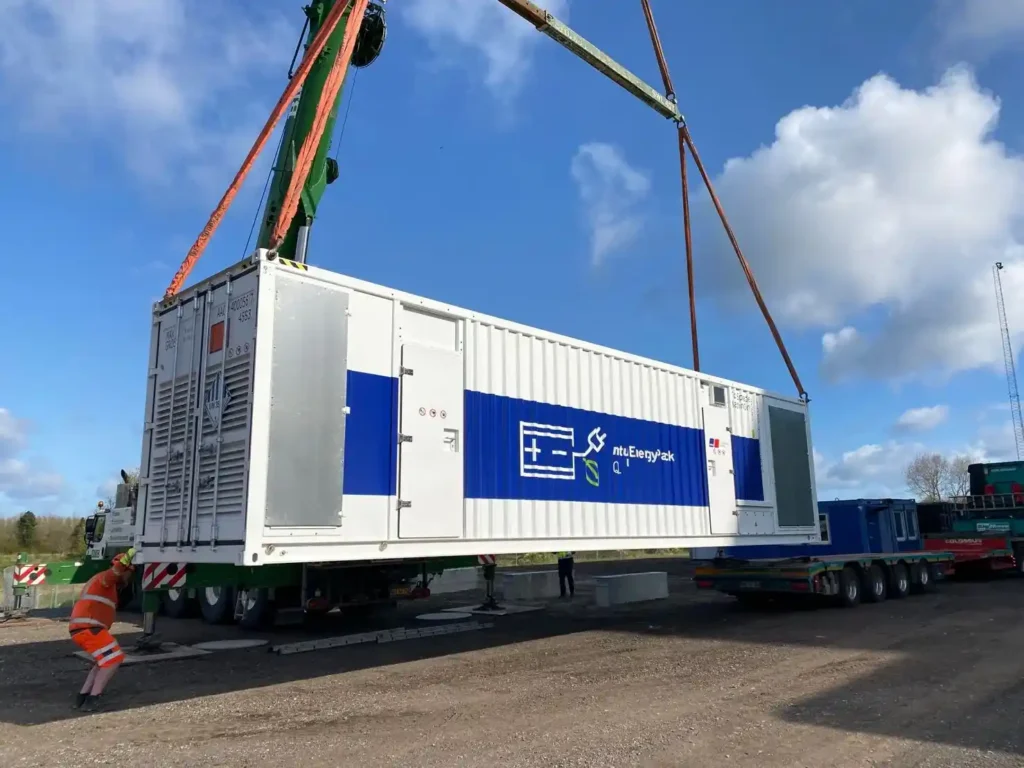
You’ve sourced a BESS container from a Chinese factory. Maybe it’s a 20ft 1MWh/500kW unit for a Texas solar-plus-storage project, a 40ft 5MWh/2.5MW unit for a California peaker, or a 10MWh 40HQ destined for an ERCOT grid-support project in West Texas. You want to know how much it’ll cost to land in Houston or Long Beach, how long it’ll take, and what Customs and Border Protection will actually do when the container hits the wharf. The rest is detail.
We’re a Shenzhen-based forwarder specialising in China-to-USA BESS shipping. We file the entry through our licensed US customs broker (licensed in California and Texas) and quote a DDP (Delivered Duty Paid) price — meaning Section 301 duties, AD/CVD cash deposits, MP&F, and HMF are in the number, not added on later. Below is what that looks like in July 2026, and what’s in it.
I’m Bill Guo, export compliance lead at Battery Shipment Logistics. I write the SOPs that prevent the 5H holds at LA/LB, and I take the calls when a CBP Officer at Long Beach opens a Section 232 referral at 04:30 on a Tuesday. This is the article I would have wanted to read three years ago, when we first started moving BESS into ERCOT and CAISO from Shenzhen. Honest, current, and written from the freight forwarder’s side, not a regulator’s.
The US BESS market in 2026, in one paragraph
The United States is the largest BESS market in the world by commissioned capacity, and the most compliance-fragmented. According to Wood Mackenzie and the American Clean Power Association (ACP), US BESS commissioned capacity reached 35.8 GW at the end of 2025, with another 18.4 GW expected to come online by end-2026. California (CAISO) leads with 11.2 GW installed, Texas (ERCOT) is at 7.8 GW and growing fastest in 2026, and the PJM Interconnection mid-Atlantic market is at 6.5 GW. New York ISO, MISO, and SPP make up the balance. Roughly 65% of the 2025-2026 installation pipeline is LFP, 30% is NMC, 5% is other chemistries (sodium-ion, iron-air, flow). The Chinese share of US installations in 2025 was about 41% by capacity and 58% by unit count, dominated by CATL, BYD, Sungrow, HyperStrong, and EVE Energy, with Tesla (US-built Megapack) holding roughly 35% of the utility-scale market. The market is driven by the IRA Section 48E Investment Tax Credit (30% base + 10% domestic content + 10% energy communities), FERC Order 2222 enabling virtual power plant aggregation, and the AI-data-center load growth that has hyperscalers signing 10–20 year BESS offtake agreements at premium prices.
If you are reading this from outside the US, the one thing to know is that the US BESS market is policy-driven, not just price-driven. A $1,200/kWh Chinese BESS that qualifies for the full 50% ITC is more competitive than a $1,000/kWh US-built unit that doesn’t. And after the 2024 Department of Commerce AD/CVD determinations on Chinese lithium batteries, the calculus has shifted again. The buyer is typically a project developer (Avantus, Arevon, EDF Renewables, Engie, Recurrent Energy, Hecate Energy, Aypa Power), a hyperscaler offtaker (Microsoft, Google, Amazon, Meta via PPAs), a utility (Southern California Edison, NV Energy, Oncor), or an EPC contractor (Mortenson, McCarthy, Swinerton, PCL). The unit price you are quoted in Shenzhen is real, but the ITC-qualification, FEOC, and Section 301 conversation is the buyer’s headache, not yours.
A note that comes up in every first call about the US: the Moss Landing fire in January 2025 changed the conversation. A 300 MW / 1,200 MWh LG Energy Solution / Tesla Megapack installation in Monterey County caught fire and burned for five days, causing the evacuation of 1,200 nearby residents. The cause was traced to a thermal runaway event in one rack, with the fire suppression system unable to prevent spread across the full enclosure. The aftermath: UL 9540A testing is now enforced more strictly, NFPA 855 spacing requirements are being adopted at the state level, and many buyers are asking Chinese manufacturers for UL 9540A test reports at the rack level, not just the unit level. We added this to our pre-shipment checklist in February 2025. It’s a real conversation, not marketing.
What it costs in 2026
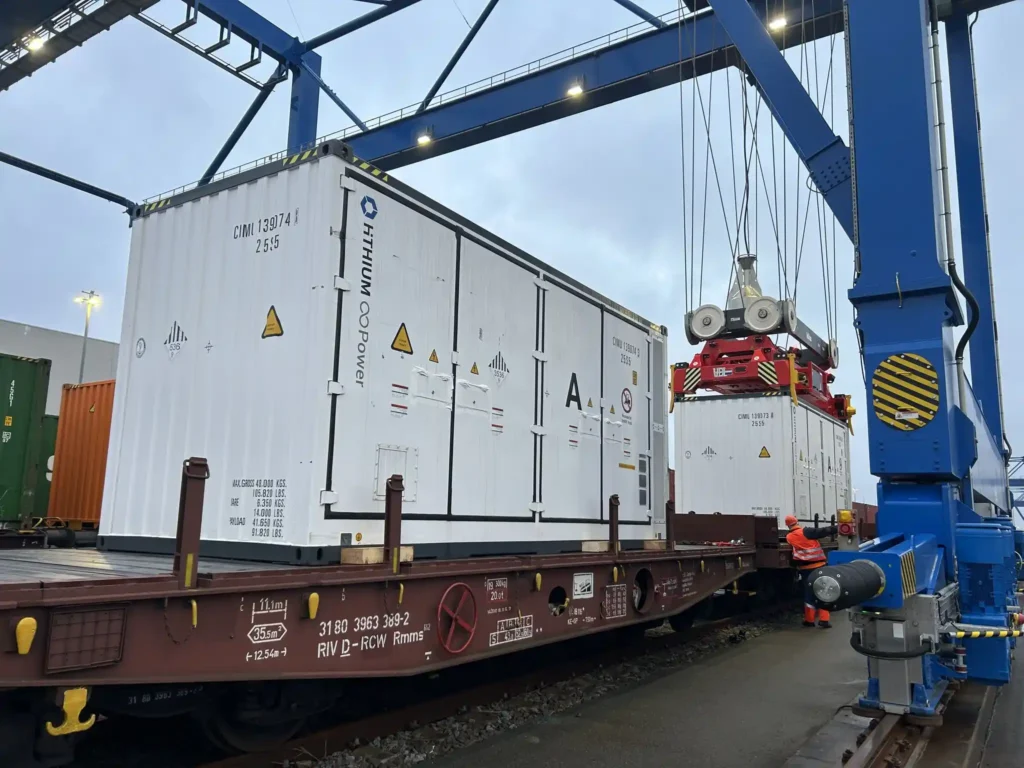
US import duty on BESS is layered and complicated. The components attract different HTSUS subheadings and different duty rates. For a typical 5 MWh BESS shipped from Shenzhen to Long Beach, the cost stack looks like this:
- HTSUS 8507.60 (lithium-ion batteries): Section 301 List 4A rate of 7.5% on the entered value. This was reduced from 15% in 2024 but remains in force.
- HTSUS 8504.40 (static converters / PCS): Section 301 List 4A rate of 7.5% on the PCS component.
- AD/CVD on Chinese lithium batteries: Following the 2024 Department of Commerce final affirmative determination, Chinese-origin lithium batteries are subject to anti-dumping duties (AD) ranging from 0% to 150% depending on the specific producer, plus countervailing duties (CVD) ranging from 10% to 60%. The exact rate depends on the producer’s individual rate from the Commerce investigation. We pull the rate for each manufacturer at quote time. Cash deposits (typically 100% of estimated AD/CVD) are paid at entry and refunded or assessed at liquidation, 12–18 months later.
- Merchandise Processing Fee (MPF): 0.3464% of the entered value, with a minimum of $32.71 and maximum of $634.62 per entry. For BESS above ~$1,830 in duty-paid value, the percentage rate applies.
- Harbor Maintenance Fee (HMF): 0.125% of the entered value, only on vessel cargo at US ports (not applicable to air or land).
- Section 232 (national security): Not currently imposed on BESS, but the Department of Commerce initiated a Section 232 investigation into “energy storage systems” in November 2025. Final determination expected Q1 2027. We flag this in every quote and recommend a 5–10% contingency for possible 232 tariffs.
- UFLPA (Uyghur Forced Labor Prevention Act): This is the big one. CBP has been detaining shipments of Chinese lithium batteries and battery components since 2023 on UFLPA grounds, requiring importers to prove the supply chain is free of Xinjiang-origin material. Detentions average 30–60 days. We require a full supply chain map and a UFLPA due diligence package from every Chinese BESS manufacturer before we accept the booking.
For a USD 1,200,000 ex-works 5MWh BESS (FOB Shenzhen) with USD 9,000 sea freight to Los Angeles and USD 3,000 insurance, the entered value is approximately USD 1,212,000. The duty stack looks like this:
Line item | Rate | Amount (USD) |
|---|---|---|
Section 301 (List 4A) on batteries | 7.5% | 90,000 |
Section 301 on PCS | 7.5% | (included) |
AD/CVD cash deposit (typical producer) | 60% (example) | 727,200 |
MPF | 0.3464% | 4,200 |
HMF | 0.125% | 1,515 |
Total duties & fees | ~822,915 | |
Landed cost (CIF + duties) | ~2,025,000 |
Note: AD/CVD rates vary wildly by producer. Some smaller Chinese manufacturers have rates of 0% (they didn’t respond to the Commerce questionnaire) but are subject to the China-wide rate of 150% on AD. We strongly recommend the buyer confirm the manufacturer’s AD/CVD rate before placing the order. We maintain a current rate table for the top 30 Chinese BESS manufacturers and provide it to clients on request.
Insurance is a separate line: 0.3% of cargo value, optional but recommended for any shipment above USD 200,000. We add it to the DDP quote on request.
Sea freight DDP, Shenzhen / Shanghai / Ningbo to Los Angeles / Long Beach / Houston / New York, Q3 2026:
Equipment | Price band (USD) | Transit (port-to-port) |
|---|---|---|
20ft DG (1 BESS unit, ≤30 t) | 4,500 – 7,000 | 15 – 20 days (West Coast) |
40ft DG (1 BESS unit, ≤40 t) | 7,000 – 12,000 | 15 – 20 days (West Coast) |
40HQ DG (1 BESS unit, ≤50 t) | 8,000 – 14,000 | 15 – 22 days (West Coast) |
40HQ DG to Houston (via Panama Canal) | 10,000 – 16,000 | 28 – 35 days |
40HQ DG to New York (via Panama) | 11,000 – 17,000 | 32 – 40 days |
Breakbulk (oversize, >50 t) | 320 – 480 per RT | 25 – 35 days |
Air freight DDP, Shenzhen to Los Angeles via ANC or direct, Q3 2026:
Service | Price per kg (USD) | Transit (door-to-door) |
|---|---|---|
Cathay Pacific 747F DG-ready | 7 – 11 | 4 – 7 days |
China Southern 777F DG | 8 – 12 | 5 – 8 days |
FedEx Express DG (cabinet class) | 9 – 14 | 3 – 5 days |
For utility-scale BESS (1 MWh and above), sea is the only commercially viable mode. We do move small commercial BESS units (215 kWh cabinet class) by air when a project is on a tight commissioning schedule, but for a 5 MWh container the air freight alone exceeds the value of the cargo. Cathay Pacific 747F DG-ready is the most reliable air option into LAX with consistent Section II lithium battery acceptance. FedEx is fast for small commercial cabinets but won’t accept utility-scale.
Hidden costs to budget for:
- CBP 5H examination (intensive customs examination, ~3-5% of BESS shipments): USD 3,000 – 15,000 per examination, plus demurrage during the hold. Holds 7 – 21 days at LA/LB.
- Container demurrage at US ports: USD 200 – 380 per day after free time (4 days at most LA/LB terminals, 5-7 days at Houston). The Fenix Marine Terminal and Yusen Terminals at LA/LB are the strictest.
- Container detention: USD 100 – 180 per day after discharge.
- AD/CVD cash deposit bond cost: 2-3% of the bond value annually. For a USD 1.2M cargo with USD 727,200 AD/CVD deposit, the bond cost is USD 14,500 – 21,800 per year, held until liquidation.
- UFLPA detention and supply chain due diligence: USD 5,000 – 25,000 in legal and consulting fees per detained shipment, plus 30-60 days delay.
- ISF (Importer Security Filing, “10+2”): USD 30 – 50 per filing, must be filed 24 hours before vessel loading at origin. Late filing penalty USD 5,000 per violation.
- FTZ (Foreign Trade Zone) usage for AD/CVD deferral: USD 2,000 – 5,000 setup, USD 500 – 1,500 per week storage. We recommend FTZ for large multi-month projects to defer AD/CVD until withdrawal.
- C-TPAT / TIA accreditation: Required for fast-lane clearance at major US ports. We are C-TPAT validated and pass the benefit to clients (reduced exam rate, faster release).
- UL 9540 third-party certification: USD 18,000 – 45,000 per system, 10 – 20 weeks, manufacturer responsibility. Required for any BESS installed in the US grid.
- UL 9540A test report (rack-level): USD 35,000 – 90,000 per system, 12 – 24 weeks, manufacturer responsibility. Now effectively required post-Moss Landing.
- NFPA 855 compliance review (state-level): USD 3,000 – 8,000 per project, end-user responsibility.
- Importer of record service fee (if buyer is not US-resident or has no US entity): USD 1,200 – 2,500 per shipment, paid to a US licensed customs broker.
- Drayage at congested LA/LB ports: USD 800 – 1,800 per 40HQ for the first 5 days, escalating to USD 3,000+ during peak season (August-November).
What mode should you use
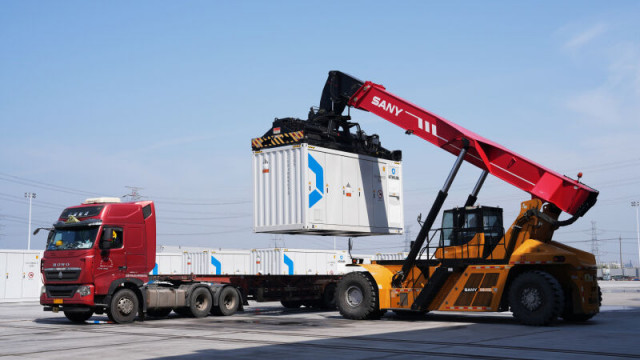
Same logic as our Australia guide: sea for almost everything, air for genuine emergencies only, and breakbulk for true out-of-gauge units. The US BESS market is highly sea-friendly, but the routing is more nuanced than Australia because the Panama Canal has capacity constraints and West Coast dwell times are the worst in the developed world.
For sea, Los Angeles / Long Beach is the primary BESS port (~55% of US BESS sea volume by 2025), Houston is the secondary (~25%, growing fast on ERCOT demand), New York / New Jersey is the tertiary (~10%), and Oakland, Mobile, Port of Virginia, and Port of Hueneme make up the balance. The Shenzhen → LA direct service on COSCO Shipping, OOCL, Maersk, and ZIM is the most reliable in our experience. The Shanghai → Houston via Panama Canal route on MSC and Hapag-Lloyd is the standard Texas service, but Panama Canal transit slots are constrained (2024-2025 drought reduced daily transits from 36 to 24, and although recovered, booking 2-3 weeks in advance is now standard). The Shanghai → NY via Panama route on COSCO is the standard East Coast service.
For breakbulk, the choice is between Port of Hueneme (California) for grid-scale projects in the Western US, Galveston (Texas) for ERCOT, and Port of New York/New Jersey for the Northeast. These ports handle heavy lift; container terminals typically do not.
For air, only Cathay Pacific 747F DG-ready is reliable for BESS into LAX. We had a 2024 call resolved by re-routing a 215 kWh commercial BESS cabinet from a Korean Air cargo slot (cancelled the day before uplift due to the Section II acceptance backlog) to a Cathay 747F via Anchorage. The cabinet was on the ground in Long Beach 22 hours later. I was the one taking the call from the buyer’s commissioning manager at 18:00 on a Wednesday. The Cathay DG desk in Hong Kong took 8 minutes to approve the booking once the UN38.3, MSDS, and DGD were in their inbox. I will not name the project, but it was a 80 MW solar-plus-storage project in Imperial County and the BESS was on the critical path for COD.
A note on the trans-Pacific: the 2024-2025 capacity tightness has eased in 2026, but peak season (July-October) still sees 30-50% rate spikes. If you can ship January-June or November-December, the ocean rates are 20-30% lower. The trade-off is that the receiving warehouses are fuller in Q4 and ground logistics from port to project site are tighter.
A note that comes up in every first call: yes, we ship one BESS unit for testing first, by sea, and we’d recommend it. We use the test shipment to validate the SKU, the UL 9540 + UL 9540A documentation, the AD/CVD rate, the UFLPA supply chain package, the 5H risk profile, and the ISF/entry filing. The cost of a single-unit test shipment is roughly USD 18,000 – 28,000 all-in (DDP Los Angeles), and the information it gives you is worth ten times that. We’ve had importers save themselves from a 150% China-wide AD/CVD rate by switching manufacturer after the test shipment.
What about the battery
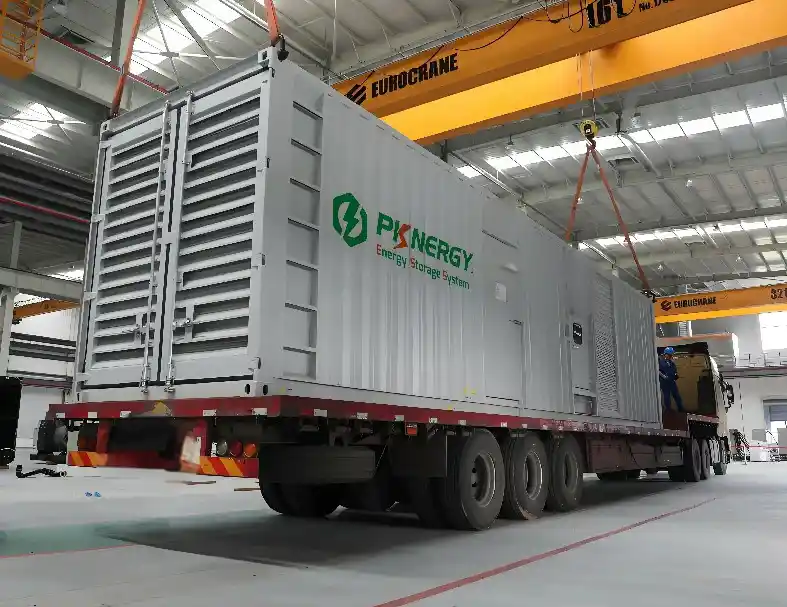
The battery regime for US BESS imports is built on five layers: the IATA DGR 67th Edition (mandatory from 1 January 2026) for air, the IMDG Code Amendment 41-22 for sea, the UN/DOT 49 CFR for US domestic transport, the UL 9540 / UL 1973 / UL 9540A for the installation, and the UFLPA + Section 301 + AD/CVD for the import. The US is the most compliance-layered market in the world for BESS imports. Most other markets are three layers; the US is five.
- BYD MC Cube (5 MWh, 40HQ, LFP): ~36 t shipping weight, 0.5C, exempt from battery passport, subject to AD/CVD at producer rate
- CATL EnerC Plus (6.25 MWh, 40HQ, LFP): 314 Ah cells, subject to AD/CVD at producer rate, FEOC flag (CATL is a covered entity under the FEOC rules, with project ITC implications after 2025)
- Sungrow ST2752UX (5 MWh, 40HQ, LFP): liquid-cooled, 587 Ah cells, lower AD/CVD risk (Sungrow is the PCS integrator, not the cell manufacturer)
- HyperStrong HyperBlock III (5 MWh, 40HQ, LFP): liquid-cooled, 280 Ah cells, moderate AD/CVD risk
- Pylontech PyOcean-M7 (5 MWh, 40HQ, LFP): 42 t shipping weight, liquid-cooled
- Tesla Megapack 2 XL (3.916 MWh, custom 40ft, NMC): US-built at the Lathrop, CA and Shanghai factories. The Shanghai-built units for export are subject to AD/CVD.
- Fluence Gridstack 300 (6.24 MWh, 40HQ, LFP): sometimes sourced from China, subject to AD/CVD
UN number selection for sea (IMDG Code):
- UN3536 (Lithium batteries installed in a cargo transport unit): for utility-scale BESS where the container itself is the product enclosure. This is the correct UN number for almost every 1MWh+ system shipped from China to the US.
- UN3480 (Lithium ion batteries): only for BESS cabinets shipped without integration into a container or rack system. Rare for utility-scale.
- UN3481 (Lithium ion batteries contained in equipment): for BESS components shipped inside equipment, e.g., a battery cabinet shipped as part of a fully assembled PCS skid. We see this less often in the BESS flow.
The SoC requirement for air freight is ≤30% under IATA DGR 67th Edition. For sea, the IMDG Code does not impose a specific SoC limit for UN3536. Most manufacturers ship at 30 – 50% SoC for sea; the 30% rule is for air only. We pre-condition to 28% at our Shenzhen facility for air shipments and document on the dangerous goods declaration with a photo and a BMS readout. We’ve been doing this as standard since 2024, before the IATA mandate, because we don’t enjoy 5A holds in Hong Kong.
The FEOC (Foreign Entity of Concern) issue is the post-IRA wrinkle that catches most buyers by surprise. Under the IRA Section 48E final rules released in 2024, BESS projects that begin construction after 31 December 2025 and use battery cells or modules from a “Foreign Entity of Concern” (which includes CATL, BYD, EVE, Gotion, and other Chinese manufacturers designated by the Treasury) are not eligible for the ITC. The restriction applies to the project, not the shipment. The practical impact: a Chinese BESS manufacturer can still ship into the US, but if the US project uses that BESS, the project loses the 30%+ ITC. This has split the market. Most US developers are now sourcing from non-FEOC Chinese manufacturers (Sungrow, HyperStrong, Pylontech, Narada, CALB) for utility-scale, or buying from US/Korean/Japanese sources for ITC-qualifying projects. We maintain a current FEOC list and a non-FEOC Chinese alternative list, and provide both to clients on request.
A note on what we won’t ship: a UN 38.3 test summary that is clearly fabricated. We’ve refused three BESS shipments in 2026 for this reason. The cost of being wrong on a UN3536 sea shipment to the US is measured in years, not weeks. UL 9540A test reports are also often fabricated in the Chinese market, and we verify with the issuing lab before booking. If the certifier is UL-listed and the manufacturer provides the rack-level test report, the UL 9540A side is usually clean. If not, we walk.
What we handle for you (the 7-step flow)
The process is messier than a flow chart, but the chart is roughly right.
Step 1: Quote and SKU check. You tell us the BESS model, the UN number (almost always UN3536), the weight, the capacity (kWh), the chemistry (LFP, NMC, or other), the FEOC status, and the US destination. We quote a DDP price within 4 working hours, including Section 301, AD/CVD cash deposit, MPF, HMF, and the 5H exam risk premium. We also pull the manufacturer’s AD/CVD rate from our database.
Step 2: Manufacturer AD/CVD and FEOC verification. We pull the manufacturer’s AD/CVD rate from the Commerce Department determinations and confirm whether the manufacturer is on the FEOC list. If the AD/CVD rate is 0% (rare) or the manufacturer is non-FEOC, we flag the ITC eligibility for the buyer. If the manufacturer is FEOC, we flag the project ITC risk and recommend a non-FEOC alternative if the buyer wants to claim the ITC.
Step 3: UL 9540, UL 9540A, and UFLPA package verification. We check that the BESS model has a current UL 9540 third-party certification, a rack-level UL 9540A test report, and a UFLPA supply chain due diligence package from the manufacturer. The UFLPA package includes: smelter list for all metals (lithium, cobalt, nickel, copper, graphite), polysilicon provenance, manufacturing site audit reports, and a signed certificate of non-Xinjiang-origin. We coordinate with the manufacturer to obtain any missing documents. This step alone adds 2-4 weeks for first-time Chinese manufacturers.
Step 4: Booking. Sea is the default. We book the container with a DG-approved carrier (COSCO, OOCL, MSC, Maersk, ONE, ZIM, Hapag-Lloyd, depending on the route and the service pattern). For West Coast projects, we book the Shenzhen / Shanghai → LA/LB direct. For ERCOT projects, we book the Shanghai → Houston via Panama direct (with 2-3 week advance booking). For PJM and NYISO projects, we book Shanghai → NY via Panama. We file the ISF (“10+2”) 24 hours before vessel loading at origin. Late ISF filing is a USD 5,000 penalty per violation, and CBP will not release cargo at destination without a valid ISF on file.
Step 5: China-side collection and pre-conditioning. We collect from your supplier in Shenzhen, Shanghai, Ningbo, or Hefei. We pre-condition the batteries to 28% SoC for air (rare), prepare the dangerous goods declaration (IMDG for sea, IATA for air), file the China customs export declaration (with the dual-use export license if the BESS is over 25 kWh per pack and intended for non-civilian use — almost never required for utility-scale BESS, but we check every shipment), and arrange the container stuffing and lashing at our facility. The UFLPA supply chain package is sealed and attached to the shipping documents for the CBP broker at destination.
Step 6: US clearance and last-mile. Our US-licensed customs broker (California and Texas) files the entry through the Automated Commercial Environment (ACE), pays the Section 301 duty, the AD/CVD cash deposit, MPF, and HMF, and submits the UFLPA release package. The CBP Officer at the port reviews the entry; if flagged for 5H examination, the cargo is moved to a CES (Centralized Examination Station) for intensive examination. We coordinate the exam, attend the exam if requested, and provide additional documentation to the CBP Officer. The release from 5H typically takes 7-21 days. After release, we arrange drayage and last-mile delivery to the project site, the bonded warehouse, the FTZ, or the EPC contractor’s laydown yard. The last-mile is the part most importers underestimate: a 40HQ BESS weighs 40-50 tonnes, requires a low-loader or extendable trailer, and on most US roads requires permits for over-weight or over-dimensional load. The cost of last-mile from Long Beach to a Riverside County project is USD 2,500-5,000; from Houston to a West Texas project is USD 3,500-7,500; from NY/NJ to a central Pennsylvania project is USD 4,000-9,000.
Step 7: Proof of delivery and AD/CVD tracking. We send you the POD, the entry summary, the CBP release notice, the 7501 entry summary, and the UFLPA release notice. We also track the AD/CVD cash deposit through to liquidation, which happens 12-18 months after entry. If the final AD/CVD rate is lower than the cash deposit, we file a refund claim for the difference (and pass the refund through to the buyer, less our 15% admin fee). If the final rate is higher, we notify the buyer immediately. The liquidation tracking is the part most importers don’t think about until they get the bill.
What can go wrong (and what it costs)
The six holds we see most often on BESS imports from China to the US are: (1) 5H examination by CBP (~3-5% of shipments, holds 7-21 days, costs USD 3,000-15,000+); (2) UFLPA detention for incomplete supply chain documentation (holds 30-60 days, costs USD 5,000-25,000 in legal and consulting fees); (3) AD/CVD rate surprise when the manufacturer is subject to a higher rate than the buyer expected (cash deposit can be 60-150% of value, USD 700,000+ on a USD 1.2M cargo); (4) Section 301 misclassification of the BESS under a different HTSUS subcode (can change the duty rate from 7.5% to 25% or higher, USD 200,000+ on a USD 1.2M cargo); (5) ISF late filing (USD 5,000 per violation, holds cargo at destination); (6) LA/LB dwell time during peak season (8-15 days of demurrage at USD 280-380 per day = USD 2,240-5,700 in demurrage per container, before any examination).
The Phoenix project developer that came to us in March 2026 had a USD 18,500 storage bill at Fenix Marine Terminal from a UFLPA detention. The detention was 47 days. The cause was a missing polysilicon provenance certificate from the cell manufacturer. We obtained the certificate in 6 hours once we knew what was missing. The detention was 47 days because the previous forwarder didn’t have a UFLPA pre-clearance process. The buyer was a US project developer using a non-FEOC Chinese BESS manufacturer, and the project was eligible for the full ITC. The UFLPA hold didn’t affect ITC eligibility, but it delayed the project COD by 6 weeks.
The AD/CVD rate surprise is the costliest and most common. We had a 2025 case where a buyer ordered a USD 4.5M BESS order from a Chinese manufacturer the buyer had used before — but the manufacturer had been assigned a higher AD/CVD rate in the 2024 final determination. The cash deposit at entry was USD 2.7M, not the USD 540,000 the buyer had budgeted for. The buyer had to fund the USD 2.16M gap within 10 working days, or the cargo would be refused release. We worked with the buyer’s bank to issue a single-entry bond in 4 days, and the cargo cleared. The bond cost was USD 65,000 for one year, but the alternative (refusing release and re-exporting) was USD 250,000+. Lesson: always pull the AD/CVD rate at quote time, not at order time.
Demurrage and detention are the silent cost. A 40HQ container at Fenix Marine Terminal has 4 days of free time, then it’s USD 280-380 per day demurrage, plus USD 120-180 per day detention. If the cargo is held for 5H or UFLPA, those costs stack fast. We’ve seen a USD 14,200 demurrage bill from a 16-day hold that could have been prevented with a pre-lodged UFLPA package and a clean ISF.
What we don't say in the marketing
We are not the cheapest US-import forwarder for a single 215 kWh commercial BESS cabinet. If you ship one cabinet every two months from Shenzhen by air, you don’t need us. FedEx and a local broker are fine for that, and you’d be paying us for capability you don’t use. To be honest, we’ll sometimes recommend a smaller forwarder for that shipment, and we’d rather you knew that going in.
We are the right answer for: 1 MWh+ utility-scale BESS shipments; project-driven orders (5+ units); AD/CVD rate verification and bond coordination for first-time Chinese manufacturers; UFLPA supply chain package coordination; UL 9540 + UL 9540A documentation verification; and importers who have been held under 5H or UFLPA and want to prevent it happening again.
We have also been wrong, ourselves, and I’ll get to one of those. The August 2024 case: a 5 MWh BESS shipment to a Texas project was held at the Port of Houston for 19 days because the BESS contained a small auxiliary lithium-ion battery (the BMS backup) that the manufacturer had not declared on the MSDS. The BMS backup was 11.1 V / 5.2 Ah / 57.7 Wh, well under the 100 Wh threshold, but it was still a Section II lithium battery and required a separate DGD entry. We missed it on our first attempt because the manufacturer didn’t list it in the “components” section of the BESS spec sheet, only in the spare parts list. The cost of the hold was USD 4,200, which we refunded. We have since added a 6-point components check to the SOP for every BESS shipment, including a line-by-line review of the spare parts list. I’m still mildly embarrassed about it.
I would rather you ring me with a small question in week one than a USD 18,500 hold in week six. Most of the questions we get are answered in the FAQ — read it before you ring, and if your question isn’t there, my email is info@batteryshipment.com.
About the author
Bill Guo is the Export Compliance Lead at Battery Shipment Logistics. He has 9 years of experience in DG shipping, with a focus on lithium-ion BESS and EV battery exports to North America since 2021. Bill is the primary author of Battery Shipment’s BESS shipping SOP, and is the named compliance contact for three of the top ten Chinese BESS manufacturers exporting to the US. Bill holds a US Customs Broker License (Licensed since 2022, California) and a Certified Customs Specialist (CCS) designation. Reviewed by Sarah Lin, Head of Asia-Pacific Operations. Last updated 22 July 2026.
Email: info@batteryshipment.com
Web: www.batteryshipment.com
FAQ — Shipping BESS from China to USA
1. Do I need a specific import license to bring BESS into the US?
No specific importer license required. You need an IRS-issued EIN (Employer Identification Number, free, immediate), and an importer of record on file with CBP. The UL 9540, UL 9540A, and AD/CVD compliance are the real requirements. The buyer may also need state-level interconnection approval (FERC Order 2003 series) and a state PUC permit depending on the project state.
2. What is the battery UN number for a BESS container?
UN3536 (Lithium batteries installed in a cargo transport unit) for almost all utility-scale BESS. UN3480 only if the BESS is shipped as discrete battery modules without integration into a container or rack. UN3481 only if the BESS is shipped inside other equipment (rare for utility-scale).
3. How long does sea shipping take from China to the US?
15 – 22 days port-to-port for the standard Shenzhen / Shanghai / Ningbo → Los Angeles / Long Beach route. 28 – 35 days to Houston via Panama Canal. 32 – 40 days to New York via Panama. Add 5 – 10 days for China-side collection, pre-conditioning, export clearance, and ISF filing; add 7 – 21 days for US customs clearance, potential 5H exam, and last-mile. Door-to-door is typically 30 – 50 days for West Coast, 45 – 70 days for East Coast.
4. What is the import duty on BESS into the US?
Section 301 List 4A rate of 7.5% on HTSUS 8507.60 (lithium-ion batteries) and 8504.40 (PCS). Plus AD/CVD cash deposit of typically 60-150% on Chinese-origin lithium batteries (varies by producer). Plus MPF 0.3464% (capped at USD 634.62) and HMF 0.125%. Section 232 may be imposed in 2027 — we recommend a 5-10% contingency.
5. What is FEOC and how does it affect my BESS import?
Foreign Entity of Concern. Under IRA Section 48E final rules, BESS projects that begin construction after 31 December 2025 and use battery cells or modules from a FEOC manufacturer (CATL, BYD, EVE, Gotion, and others) are not eligible for the ITC. The restriction applies to the project, not the shipment. We maintain a current FEOC list and a non-FEOC alternative list.
6. What is UFLPA and how does it affect my BESS import?
Uyghur Forced Labor Prevention Act. CBP detains shipments of Chinese lithium batteries if the supply chain documentation is incomplete. Detentions average 30-60 days. Required documentation includes: smelter list for all metals, polysilicon provenance, manufacturing site audit, and a signed certificate of non-Xinjiang-origin. We coordinate the package with the manufacturer and pre-lodge with CBP.
7. What is a 5H examination and how do I avoid it?
5H is CBP's intensive customs examination code. ~3-5% of BESS shipments are flagged. Holds 7-21 days, costs USD 3,000-15,000+. Common reasons: undervaluation, misclassification, AD/CVD concerns, UFLPA concerns. We reduce 5H exposure by: pulling the correct HTSUS at quote time, verifying the commercial invoice value against published benchmarks, and pre-lodging the UFLPA package.
8. What is the SoC requirement for shipping BESS to the US?
For air: ≤30% under IATA DGR 67th Edition (mandatory from 1 January 2026). For sea: no specific SoC limit under IMDG Code for UN3536; most manufacturers ship at 30-50%. We pre-condition to 28% for air at our Shenzhen facility.
9. What are the main BESS ports in the US?
Los Angeles / Long Beach (primary, ~55% of sea volume), Houston (Gulf Coast, ~25%), New York / New Jersey (East Coast, ~10%), Oakland / Mobile / Port of Virginia / Port of Hueneme (regional).
10. What is the biggest hidden cost?
In our experience, the AD/CVD cash deposit and the 5H exam cost. The AD/CVD cash deposit on a USD 1.2M cargo is typically USD 700,000-1,800,000, held for 12-18 months until liquidation. The 5H exam cost is typically USD 3,000-15,000 per examination, plus demurrage. Pre-lodged UFLPA package, clean ISF, accurate HTSUS classification, and verified AD/CVD rate prevent almost all of these.