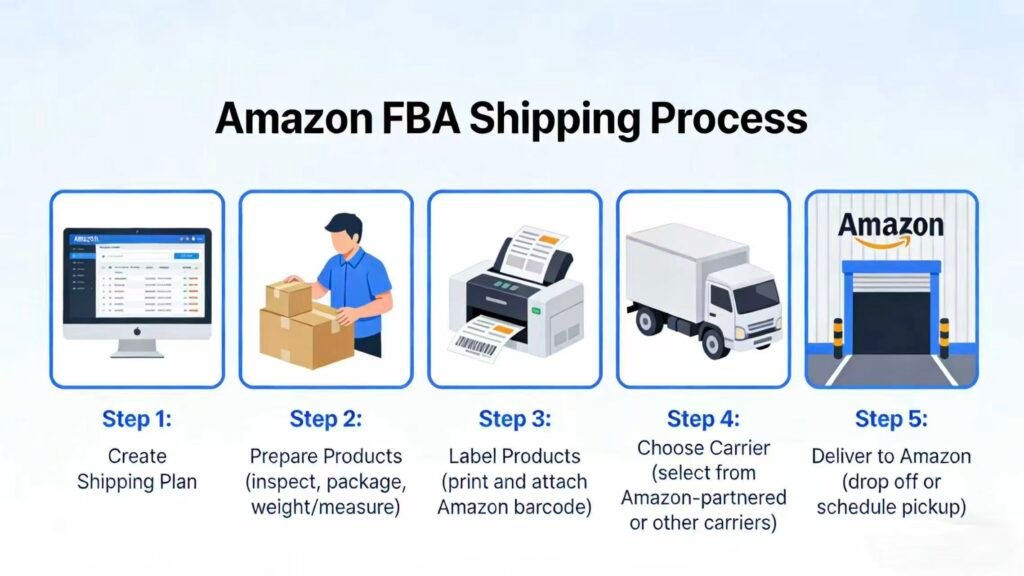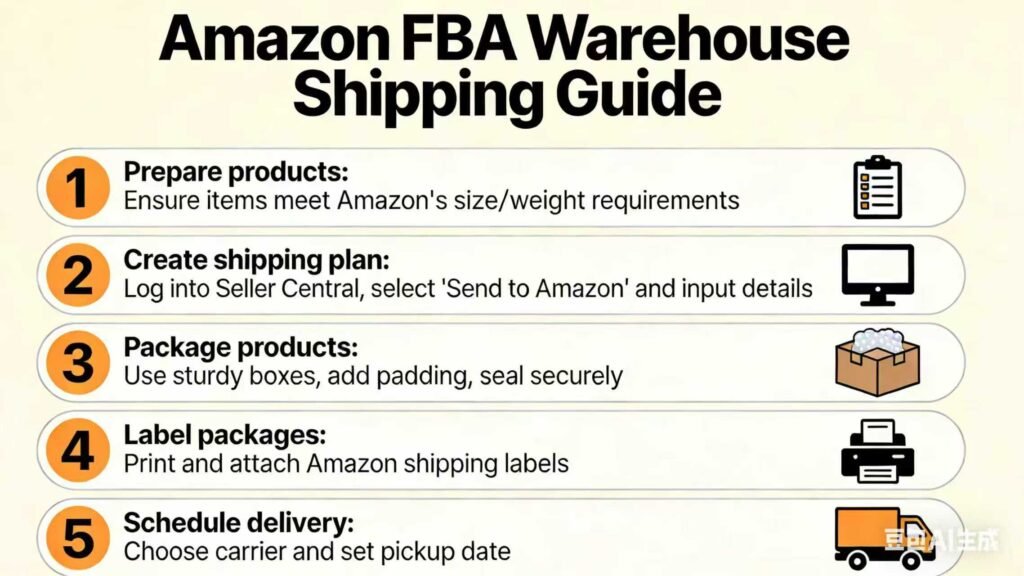
Amazon FBA Shipping-FBA Shipping From China
What is Amazon FBA shipping?
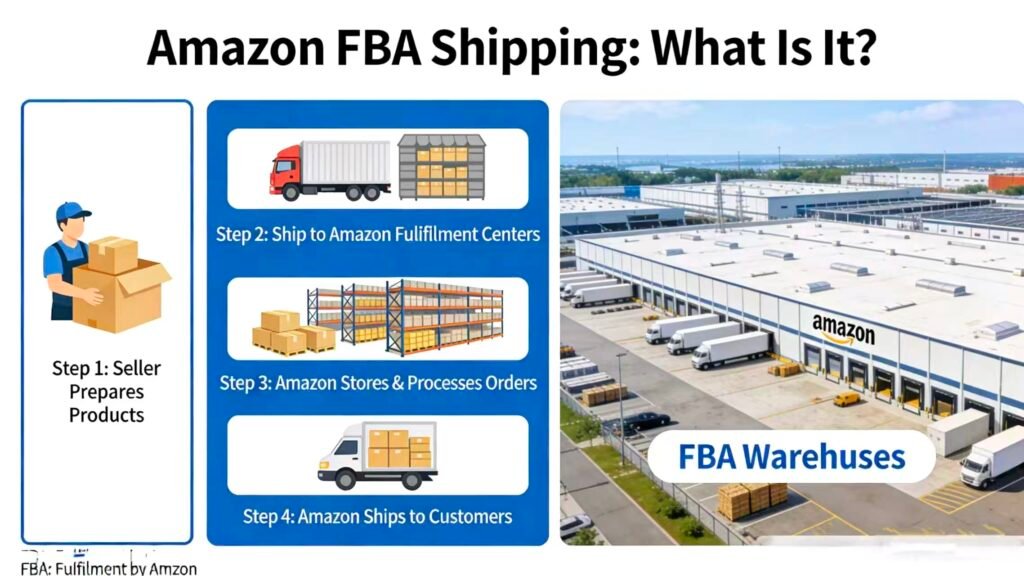
Amazon FBA Shipping (Fulfillment by Amazon) is a specialized logistics service that allows sellers to send inventory directly from their factory or warehouse to Amazon’s fulfillment centers. Once received, Amazon handles storage, picking, packing, shipping to end customers, and returns, including Prime-eligible fast delivery. This solution simplifies cross-border e-commerce and allows sellers to scale globally without managing local warehouses or last-mile logistics.
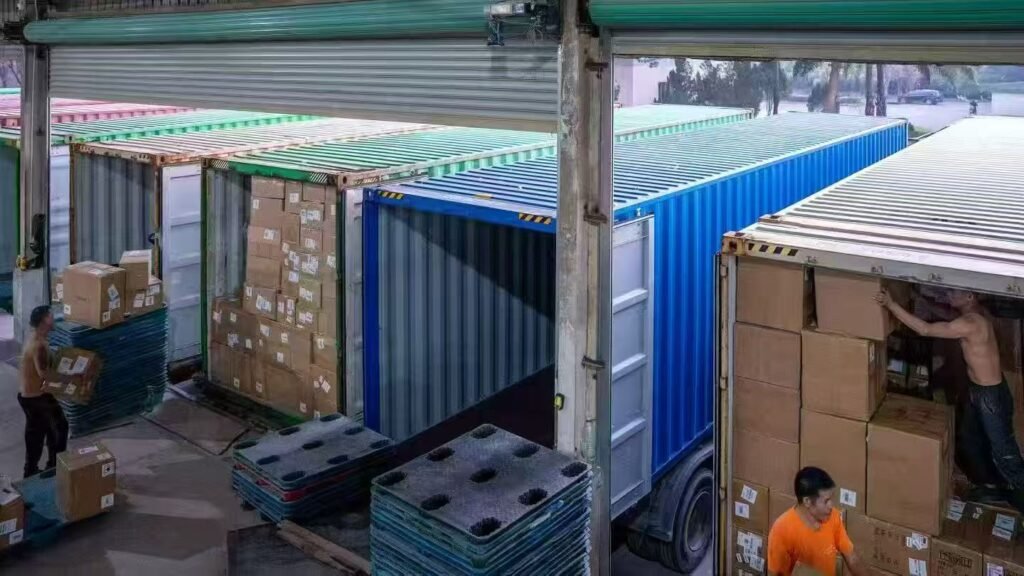
For sellers exporting from China, Amazon FBA shipping requires strict compliance with packaging, labeling, and carton content rules. Mistakes can lead to delays or rejected shipments, which is why working with a professional freight forwarder is crucial. BatteryShipment specializes in FBA-compliant shipping, managing everything from factory pickup, sea, air, or express transportation, to seamless delivery into Amazon fulfillment centers.
Key benefits of Amazon FBA shipping include faster delivery, access to Amazon Prime customers, reduced workload for sellers, and reliable order fulfillment. It supports small-to-medium batch shipments and specialized cargo such as electronics or batteryshipment, ensuring goods reach customers efficiently while meeting Amazon’s requirements.
By partnering with BatteryShipment, sellers gain peace of mind: accurate documentation, FBA-compliant packaging, and timely delivery. This turnkey logistics solution improves customer satisfaction, boosts conversion rates, and provides a competitive edge in major e-commerce markets like the US, Europe, and Japan, allowing businesses to focus on sales and growth while we handle the complexities of cross-border shipping.
What is process for shipping goods to Amazon FBA?
How to send products to Amazon FBA warehouse?
Shipping products to Amazon FBA (Fulfillment by Amazon) warehouses requires careful planning and strict compliance with Amazon’s guidelines. Partnering with experienced freight forwarders like BatteryShipment can simplify the process and ensure timely delivery. Here’s a step-by-step approach:
1. Prepare Your Products
Convert your listings to FBA in Amazon Seller Central.
Generate a shipment plan, specifying quantities and fulfillment centers.
Label each unit with FNSKU barcodes and apply carton labels according to Amazon’s requirements.
Ensure proper packaging: use sturdy boxes, secure sealing, weight limits (≤22.7kg/50lbs), and adequate cushioning, especially for fragile or regulated items like lithium batteries.
2. Choose the Right Shipping Method
Sea Freight: Cost-effective for bulk shipments (FCL/LCL), transit 25–40 days.
Air Freight: Faster delivery for medium-value shipments, transit 7–12 days.
Express Shipping: Best for urgent small parcels, transit 2–5 days.
3. Customs Clearance and Compliance
International shipments must comply with import regulations.
DDP shipping ensures duties, taxes, and customs fees are prepaid, simplifying delivery.
Accurate HS codes, documentation, and compliance with FDA/FCC or EU certifications are crucial to avoid delays.
4. Delivery to Amazon Fulfillment Centers
Schedule appointments with Amazon FCs for pallet or carton delivery.
Use approved carriers or freight forwarders like BatteryShipment for seamless door-to-FBA delivery.
Track shipments via Amazon Seller Central to monitor customs clearance and warehouse receipt.
5. Optimize for Efficiency
Consolidate SKUs to save on shipping costs.
Plan ahead for sea freight lead times (4–6 weeks) or air freight (2–3 weeks).
Start with small batches to ensure compliance before scaling up.
Key Advantages of Professional FBA Shipping:
Compliance with Amazon FBA packaging and labeling rules
End-to-end international logistics and DDP customs clearance
Reliable door-to-FBA-center delivery, reducing errors and delays
Ideal for small-to-medium batch shipments, electronics, and batteryshipment
With BatteryShipment, sellers can streamline Amazon FBA shipping, avoid operational risks, and focus on growing their e-commerce business while ensuring fast, compliant, and cost-effective delivery.
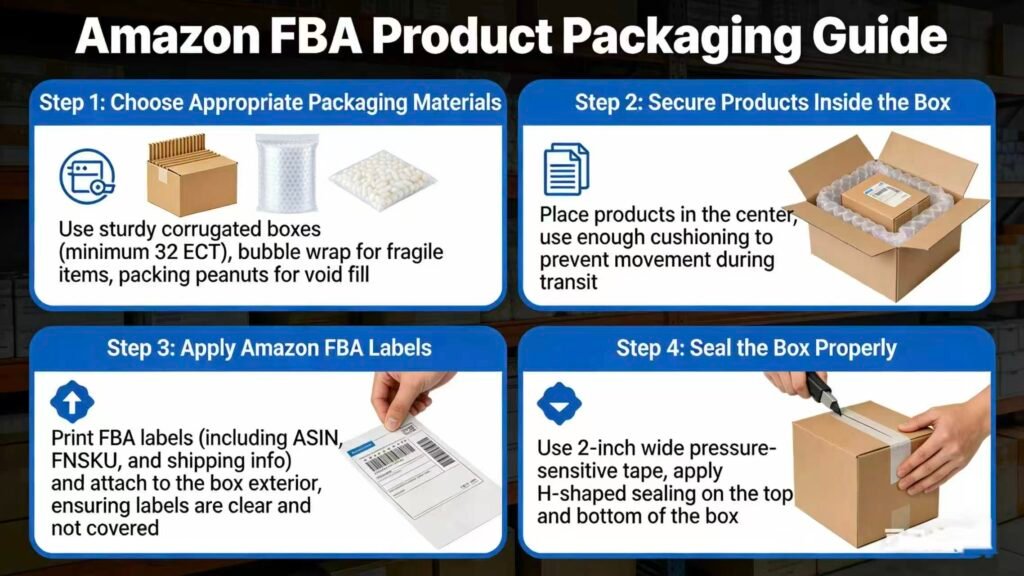
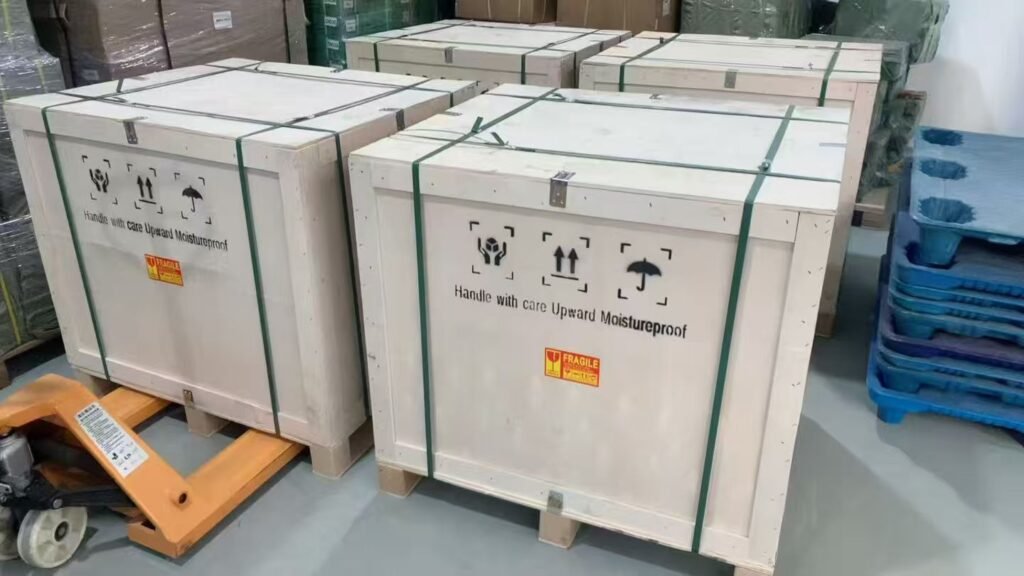
How to properly package products for Amazon FBA shipping?
Carton Selection and Standards
- Used cartons with damage, deformation, or residual tape
- Display/open cartons or cartons without lids
- Oversized cartons designed for pallet dimensions
- Branded cartons intended for other platforms (e.g. Amazon-branded boxes)
- Maximum length of one side: ≤ 63.5 cm (25 inches)
- Maximum carton weight: ≤ 22.7 kg (50 lbs)
- Sum of the three sides: ≤ 250 cm
- Carton compression strength ≥ 32 kg/m² (BC double-wall corrugated board)
- Double-layer cartons are recommended for heavy cartons (> 15 kg)
- Oversized cartons (any side > 63.5 cm) must be palletized
Labeling Requirements
- Each sellable unit must have an FNSKU label applied individually, fully covering the original manufacturer barcode. Labels must be generated from the Amazon Seller Central system.
- Each outer carton must have Amazon shipment labels, with the following guidelines:
- Apply to a flat surface of the carton, avoiding seams and carton edges
- Distance from carton edges: ≥ 5 cm
- Distance between labels: ≥ 5 cm
- Labels must not cover seams and must not be taped over or obscured
Packaging Material Selection
- Bubble wrap / bubble bags (thickness ≥ 0.5 mm)
- Full sheets of foam paper / EPE (pearl cotton)
- Air pillows / air cushions
- Full sheets of kraft paper / packing paper
- Small foam pieces or foam peanuts
- Shredded paper or paper scraps
- Any loose or easily shifting materials
- Gap between product and carton wall: ≤ 5 cm (fill if larger)
- At least 2 inches (5 cm) of cushioning material between products
Carton Sealing Standards
Use strong BOPP tape (width ≥ 5 cm) and apply the “H-seal” method:
- Strapping bands
- Nylon ropes
- Large staples
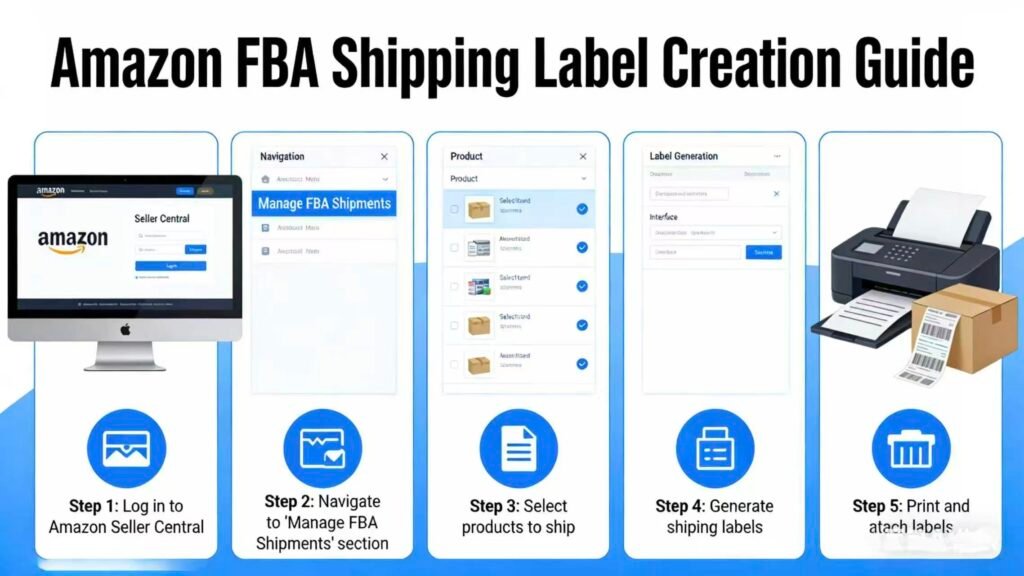
How to creat Amazon FBA shipping labels?
Creating accurate Amazon FBA shipping labels is crucial to ensure your products are accepted at fulfillment centers and avoid delays or extra fees. There are two main types of labels: FNSKU product labels and FBA carton/box labels.
1. Generate FNSKU Product Labels
Log in to Amazon Seller Central → Inventory > Manage Inventory → select products → Print Item Labels. Each unit must have a scannable FNSKU label covering any manufacturer barcode. Use a thermal or high-quality laser printer for clarity. For international shipments, include a “Made in China” label if required.
2. Print and Apply Carton/Box Labels
After creating your shipment plan, Amazon generates unique carton labels for each box or pallet. Print at least two labels per box on flat surfaces; for pallets, label all four sides. Ensure labels are readable, not covered by tape, and placed at least 1.5″ from edges. Heavy or oversized boxes require additional indicators, like “Team Lift” labels.
3. Packaging Compliance
Use Amazon-approved boxes, respect weight limits (≤22.7kg/50lbs), and secure contents with bubble wrap or air pillows. Fragile or liquid items need extra protection and labeling. Proper packaging ensures FBA shipment acceptance and prevents damage during transit.
4. Final Verification and Tracking
Double-check all labels for clarity and accuracy, and test-scan if possible. Track the shipment in Seller Central to monitor delivery progress to the fulfillment center.
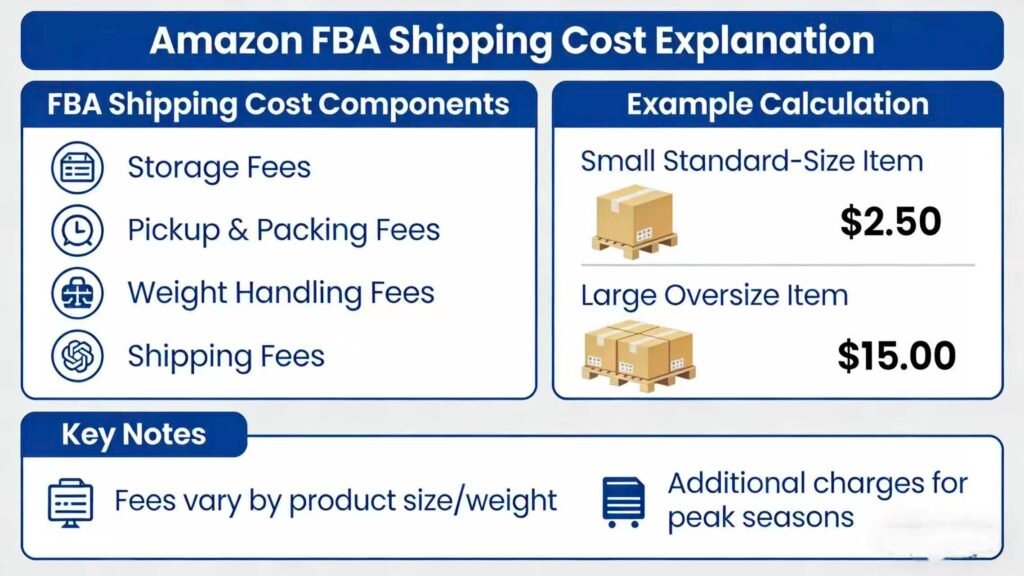
How much does Amazon FBA shipping cost?
1.Fee Structure and Calculation
- Product size tier (standard-size vs. oversize)
- Weight (the greater of actual weight or dimensional weight)
- Product category
2.Standard-Size Product Fees (U.S. Marketplace)
| Weight Range | Fulfillment Fee (USD) |
| ≤ 2 oz | $3.06 |
| 2–4 oz | $3.34 |
| 4–8 oz | $4.08 |
| 8–12 oz | $4.32 |
| 12–16 oz | $4.75 |
| 1–1.25 lb | $4.99 |
| 1.25–2 lb | $5.40 |
| 2–3 lb | $6.08 |
| > 3 lb | $6.44 + $0.40 per additional lb |
- Small standard-size: $3.50 (about 7% higher than non-apparel)
- Large standard-size: $4.56 (about 16% higher than non-apparel)
3.Oversize Product Fees (U.S. Marketplace)
| Size Tier | Longest Side Limit | Girth (L+W+H) Limit |
| Small Oversize | ≤ 63.5 cm (25″) | ≤ 250 cm |
| Large Oversize | ≤ 120 cm | ≤ 300 cm |
| Oversize | > 120 cm | No fixed limit |
- Small Oversize: Base fee $9.39 + $0.64 per additional lb (≤70 lb)
- Large Oversize: Base fee $13.35 + $0.64 per additional lb (≤70 lb)
- Oversize: Base fee $20.05 + $0.64 per additional lb (≤70 lb)
- Special Oversize (>70 lb): $194.96 + $0.19 per lb over 151 lb
4.European Marketplace Fulfillment Fees (Effective February 2025)
| Weight Range | Fulfillment Fee (€) |
| ≤ 150 g | €3.74 |
| ≤ 400 g | €3.36 |
| ≤ 900 g | €4.73 |
| ≤ 1.4 kg | €5.50 |
| ≤ 2.9 kg | €7.00 |
5.Special Fees and Incentive Programs
- Eligibility: Product price ≤ $10
- Benefit: About $0.86 lower per unit than standard FBA fees
- Application: Automatically applied by the system (no manual request required)
- UK: £0.26
- DE / ES / IT / NL: €0.26
- SE: SEK 2.50
- PL: PLN 1.15
- Small standard-size items (≤8 oz): additional $0.10–$0.20 per unit
- Example: a 2–4 oz item increases from $3.15 to $3.34
6.Fee Calculation Example
- U.S. marketplace: [ (20 \times 15 \times 5) \div 139 \approx 13.67 \text{ cubic inches} \approx 0.08 lb ]
- 0.8 kg ≈ 1.76 lb → use the higher value (1.76 lb)
- Classified as Large Standard-Size
- Fulfillment fee = $5.40 (1.25–2 lb tier)
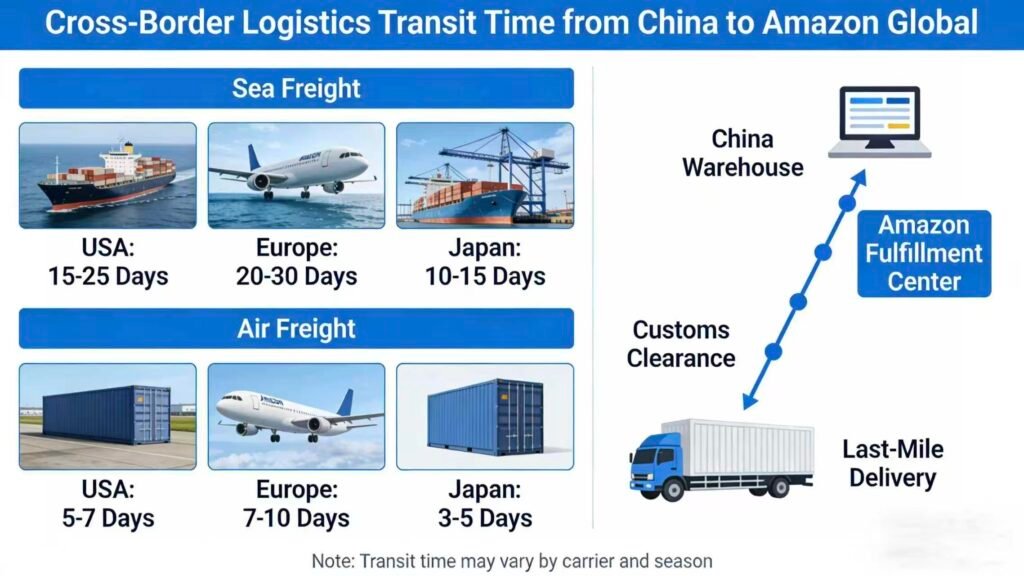
How long does Amazon FBA shipping take?
Shipping products to Amazon FBA centers involves two main phases: international transit and warehouse processing. Total time varies by shipping method, origin, and destination. Working with a professional logistics partner like BatteryShipment can help ensure timely delivery and compliance.
1. Transit from China to Amazon Fulfillment Centers
Express shipping (DHL, UPS, FedEx): 2–5 days, suitable for urgent or small shipments.
Air freight: 5–12 days, ideal for medium-value products.
Sea freight (DDP): 25–45 days, cost-effective for bulk shipments. Fast options may shorten transit by a few days.
Typical Shipping Times to Key Markets:
USA (West Coast): 25–30 days by sea, 7–12 days by air
USA (East Coast): 33–50 days by sea
Germany & France: 30–40 days by sea, 7–12 days by air
UK: 20–35 days by sea, 4–7 days by air
Japan: 7–15 days by sea, 3–5 days by air
Australia: 15–25 days by sea, 5–10 days by air
2. Amazon Warehouse Processing
After arrival, Amazon scans and checks in your inventory. Receiving and shelving usually takes 3–7 days, but can be longer during peak seasons.
3. Factors Affecting Delivery Time
Customs clearance: Using DDP shipping simplifies import procedures.
Warehouse appointments: Deliveries must meet Amazon’s strict scheduling rules.
Peak periods: Extra time is needed during Q4 or major sales events.
Product type: Oversized or regulated items may require special handling.
Tips for Sellers
Plan sea shipments 4–6 weeks ahead, air shipments 2–3 weeks.
Partner with experienced forwarders like BatteryShipment for smooth delivery, proper labeling, and compliance.
Consolidate SKUs when possible to reduce costs and simplify warehouse handling.
By planning ahead and choosing the right shipping method, sellers can optimize inventory flow, avoid stockouts, and maintain smooth operations with Amazon FBA.
Batteryshipment for Amazon FBA
- Professional team support / FNSKU labeling services: We assist with or fully handle FNSKU labeling, ensuring labels fully cover the original manufacturer barcode, maintain a resolution of ≥300 DPI, and are placed away from seams—strictly complying with Amazon’s Product Labeling Requirements.
- Outer carton compliance with FBA standards: All shipments use six-sided intact corrugated cartons, fully aligned with Amazon FBA packaging regulations.
- Optimized transportation solutions: We offer air freight and sea freight dedicated lines, avoiding restricted routes for dangerous goods to ensure stable transit times—5–10 days by air, 12–18 days via Matson fast vessels, and 25–40 days by standard ocean shipping.
- Dedicated warehouse appointment & end-to-end tracking: Our exclusive delivery appointment service provides full visibility throughout the process, including real-time updates on customs clearance progress, arrival status, and warehouse receipt confirmation, enabling sellers to monitor cargo movement at any time through the system.