DDP Shipping From China

DDP shipping is a core term under the Incoterms® (International Commercial Terms) and is also known as “Delivered Duty Paid.” It is one of the trade terms under which the seller bears the greatest responsibility, risk, and cost. Its defining feature is: “the seller handles everything end to end, while the buyer simply receives the goods.”
 
This shipping method is becoming increasingly popular, with more customers choosing DDP for their international shipments. For freight forwarders, it also raises the bar for service capabilities, as it requires comprehensive control over transportation, customs clearance, and final delivery.
We have accumulated a growing number of successful DDP shipping cases across different markets. To learn more details, please continue reading.

What is DDP Shipping

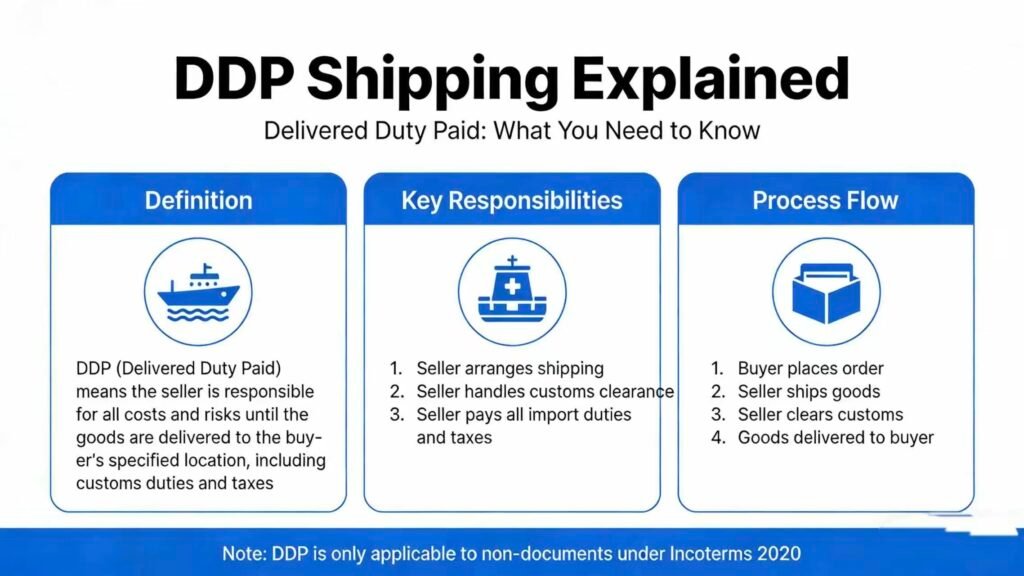
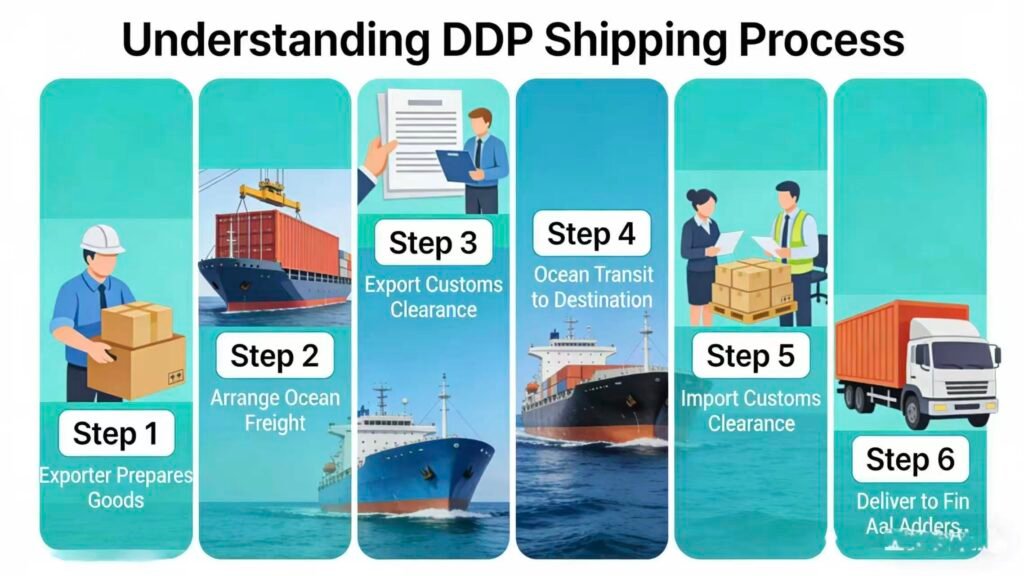
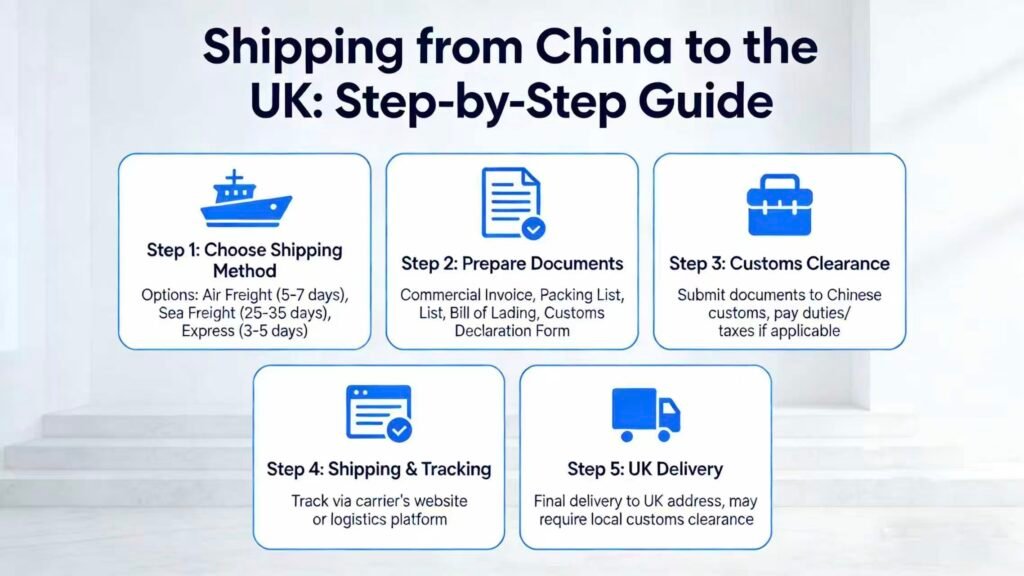
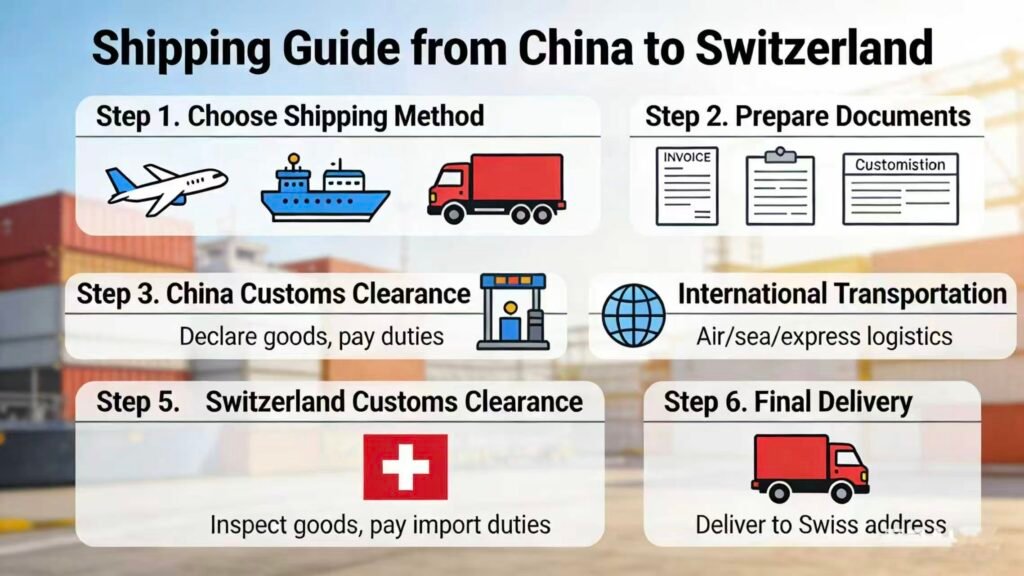
DDP Shipping (Delivered Duty Paid) is a widely used Incoterms® 2020 rule that places full responsibility on the seller to deliver goods to the buyer’s named destination, with all costs, duties, and taxes paid. Under DDP shipping terms, the seller manages the entire process—from pickup in China, export and import customs clearance, international transport (air, sea, rail, or road), to final door-to-door delivery—allowing the buyer to simply receive the goods without handling customs or import formalities.

One of the biggest advantages of DDP shipping from China is cost certainty. Buyers receive a fixed landed cost upfront, avoiding hidden charges such as import duties, VAT, or clearance fees. This makes DDP shipping especially popular in cross-border e-commerce, B2B trade, and small-to-medium batch shipments, where simplicity and budget control are critical. It is commonly used for deliveries to Europe, the United States, and Southeast Asia.

Compared with Incoterms like EXW or FOB, DDP offers the highest level of convenience for buyers but requires strong expertise from the seller or freight forwarder. Accurate HS codes, local tax rules, and destination customs regulations must be handled correctly to avoid delays or penalties. This is particularly important for regulated cargo, such as lithium batteries. Experienced providers like batteryshipment support DDP shipping for battery cargo by ensuring proper documentation and compliance throughout the transport process.

Overall, DDP shipping is an ideal solution for buyers seeking a true door-to-door international shipping service with predictable costs and minimal risk. For sellers, offering DDP can significantly improve customer experience and competitiveness in global markets.

How DDP Shipping Works?

DDP (Delivered Duty Paid) is the Incoterms rule under which the seller bears the maximum level of responsibility in international trade, covering transportation, insurance, export and import customs clearance, as well as all duties and taxes. Below is the complete DDP operational process:

1.Confirm Quotation and Contract Details

Buyer provides:
  • Cargo details (product name, quantity, weight, volume)
  • Exact destination address
  • Required delivery time
Seller / Freight Forwarder provides:
  • Quotation (including freight, insurance, customs duties, taxes, etc.)
  • Transportation plan (ocean freight / air freight / road transport)
  • Estimated transit time
Sign the DDP contract:
  • Clearly specify the “Delivered Duty Paid” term
  • Total price (all-inclusive)
  • Delivery location
  • Payment terms
  • Liability for breach of contract

2.Select a Freight Forwarder

Choose a freight forwarder or logistics provider with a strong customs clearance network and import qualifications in the destination country.

3.Cargo Preparation and Packaging

Prepare the goods in compliance with transportation and destination-country import requirements, ensuring proper and secure packaging.

4.Domestic Transportation and Export Customs Clearance

The freight forwarder arranges trucking to collect the cargo from the seller’s warehouse and provides a pickup receipt, then completes export customs clearance.

5.International Transportation Stage

Select the appropriate mode of transport: air freight, ocean freight, express courier, or rail transport, based on cost, timing, and cargo characteristics.

6.End-to-End Monitoring

  • Shipment tracking: Monitor cargo status in real time through the logistics system (departure, transshipment, ETA).
  • Insurance arrangement: Purchase All Risks insurance, covering the entire transportation process (recommended coverage: 110% of cargo value).
  • Exception handling: In case of delays or damage, immediately activate contingency plans, inform the buyer, and retain evidence for insurance claims.

7.Import Customs Clearance at Destination

At least 72 hours in advance, submit commercial invoices, packing lists, bills of lading, and other clearance documents to the destination agent for pre-declaration.

8.Final Delivery and Receipt

Deliver the goods to the buyer’s designated location by truck or courier. Complete unloading and obtain proof of delivery in accordance with the contract terms.

This structured DDP process ensures full compliance, cost transparency, and smooth door-to-door delivery for international shipments.

DDP Shipping From China To USA

DDP Shipping from China to USA (Delivered Duty Paid, Incoterms® 2020) is one of the most comprehensive and buyer-friendly international shipping solutions. Under DDP terms, the Chinese seller takes full responsibility for the shipment until it is delivered to the U.S. buyer’s specified address. This all-inclusive service covers pickup in China, export customs clearance, international transportation (air freight, sea freight, or express), U.S. import customs clearance, payment of all duties and taxes—including Section 301 tariffs—and final truck or courier delivery.

DDP shipping from China to the USA is widely used in cross-border e-commerce, Amazon FBA, B2B trade, and DTC fulfillment, as it provides buyers with a clear landed cost and eliminates unexpected charges. Depending on urgency and cargo type, transit times typically range from 2–5 days by express, 5–10 days by air freight, and 25–40 days by sea freight DDP, making it suitable for both small parcels and medium-volume shipments.

The main advantage of DDP shipping is cost transparency and convenience. U.S. buyers do not need to handle customs procedures, import filings, or duty payments, while sellers can improve conversion rates and customer trust by offering a true door-to-door service. However, DDP also places higher compliance requirements on the seller. Accurate HS code classification, proper ISF filing, FDA/FCC compliance (for electronics and regulated products), and correct duty calculations are critical to avoid delays, penalties, or cargo holds.

This is where experienced logistics providers make a difference. Professional forwarders with U.S. local customs and delivery networks can manage complex regulations and ensure smooth clearance. Companies like BatteryShipment support DDP shipping from China to the USA with compliant customs handling, accurate landed cost calculation, and expertise in regulated cargo such as lithium batteries.

DDP Shipping From China To Germany

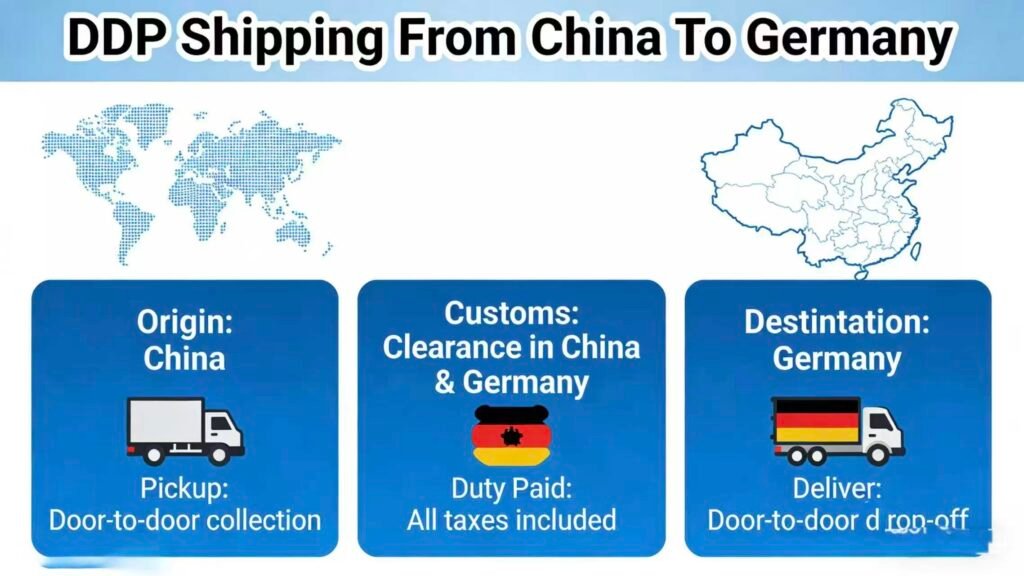
DDP shipping from China to Germany is becoming increasingly common. Germany has its own specific regulatory requirements and also serves as a major logistics hub in Europe. Below is a detailed explanation of DDP shipping to Germany:


1.Import Customs Clearance in Germany
① Pre-declaration preparation (72 hours before cargo arrival)
The German agent submits the following documents:
– Commercial invoice
– Packing list
– Bill of lading
– Certificate of origin
– EORI number
– VAT number
A pre-ruling from German Customs is obtained to confirm the correct duty rate.
2.Formal customs clearance process
– Document exchange: Use the bill of lading to obtain the Delivery Order (D/O).
– Import declaration: Submit the electronic customs declaration through the German Customs ATLAS system.
– Duty and tax calculation & payment:
– Customs duty = Customs value × duty rate
(typically 0%–12%, depending on the HS code)
– Import VAT = (Customs value + customs duty) × 19%
(standard rate; 7% applies to certain goods)
– Customs inspection (spot checks): Cooperate with customs to verify that the goods match the declaration.
– Release: After duties and taxes are paid and inspection is passed, customs issues the release approval.
Important:
Under the DDP model, customs clearance must be completed using the seller’s or freight forwarder’s German VAT number (format: DE123456789) and EORI number.


3.Final Delivery and Proof of Receipt in Germany
– Arrange trucking to deliver the cargo from the port or airport to the buyer’s designated address.
– Unloading (under DDP terms, unloading is normally the seller’s responsibility unless otherwise agreed).
– The buyer inspects the goods and signs the Proof of Delivery (POD).
– The seller provides the buyer with a full set of documents, including:
– Commercial invoice
– Bill of lading
– Insurance policy
– Proof of duty and tax payment


4.Cost Structure of Germany DDP
Total DDP price =
Transportation cost + Insurance + Export charges + Import duties & VAT + Final delivery charges


5.Key Risks in DDP Operations to Germany
– VAT and EORI compliance risks
– Duty and tax estimation risks
– Customs clearance delay risks
– Cargo damage or loss risks


This overview outlines the core compliance requirements, cost structure, and operational risks involved in DDP shipping from China to Germany, helping exporters manage shipments more effectively and avoid regulatory pitfalls.

DDP Sea Freight From China

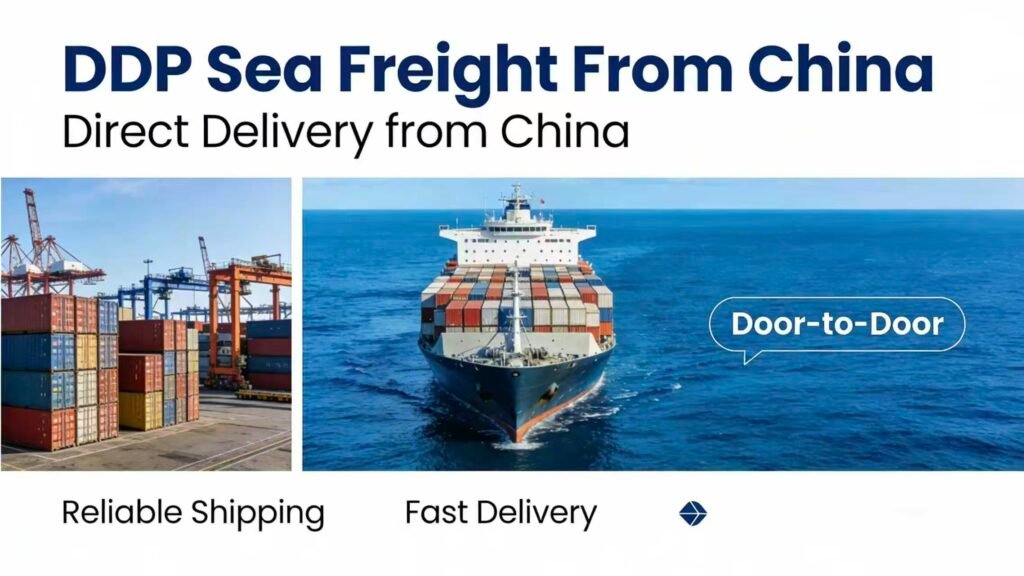
DDP Sea Freight from China (Delivered Duty Paid) is a highly cost-effective and buyer-friendly international shipping solution that provides true door-to-door delivery with full cost certainty. Under DDP terms, the Chinese seller assumes complete responsibility for the shipment until it arrives at the buyer’s designated address, covering pickup in China, export customs clearance, ocean freight, destination port charges, import customs clearance, payment of all duties and taxes, and final inland delivery.

DDP shipping by sea from China is widely used for bulk cargo, FCL and LCL shipments, B2B trade, and cross-border e-commerce replenishment, especially for routes such as DDP sea freight from China to USA, Europe, and Southeast Asia. Compared with air freight or express DDP, sea freight offers significantly lower costs, making it ideal for large-volume or heavy cargo where transit time is flexible. Typical DDP sea freight transit times range from 25–45 days, depending on destination, customs efficiency, and inland delivery distance.

One of the main advantages of DDP shipping from China is cost transparency. Buyers receive a single, all-inclusive landed price with no hidden fees, no customs paperwork, and no unexpected duty payments. This simplicity makes DDP sea freight particularly attractive to overseas buyers without import experience and helps sellers improve trust, conversion rates, and long-term cooperation.

However, DDP sea freight requires strong operational and compliance expertise. Accurate HS code classification, duty and tax calculation, ISF filing (for U.S. imports), and destination customs compliance are critical to avoid delays, penalties, or cargo holds—especially for regulated goods such as electronics and lithium batteries.

With experienced forwarders like BatteryShipment, DDP sea freight from China becomes a reliable and controlled logistics solution.

DDP Shipping Cost/Rate/Price From China

DDP Total Cost = Base Freight + Surcharges + Import Duties & Taxes + Final Delivery

1. Base Freight (Largest Cost Component)
– Ocean Freight
– 20’ container: USD 2,800–5,500
– 40’ container: USD 3,800–8,600
– LCL: USD 80–150 / CBM
– Air Freight
– USD 5–25 / kg (unit rate decreases as weight increases)
– Rail Freight
– FCL: USD 8,800–11,500 / container
– LCL: USD 260–310 / CBM
– Express Courier
– USD 10–30 / kg (based on weight and volume)

2. Surcharges (Fixed or Percentage-Based)
– Documentation fee: USD 50–150 / shipment
– Customs clearance fee: USD 80–200 / shipment (export + import)
– Port / airport handling fees:
– Ocean freight: USD 100–300 / container
– Air freight: USD 1–3 / kg
– Fuel surcharge: 10%–30% of base freight (subject to fuel price fluctuations)
– Remote area surcharge: USD 50–200 (depending on destination distance)
– Special cargo handling fee: USD 100–500
(e.g. dangerous goods, oversized cargo)

3. Import Duties & Taxes (Example)
Assumptions:
– Cargo value: EUR 10,000
– Freight cost: EUR 1,000
– Insurance: EUR 100
– Customs duty rate: 5%
1️⃣ Customs duty
= CIF value × duty rate
= (10,000 + 1,000 + 100) × 5%
= EUR 555
2️⃣ Import VAT
= (CIF value + customs duty) × VAT rate
= (11,100 + 555) × 19%
= EUR 2,214.45
3️⃣ Total import duties & taxes
= 555 + 2,214.45
= EUR 2,769.45
(≈ 25% of the cargo value)

4. Final Delivery (Last-Mile) Cost
– Varies by country and delivery distance
– Typically ranges from USD 150 to USD 1,500

This breakdown clearly shows how DDP pricing is structured, helping shippers better estimate total landed costs and avoid unexpected expenses during DDP shipping from China.
Frequently Asked Questions

DAP: Seller delivers goods to buyer’s location; buyer pays duties.
DDP: Seller handles all costs, duties, and delivery to buyer’s door.

Countries with strict import regulations, like Türkiye,  African country often restrict or complicate DDP shipments.


ed do eiusmod tempor incididunt ut labore et dolore magna aliqua. Ut enim ad minim veniam, quis nostrud exercitation.

The seller pays all duties, taxes, and customs fees under a DDP shipment.

Use DDP shipping when you want a hassle-free, door-to-door delivery with all duties and taxes included.