Door to Door Shipping From China
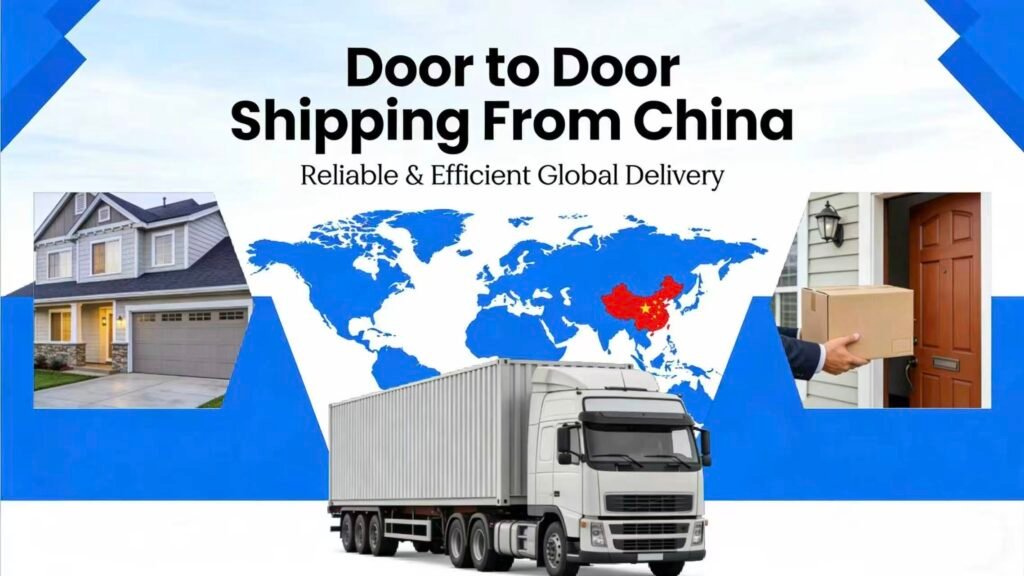
Table of Contents
Door to door shipping refers to a logistics service in which a freight forwarder or logistics provider is responsible for picking up the goods from the shipper’s location in China (factory or warehouse), transporting them via air, sea, rail, road, or express courier to the destination country, completing customs clearance and duty payment, and finally delivering the cargo to the overseas consignee’s address.
The entire door-to-door shipping process includes:
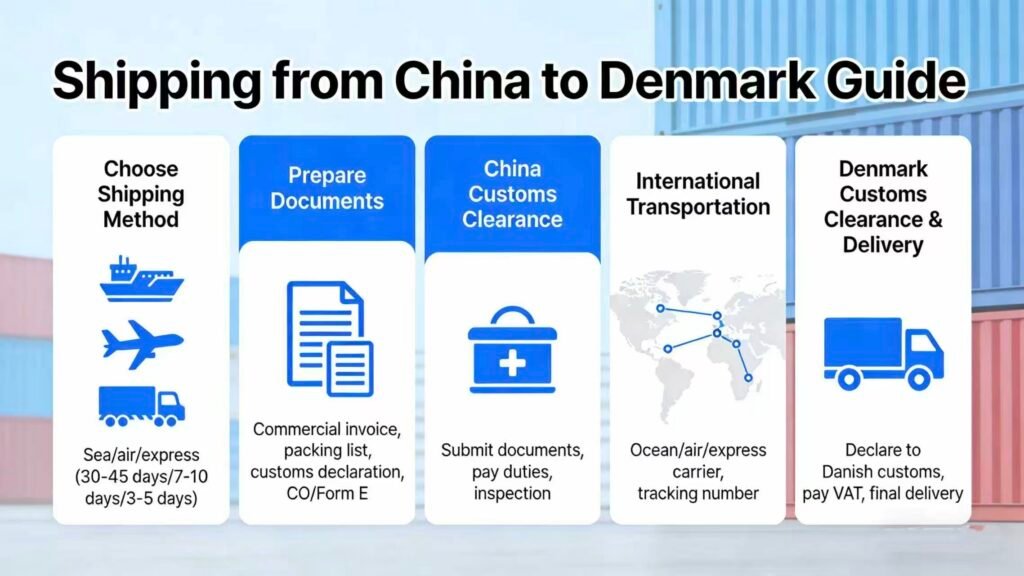
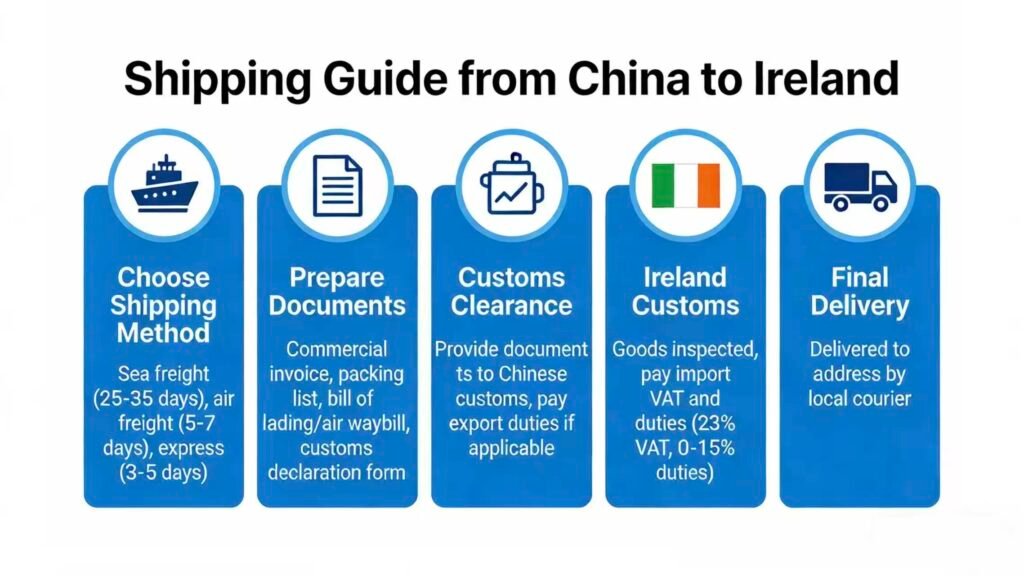
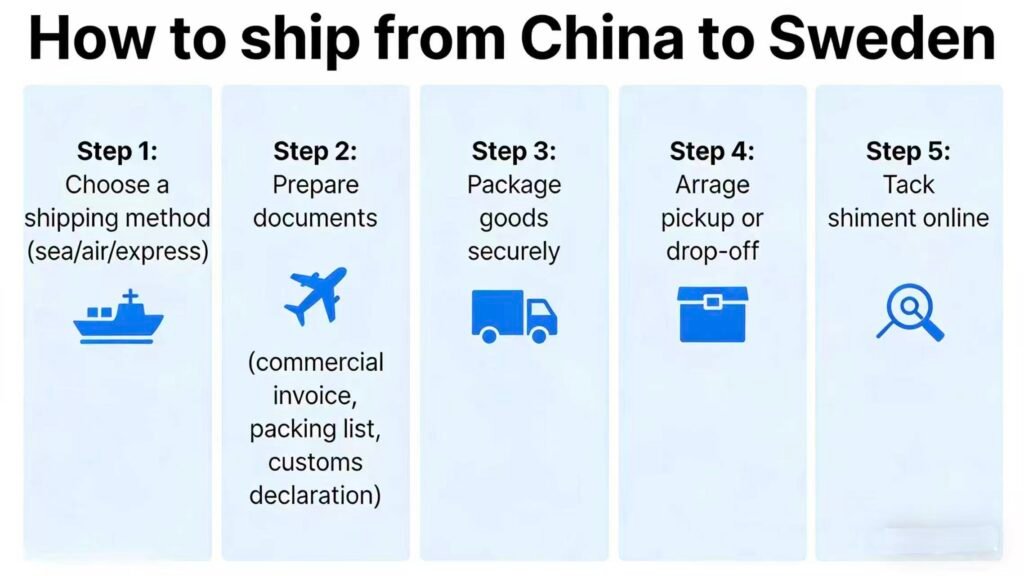
China pickup – international transportation – customs clearance & duty payment – last-mile delivery.
Below is our detailed explanation of the complete door-to-door shipping process.
1. Shipping from China to Spain
What is door to door shipping?
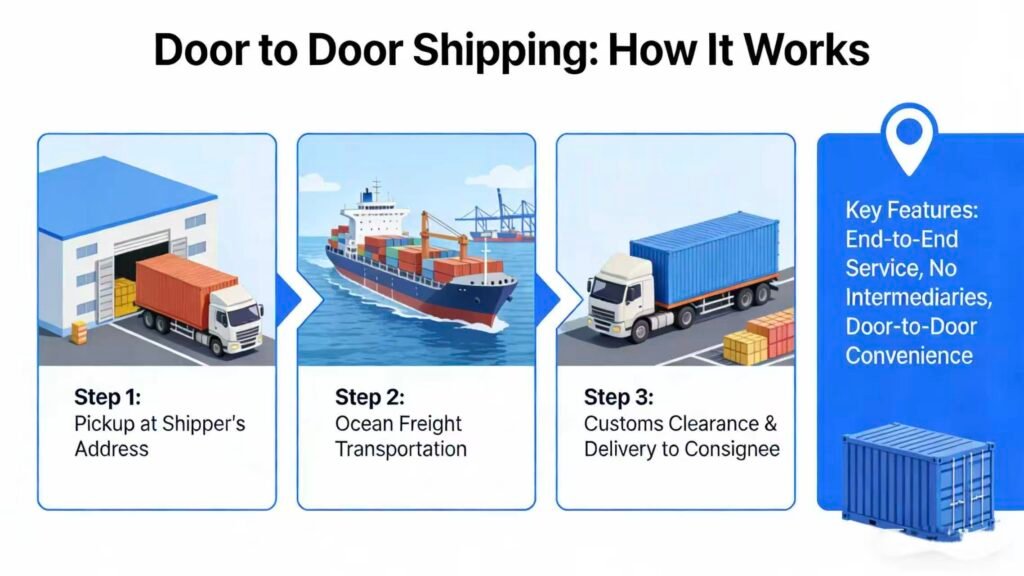
Door-to-door shipping is a comprehensive logistics service that delivers goods directly from the seller’s factory or warehouse to the buyer’s final destination. Instead of arranging pickup, customs clearance, international transport, and local delivery separately, shippers work with one freight forwarder who manages the entire process from start to finish.
This shipping solution typically includes origin pickup, export documentation, international transportation by sea, air, rail, or road, import customs clearance, and last-mile delivery. By consolidating all stages under one provider, door-to-door shipping reduces operational complexity, communication gaps, and transit risks commonly found in port-to-port shipping.
Door-to-door services are widely used in international shipping from China, especially for cross-border e-commerce, Amazon FBA replenishment, and small to medium-sized importers without dedicated logistics teams. Depending on the agreed Incoterms, shipments can be arranged under DDP (Delivered Duty Paid) or DAP/DDU, offering flexibility in duty and tax responsibility.
The main advantages are cost transparency, time savings, and predictable delivery. With an all-inclusive quote and a clear transit timeline provided upfront, businesses can better control logistics expenses while focusing on sales and growth. For companies prioritizing simplicity and accountability, door-to-door shipping remains one of the most efficient global logistics solutions.
How does door to door service work?
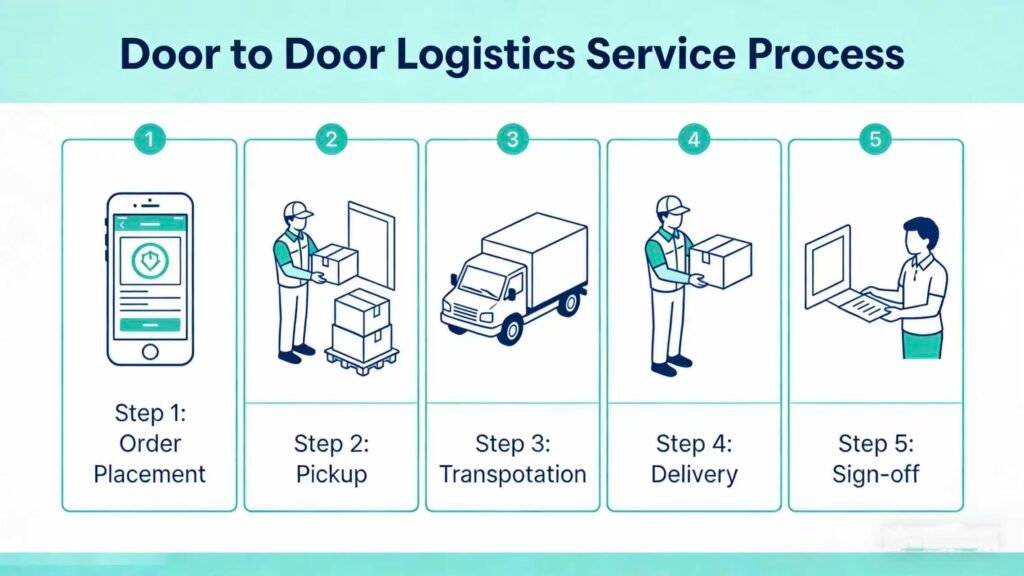
International door-to-door cargo transportation means the logistics provider takes full responsibility for transportation, customs clearance, and final delivery, shipping the goods directly to the consignee’s designated warehouse. Both the shipper and the consignee only need to cooperate at key stages, such as providing required documents and confirming receipt of the cargo.
I. Pre-Shipment Preparation: Confirm Requirements & Prepare Documents
This is the foundation of door-to-door shipping. The key questions to clarify are what the cargo is, how it will be transported, and whether it can clear customs smoothly.
1. Confirm Requirements and Sign the Contract
The shipper provides key information, including:
* Cargo name
* Weight / volume
* Cargo value
* Whether it is fragile or requires temperature control
* Pickup address in China
* Consignee’s address in the destination country
* Expected transit time
Based on these details, the logistics provider issues a quotation and clearly confirms:
* Trade terms (**DDP / DDU**, i.e. whether duties and taxes are included)
* Transportation mode
* Detailed cost breakdown
2. Prepare Shipping Documents
* **Commercial Invoice** (cargo description, quantity, unit price, total value, Incoterms)
* **Packing List** (weight, volume, and details of each package)
Additional documents may be required depending on cargo type:
* Dangerous goods: **MSDS, UN38.3 reports**, etc.
* Food / cosmetics: **inspection and quarantine certificates**
* Branded goods: **trademark authorization letter**
* Anti-dumping products: **Certificate of Origin**, etc.
### 3. Cargo Packaging and Marking
* The shipper reinforces packaging according to cargo characteristics (e.g. foam + cartons for fragile goods, pallets for oversized cargo). Paid customized packaging services can be provided by the logistics company.
* Outer packaging should clearly display key information: **consignee name, address, phone number, tracking number, and warning labels** (e.g. *Fragile*, *Keep Dry*) to avoid delivery errors.
## II. China-Side Operations: Pickup → Warehousing → Export Customs Clearance
1. **Door-to-door pickup** from the shipper’s factory or warehouse
2. **Warehousing and sorting**
3. **Export customs clearance** in China
## III. International Transportation
1. Shipment by **air freight, sea freight, rail, road, or express courier**
2. **End-to-end tracking and monitoring**
* The freight forwarder provides a tracking number.
* The shipper or consignee can track real-time shipment status via the logistics system and confirm whether the cargo has arrived at its destination.
## IV. Destination Import Customs Clearance & Final Delivery
### 1. Import Customs Clearance
After arrival at the destination port:
* Shipping documents are submitted to local customs for declaration.
* **Duties and taxes**:
* Under **DDP terms**, the freight forwarder pays import duty and VAT on behalf of the consignee in advance.
* Under **DDU terms**, the consignee is responsible for paying import duties and taxes.
### 2. Last-Mile Delivery
* Once customs clearance is completed, the cargo is transported to the freight forwarder’s overseas warehouse, sorted, and arranged for final delivery to the designated warehouse.
* **Door delivery**: The delivery staff delivers to the specified address. The consignee checks the **quantity and packaging condition** of the cargo before signing the Proof of Delivery (POD).
What are the different transportation methods for door to door shipping?
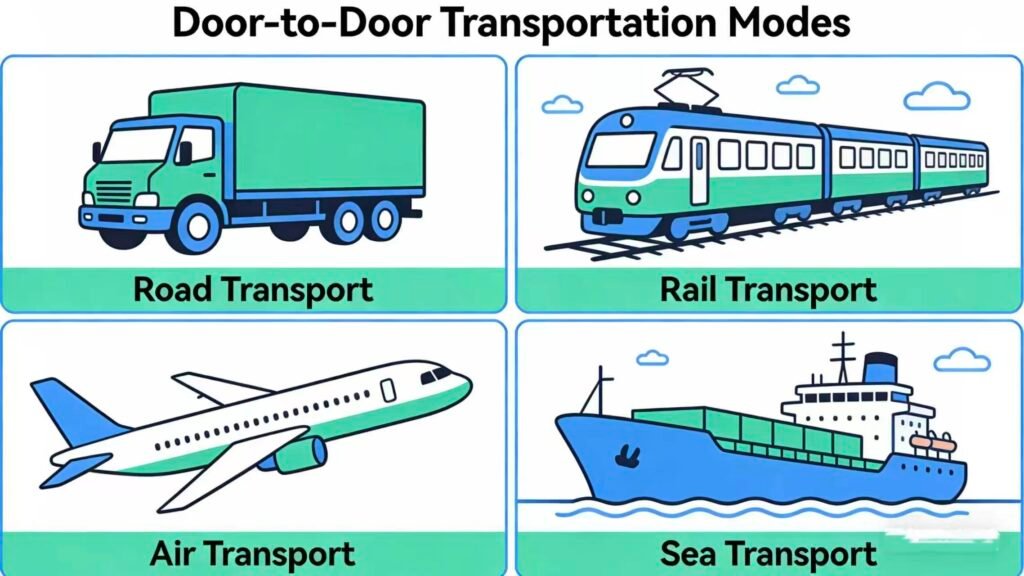
Door-to-door shipping is delivered through several core transportation methods, each designed to balance cost, transit time, and cargo suitability. The right option depends on shipment volume, urgency, destination, and handling requirements. Below are the five most commonly used door-to-door shipping methods in international logistics.
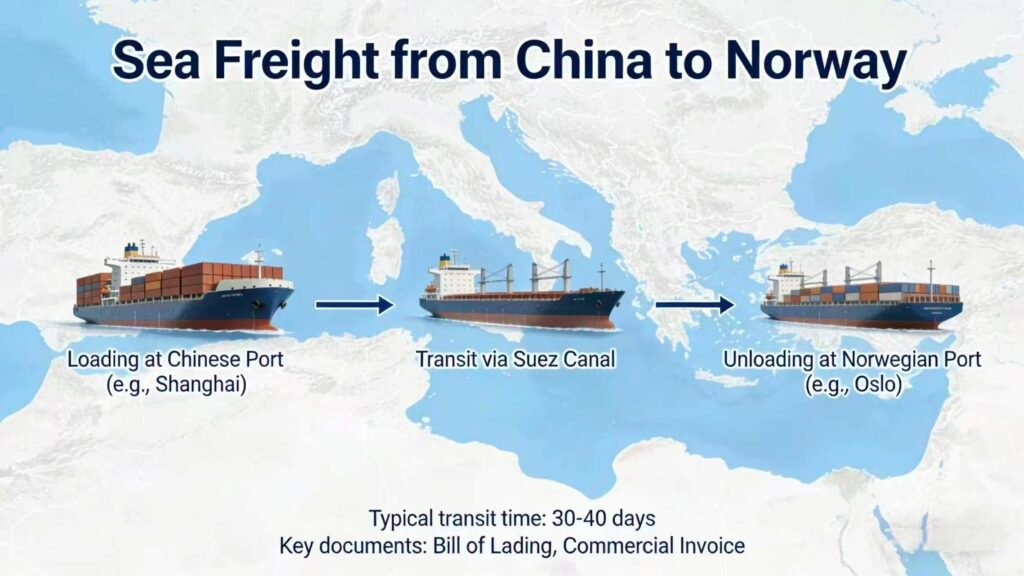
Door-to-door sea freight is the most cost-effective solution for large-volume and heavy shipments. It supports both FCL and LCL shipping, making it ideal for bulk goods, machinery, furniture, and non-urgent inventory replenishment. Transit times typically range from 25 to 45 days, but the low cost per unit makes door-to-door sea freight the preferred choice for cost-sensitive importers shipping from China to the US, Europe, and other global markets.
Door-to-door air freight is selected when speed and reliability are critical. This method integrates airport handling with full pickup and final delivery, offering transit times of 5–12 days depending on destination. Door-to-door air freight is commonly used for high-value goods, electronics, medical supplies, and time-sensitive e-commerce shipments, helping businesses reduce inventory pressure despite higher transportation costs.
Door-to-door rail freight plays a key role in Eurasian trade, especially along the China–Europe rail corridor. With transit times of 15–25 days, it provides a practical middle ground between sea and air freight. Door-to-door rail freight is well suited for manufactured goods, automotive parts, and cross-border e-commerce bulk shipments requiring stable schedules and controlled costs.
Door-to-door express shipping is the fastest option for small parcels and documents. Operated by carriers such as DHL, UPS, and FedEx, it offers delivery within 2–5 days, with integrated customs clearance and end-to-end tracking. This service is widely used for urgent samples, B2C e-commerce parcels, and emergency replenishments, though it is limited by size and weight restrictions.
Door-to-door road freight is essential for regional and cross-border land transport, particularly for intra-Europe shipments or China to Southeast Asia routes. With flexible routing and direct delivery, it supports palletized cargo, LTL shipments, and inland destinations, often serving as a critical first- or last-mile solution.
At BAT Logistics, we combine these transportation methods to design efficient door-to-door logistics solutions tailored to cargo type, timeline, and budget—ensuring predictable delivery and full supply chain visibility from origin to destination.
The advantages of door-to-door shipping
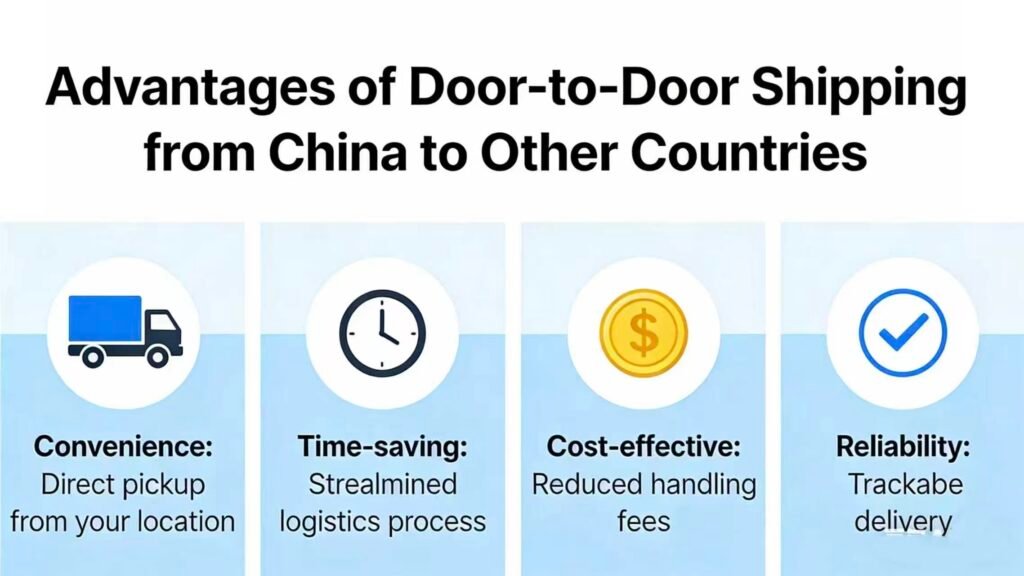
The difference between door-to-door transportation and shipments that only move to an airport or seaport lies mainly in the scope of service and the allocation of responsibility.
Door-to-door is an all-inclusive service, while port-to-port or airport-to-airport is a segmented, outsourced service. The key advantages of door-to-door shipping are that it is more worry-free, more efficient, and more controllable. A detailed comparison with port-to-port and airport-to-airport shipping is outlined below:
—
I. Full-Service Management: No Action Required from the Consignee
Door-to-door transportation involves fewer responsible parties. There is no need to separately appoint a destination customs broker or a last-mile delivery company.
This model is particularly suitable for SMEs, cross-border e-commerce sellers, and individual shippers, allowing them to focus on their core business without being distracted by logistics details.
—
II. Compliance Assurance: Professional Customs Clearance to Reduce Risks
In cross-border logistics, customs clearance is the most problem-prone stage.
With port-to-port or airport-to-airport shipping, customs clearance responsibility is transferred to the shipper or the consignee. Door-to-door shipping, however, reduces compliance risks through professional expertise.
Customs Clearance Advantages of Door-to-Door Service Providers:
1. Professional customs teams** familiar with local regulations, HS code classification, and duty & tax policies. They can pre-review documents (avoiding errors in commercial invoices and packing lists), thereby reducing inspection rates.
2. Under DDP terms, duties and VAT can be prepaid on behalf of the consignee, preventing delays, cargo holds, or penalties caused by the consignee’s unfamiliarity with tax procedures.
—
III. More Stable Transit Time
With door-to-door shipping, the entire transportation process is managed and controlled by a single provider, making costs and schedules more predictable and ensuring greater transit-time stability.
—
IV. Cost Control: All-In Price with No Hidden Charges
Port-to-port or airport-to-airport quotations usually include only the main carriage (line-haul) cost, while subsequent charges can easily exceed expectations.
Door-to-door shipping offers a bundled, all-in quotation, making costs clearer and more transparent.
Door-to-door pricing: transparent and predictable
Port-to-port / airport-to-airport:prone to hidden or unexpected costs
—
V. Unified Responsibility: Single Point of Accountability, Efficient After-Sales Support
The segmented responsibility in port-to-port or airport-to-airport shipping often makes claims and dispute resolution difficult. In contrast, door-to-door shipping provides end-to-end responsibility, offering stronger after-sales protection.
If cargo damage, loss, or delays occur during transit, there is only one liable party—the door-to-door service provider.
Shippers do not need to negotiate among pickup companies, customs brokers, line-haul carriers, and local delivery providers.
Door-to-door services typically include full-journey cargo insurance, with a simplified claims process (submission of pickup confirmation, POD, and damage photos), ensuring faster compensation and higher efficiency.
Door to door incoterms
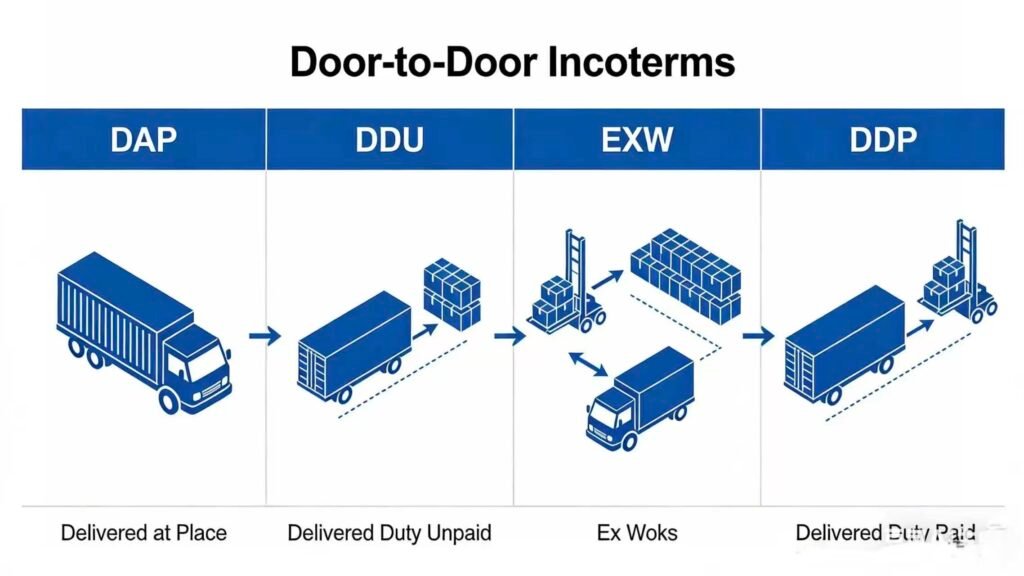
DDP (Delivered Duty Paid) – The True Door-to-Door Solution
Under DDP, the seller assumes full responsibility for the shipment from the origin warehouse to the buyer’s door. This includes pickup, international transportation, export/import customs clearance, payment of duties and taxes, and last-mile delivery. DDP door-to-door shipping offers maximum convenience and cost predictability, making it ideal for cross-border e-commerce, Amazon FBA shipments, and SMEs seeking hassle-free international logistics.
DAP (Delivered at Place) – Flexible Door-to-Door Shipping
With DAP, the seller delivers goods to the buyer’s specified location, but the buyer handles import customs clearance, duties, and taxes. This Incoterm provides flexibility for importers who have local logistics expertise while still benefiting from a door-to-door service covering transport, export clearance, and delivery to the destination.
DDU (Delivered Duty Unpaid) – Partial Responsibility Door-to-Door
DDU, an older term sometimes replaced by DAP, allows the seller to arrange transport and delivery to the buyer’s address without paying import duties or taxes. The buyer assumes responsibility for customs clearance and related charges. DDU is suitable for experienced buyers who prefer to control destination costs while using a complete door-to-door shipping service.
EXW (Ex Works) – Buyer-Managed Door-to-Door
EXW shifts the seller’s responsibility to the factory gate, but door-to-door logistics can still be arranged by the buyer’s freight forwarder. The forwarder handles pickup, international transport, customs, and final delivery, providing a complete door-to-door experience even under EXW terms.
Choosing the right Incoterm for door-to-door shipping depends on risk tolerance, customs knowledge, and budget. At batteryshipment, we design tailored door-to-door solutions under DDP, DAP, DDU, or EXW, ensuring smooth delivery via sea, air, rail, or road while clarifying responsibilities and costs.
BAT: Door-to-door service advantages
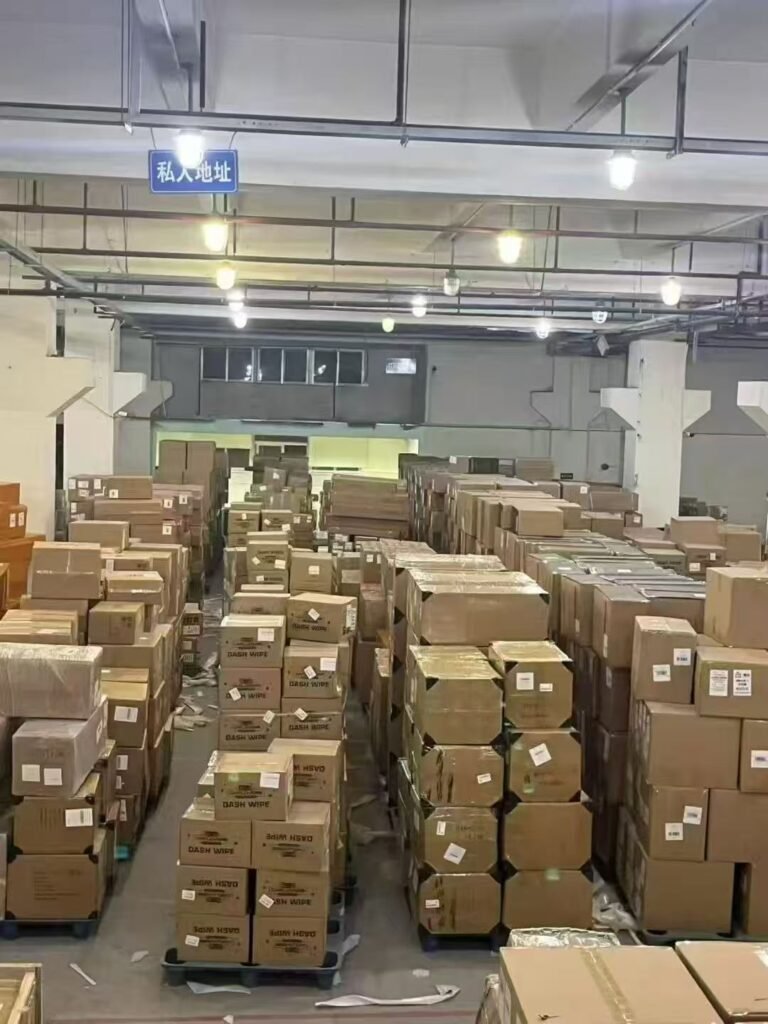
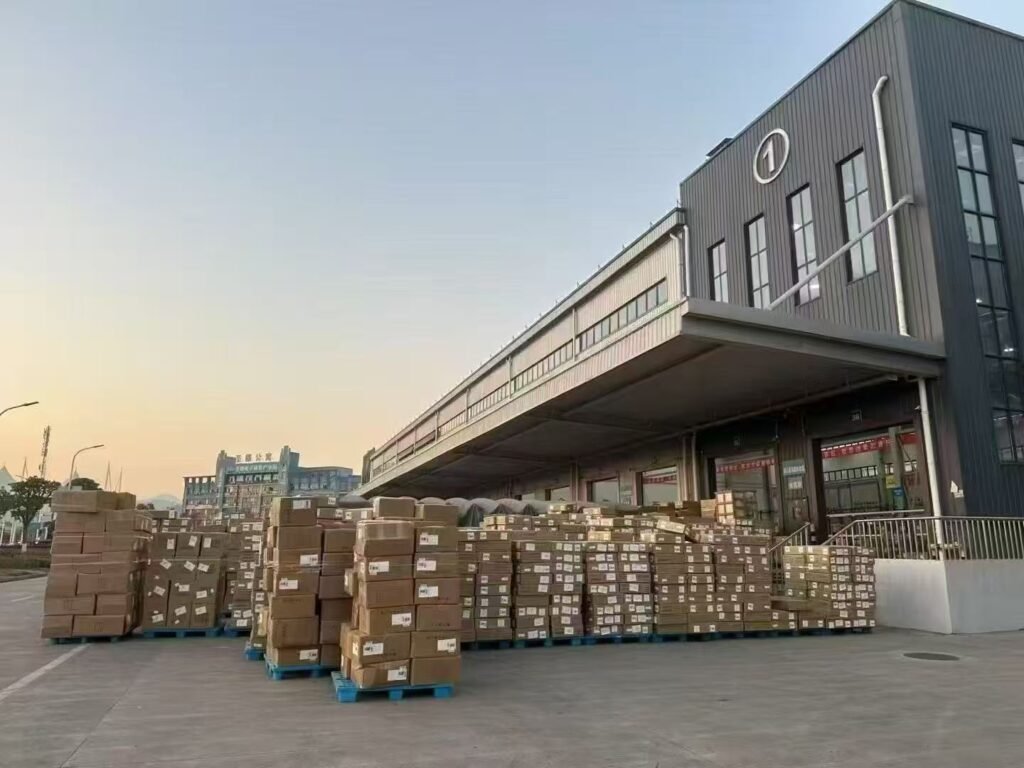
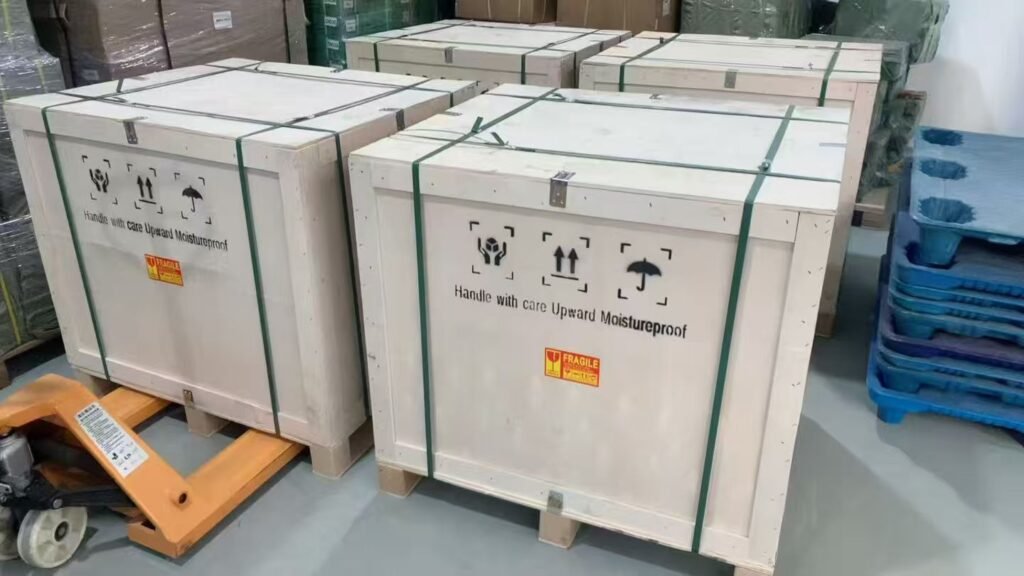
As a professional logistics service provider with 20 years of international logistics experience, BAT’s door-to-door service goes far beyond simple “pickup and delivery.” It is a fully managed, integrated logistics solution that allows customers to completely eliminate the complexity of cross-border shipping and focus on their core business.
Our service covers the entire logistics process under full control, including door pickup, export customs clearance, international transportation, destination customs clearance, and last-mile delivery. Based on each customer’s specific requirements, we tailor logistics solutions and offer flexible Incoterm options such as DDP / DDU / DAP, helping businesses optimize costs and improve operational efficiency.
Frequently Asked Questions
DAP:The recipient is responsible for customs clearance and paying taxes.
DDU:The recipient needs to pay taxes.
DDP:The sender will pay the customs duties.
Yes, we can provide door-to-door service.
Yes, we can arrange pickup services in China.