

Shipping from China to Spain
Plan the chain from China pickup to the booked Spanish or EU gateway, importer and customs setup, and delivery to the final postcode.
Start with the Spanish receiving point—not a generic freight rate.
Spain has Mediterranean and Atlantic gateways, strong road and rail connections, and different delivery conditions across the peninsula and island territories. A useful plan joins the accepted mode to the importer, declaration point and final receiving site.
Choose the mode by cargo readiness, operator acceptance and final delivery.
Container freight through a named Spanish gateway
Sea freight may suit container-scale, heavy or less urgent cargo. Compare Valencia, Barcelona, Algeciras, Bilbao or another booked port against the sailing, terminal, customs plan and onward road or rail leg.
Compare: sailing, transshipment, equipment, terminal, free time, release, inland delivery and empty return.
Air freight through an accepted Spanish gateway
Air freight may suit eligible urgent cargo. Madrid-Barajas and Barcelona-El Prat are useful comparison points, but the booked operator and handler must accept the actual goods.
Compare: chargeable weight, dimensions, screening, acceptance, handler, release and road delivery.
Rail or intermodal service with a defined Spain-bound handoff
Rail freight can be assessed when the live corridor, terminals and operators accept the cargo. The proposal must name the European rail terminal and the onward connection into Spain.
Compare: live corridor, border restrictions, gauge or terminal transfer, acceptance, storage and final-mile scope.
Eligible parcels and samples
Express courier may work for smaller eligible shipments. A parcel tariff does not prove acceptance for standalone batteries or battery-powered equipment.
Compare: exact contents, configuration, package limits, importer details, postcode and current restrictions.
Define where import ends and Spanish delivery begins.
Door-to-door shipping should state China pickup, international carriage, EU import arrangements and delivery to the named Spanish place. A DDP label does not replace a workable importer, representation and tax setup.
Define: Incoterm, importer, representative, tax owner, release point, territory, appointment, unloading and exclusions.
Name the gateway, declaration point and Spanish receiving postcode.
China and international leg
Shenzhen, Guangzhou and nearby suppliers: define pickup, consolidation, export gateway and cargo-ready status.
Shanghai, Ningbo, Qingdao and Tianjin: compare the accepted sailing, flight or rail plan with the required delivery window.
Name the actual sea port, airport or rail terminal and establish where the import declaration will be lodged.
Spain handoff
Compare the booked terminal, release plan and road or rail connection toward Madrid, Catalonia, Valencia or other inland regions.
Assess the actual sailing, terminal and inland route; the nearest-looking port is not automatically the best complete chain.
Peninsula, Balearic Islands, Canary Islands, Ceuta or Melilla: confirm the transport leg, tax treatment, access, appointment and unloading.
The first EU arrival point may differ from the Spanish delivery node. State the customs procedure, controlling party and transport record for every transfer.
Keep importer identity, classification, duty and indirect tax decisions separate.
BAT coordinates supplied shipment information and named logistics parties. The importer, customs representative and tax adviser determine the declaration and tax treatment.
Confirm the economic operator and representation setup.
EU customs uses EORI to identify economic operators for customs operations. Spain’s Tax Agency, AEAT, provides the national registration and operating channel.
Have the importer or representative confirm the valid EORI, mandate and filing arrangement before dispatch.
Decide where the import declaration is lodged.
A shipment may be released at a Spanish or another EU gateway, or move under an appropriate customs procedure before release. The declaration and transit plan must match the booked route.
Arrival at a terminal does not mean the goods are available for delivery.
Use current classification data instead of a generic duty calculator.
EU TARIC integrates tariff, trade-policy, restriction and supporting-document measures. The result depends on the actual product, origin and intended use.
The importer or qualified adviser should verify the code and measures; BAT does not promise a duty rate or clearance result.
Treat the standard rate as one input—not a landed-cost answer.
Current EU guidance lists Spain’s standard VAT rate as 21%, while reduced or special treatment may apply to specified goods or transactions.
Do not assume the same indirect-tax framework applies to every Spanish territory. The importer or tax adviser should confirm the tax base, liability and territorial treatment.
This is a route-planning checklist, not customs or tax advice. Product classification, origin, importer identity, release point, territory and intended use determine the treatment.
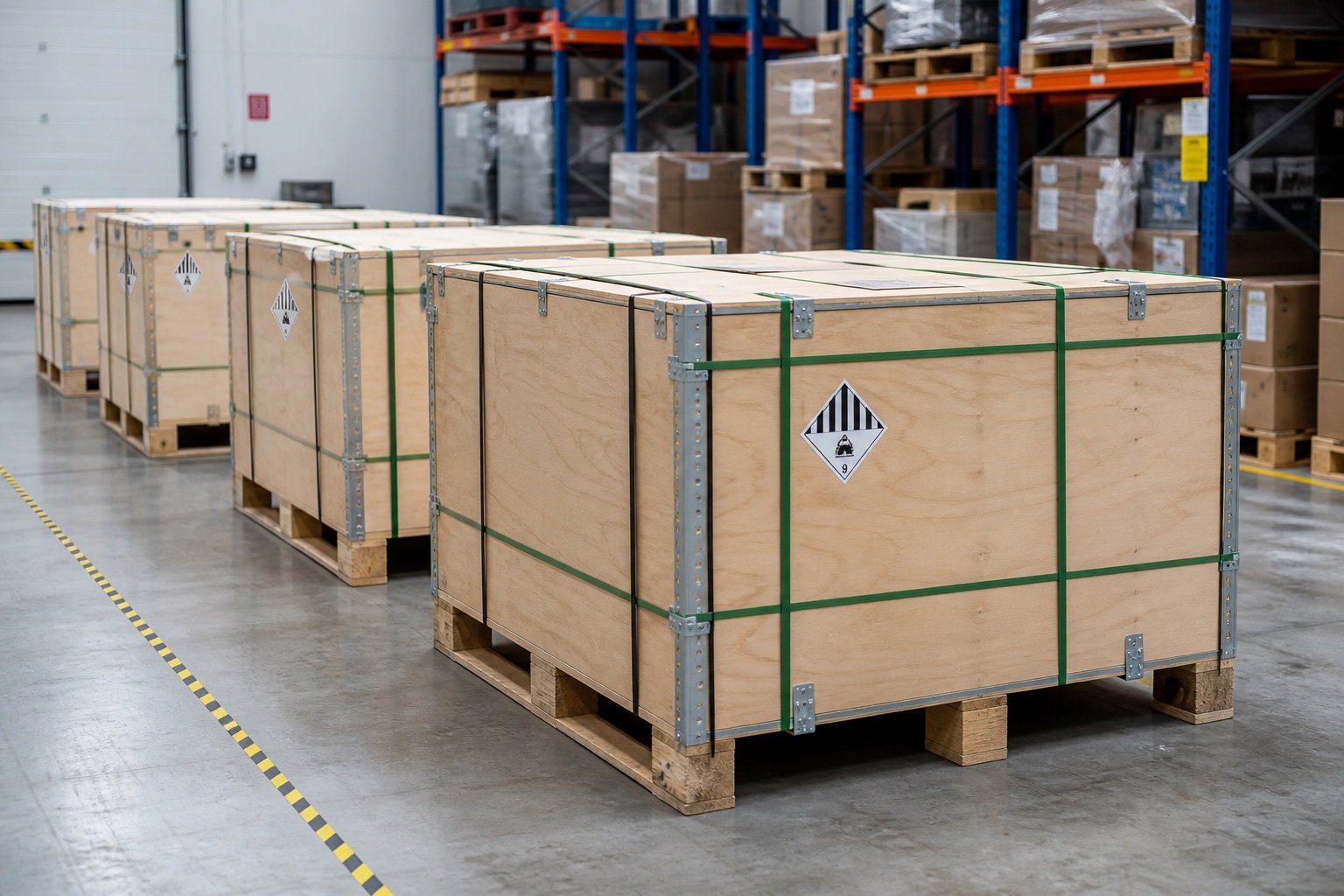
Establish the configuration before selecting the route.
State whether the shipment contains standalone cells or batteries, batteries packed with equipment, or batteries contained in equipment. Supply chemistry, watt-hours or lithium content, UN number where known, condition, quantity, dimensions and packing photographs.
Distinguish transport acceptance from EU product-market and Spanish importer responsibilities. A transport test summary does not establish every obligation for importing, selling or installing the finished product.
For larger energy storage products, add lifting points, total and distributed weight, delivery-site access, unloading method and any route survey.
Supplied UN38.3 test-summary information, SDS/MSDS where relevant, missing inputs and communication with suppliers, warehouses, carriers and named destination parties.
Testing and document issuance remain with qualified providers. BAT does not create UN38.3 or SDS/MSDS, grant product approval, determine customs treatment, or guarantee operator acceptance.
Separate readiness, international carriage, EU entry and Spanish delivery.
Document review, packing changes, pickup, booking and cut-offs affect the actual departure date.
Compare the current sailing, flight or rail plan, transfers, gateway and Spain-bound connection.
Handling, customs review, collection, island connection, road restrictions and the receiving appointment are separate steps.
No fixed rate, duty calculator or guaranteed transit time is published. Request a dated quotation for the actual cargo and named scope, with assumptions, validity and exclusions.
Read the quotation in six parts.
Prepare the inputs and name the responsible party.
| Information | What to establish | Responsible input |
|---|---|---|
| Commercial invoice & packing list | Buyer/seller, accurate description, value, packages, weight and dimensions. | Supplier/exporter; importer and representative review. |
| Transport and transit record | Bill of lading, air waybill or rail record plus the gateway and inland handoff. | Carrier and authorised issuing parties. |
| Importer and representation | Valid EORI, mandate, declaration method, release point and payment arrangement. | Importer and appointed customs representative. |
| Classification and origin | CN/TARIC code, accurate product description, origin evidence, restrictions and authorisations. | Importer, supplier and qualified advisers. |
| Battery transport file | Configuration, specification, supplied test summary, SDS/MSDS where relevant and packing details. | Manufacturer/document issuer; each operator confirms acceptance. |
| Tax and delivery instructions | Territorial tax arrangement, final postcode, appointment, access, unloading and exclusions. | Importer/tax adviser and receiving site. |

Make the gateway and Spanish delivery handoff clear before departure.
A useful quotation joins the cargo facts to the people responsible for every node.
BAT reviews China-origin shipment information and coordinates with suppliers, warehouses, carriers and named destination parties. The quotation should identify the accepted mode, gateway, importer arrangement and final delivery scope.
For Spain, ask early about the booked port or airport, EORI and representation, declaration location, mainland or island connection and receiving-site requirements.
Questions before you book.
Which Spanish port should be used?
There is no universal answer. Compare Valencia, Barcelona, Algeciras, Bilbao or another booked gateway using the accepted sailing, terminal, declaration plan, final postcode, inland equipment and total scope.
Can the shipment enter through another EU country?
Potentially, if the booked route and customs procedure support it. Confirm where the declaration is lodged, whether a transit movement is used and which party controls each transfer.
Should air freight use Madrid or Barcelona?
Madrid-Barajas and Barcelona-El Prat are useful comparison gateways. Choose only after confirming operator and handler acceptance, customs arrangements, final postcode and road delivery.
Is an EORI required?
EU customs uses EORI to identify economic operators for covered customs activities. The importer or representative should confirm the valid number, mandate and declaration setup.
What is Spain’s standard VAT rate?
Current EU guidance lists 21% as Spain’s standard rate. Reduced or special treatment may apply, and the tax base, liability and territorial treatment require transaction-specific review.
Does the same delivery and tax plan apply to every Spanish territory?
No. Peninsula, Balearic, Canary, Ceuta and Melilla destinations can require different transport legs and indirect-tax handling. Confirm the final territory and qualified tax advice before dispatch.
Can a landed-cost calculator predict the final amount?
No generic calculator can determine the result without classification, origin, value, freight basis, customs procedure, tax treatment, fees and final-delivery scope. Use current tariff data and qualified advice.
Can batteries move by sea, air, rail or courier?
Do not assume acceptance. Provide the configuration, specification, condition, packing and documents. Each operator, transfer point and route may apply different restrictions.
Can BAT quote DDP delivery to Spain?
An eligible proposal can be assessed after the cargo, importer, representation, tax arrangement and named place are clear. Ask which duty, tax, fees, storage, unloading and exceptions are included.
What information is needed for a useful comparison?
Provide cargo and battery details, packing, weight, dimensions, pickup address, ready date, final Spanish postcode and territory, Incoterm and importer arrangement. Compare the same scope, validity and exclusions.
Get a route plan for your shipment.
Send the China pickup city, cargo and battery details, packing, weight, dimensions, ready date, Incoterm and final Spanish postcode.
Include the destination territory, importer and available records if known. BAT will review missing inputs before discussing the mode, gateway, EU entry and delivery scope.