
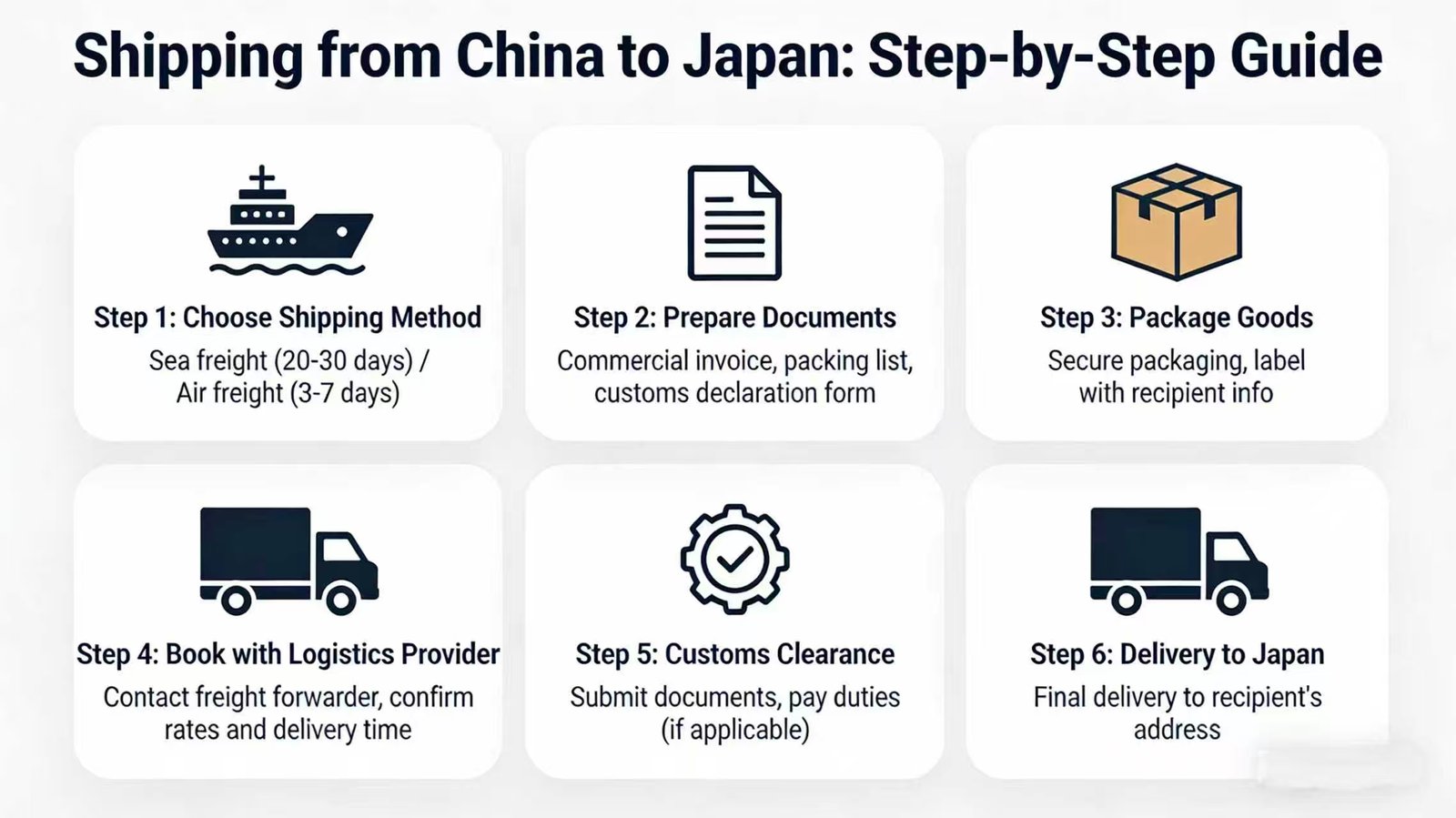
Shipping from China to Japan in 2026 involves choosing the right transport mode based on urgency, cargo type, and cost goals. At BAT Logistics, we plan optimal routes from major Chinese export hubs like Shanghai, Ningbo, and Shenzhen to key Japanese gateways such as Tokyo, Yokohama, Kobe, and Osaka — ensuring efficient export handling, customs documentation, and delivery coordination. Sea freight, air freight, and express services each have advantages: sea freight is cost-effective for large volumes with typical port-to-port transit around 3–10 days; air freight usually delivers in 1–3 days, and express courier services often complete door-to-door delivery in 1–2 days.
Start by preparing accurate documentation — including a commercial invoice, packing list, and appropriate transport documents such as bills of lading or airway bills — to meet Japanese customs requirements and avoid delays at ports like Tokyo and Yokohama. Depending on cargo urgency and size, SpeedWin helps you choose the most suitable mode, whether you need economy sea freight, faster air transit, or premium express delivery, ensuring your shipments from China reach Japan with predictable timing and clear cost expectations.
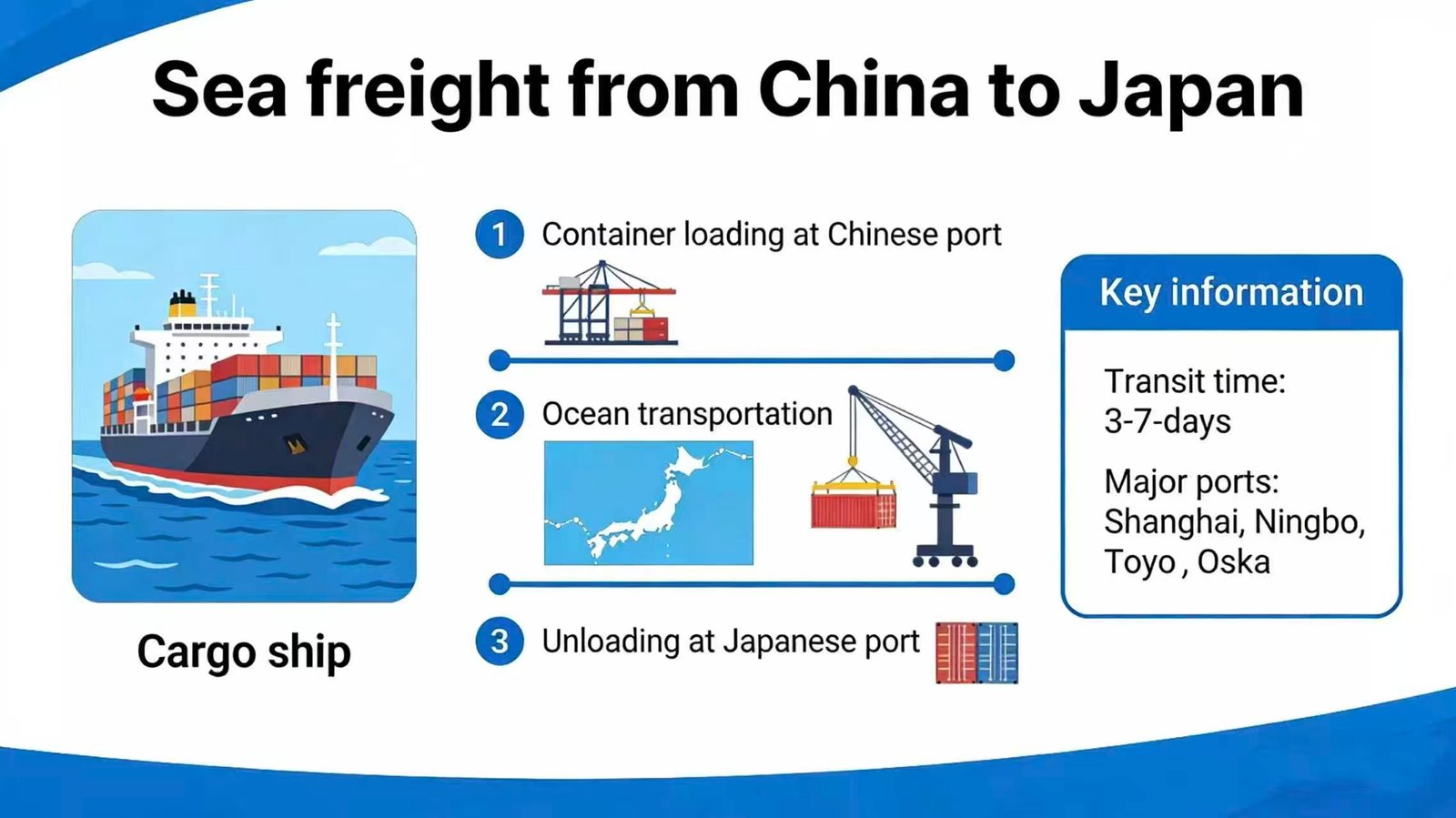
Sea freight remains one of the most cost-effective ways to ship large volumes of goods from China to Japan in 2026. At BAT, we specialize in both FCL shipping from China to Japan and LCL shipping from China to Japan, planning container space, coordinating carrier schedules, and managing export documentation and Japanese import procedures to ensure smooth deliveries. Unlike long ocean routes to Europe, shipments between China and Japan benefit from short distances — many Asian carriers list typical ocean transit times from major Chinese ports to Japanese destinations around 3–10 days, depending on origin and destination ports and service schedules.
Main Ports in Japan for Shipping from China
Japan’s key cargo seaports for shipping from China to Japan include:
Port of Nagoya – Japan’s largest trading port with extensive container handling and strong international services.
Port of Tokyo and Yokohama – Major gateways serving the Kanto region and heavy imports of consumer goods and electronics.
Port of Osaka/Kobe (Kansai Port) – Important hub serving western Japan’s industrial and commercial centers.
Port of Hachinohe – A strategic northern port with container facilities connecting to wider domestic distribution.
FCL shipping from China to Japan
Full Container Load (FCL) is ideal for exporters whose freight occupies an entire 20′ or 40′ container. With FCL, your goods stay sealed from origin to destination, reducing handling points and risk of damage. Transit times are typically at the shorter end of the China-Japan corridor window due to proximity and frequent sailings.
LCL shipping from China to Japan
Less than Container Load (LCL) suits smaller shipments that don’t fill a full container. LCL cargo is consolidated at origin and deconsolidated at the Japanese destination port. While LCL may take slightly longer than FCL due to consolidation time, it provides cost-effective access without paying for unused container space.
Sea freight on the China–Japan route remains highly efficient compared with long-haul ocean lanes, and BAT’s expertise in routing, customs compliance, and port handling helps importers reduce delays and control costs when shipping large or bulky goods by ocean.
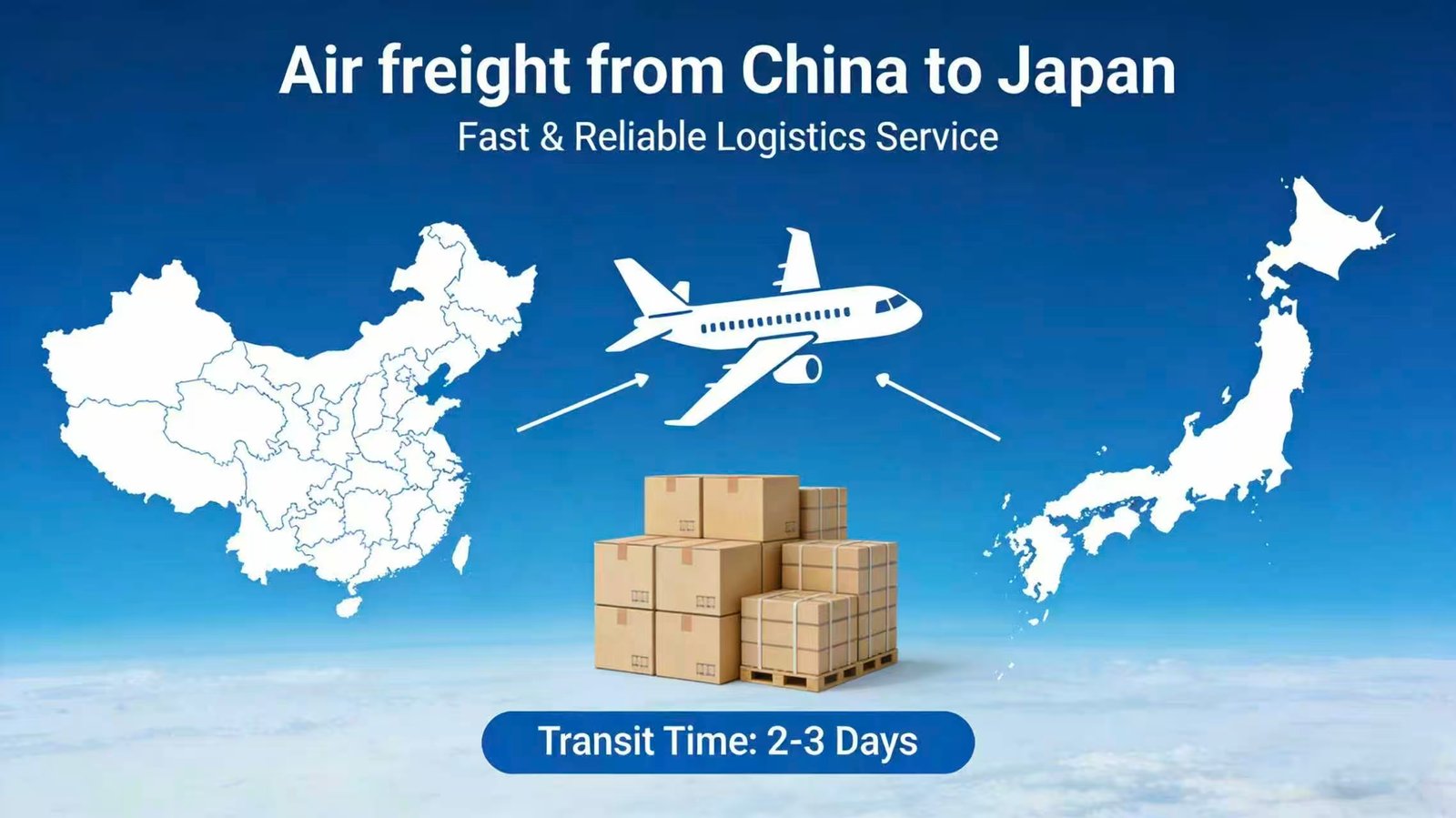
Air freight is one of the fastest and most reliable ways to move goods from China to Japan, especially for time-sensitive or high-value shipments. At BAT, we arrange professional air cargo services that include export handling in China, flight booking, Japanese customs coordination, and delivery planning to ensure efficient transit. Typical air freight transit times from China to Japan are usually 1–3 days for standard air cargo between major airports, with most shipments delivered within this window when documentation and clearance are prepared correctly.
Main Airports in Japan for Shipping from China
The primary air cargo gateways in Japan for freight from China include:
Tokyo Narita Airport (NRT) – A major international cargo hub handling electronics, auto parts, and general imports.
Tokyo Haneda Airport (HND) – Offers frequent flights and fast handling close to metropolitan Tokyo.
Osaka Kansai Airport (KIX) – A key gateway for western Japan’s commercial and industrial regions.
Nagoya Chubu Centrair Airport (NGO) – Central Japan hub with strong cargo capacities.
Air freight costs typically reflect industry averages seen in 2025–2026, with standard cargo often in the range of USD 2.20–3.80 per kg depending on shipment size and airline service. Modern Japan–China air cargo routes benefit from multiple daily flights between major Chinese hubs (such as Shanghai Pudong, Guangzhou, Shenzhen, and Beijing) and Japanese airports, making air freight a preferred choice for urgent deliveries like electronics, retail products, and just-in-time parts supply.
Air freight remains faster than sea cargo and avoids inland road or rail connections, giving it a competitive advantage for businesses that prioritize speed and reliability. BAT supports cargo consolidation, e-AWB processing, and customs facilitation to help minimize total transit times and provide clear cost and delivery expectations for shipments to Japan.
Express shipping is the fastest way to move your cargo from China to Japan, especially for urgent, small-parcel, or high-value shipments such as electronics, fashion, or e-commerce orders. At BAT, we coordinate with leading international couriers like DHL, UPS, FedEx, and TNT to provide reliable express shipping from China to Japan with door-to-door tracking, customs documentation support, and delivery flexibility. Because of the short distance between China and Japan and strong air network connections, express services on this route are particularly fast and dependable.
Typical express transit times from major Chinese cities (e.g., Shanghai, Shenzhen, Guangzhou) to Japanese destinations such as Tokyo, Osaka, Nagoya, and Fukuoka are usually 1–3 days, with many deliveries arriving in about 24–48 hours under standard express services. Costs commonly range from approximately USD 5–USD 8 per kilogram, depending on the weight, carrier, and service level you choose.
In Japan, express courier carriers have extensive last-mile networks covering major urban and regional addresses, helping minimize delivery delays after customs clearance. SpeedWin also offers DDP (Delivered Duty Paid) express options where all duties, taxes, and delivery fees are handled upfront — especially useful if you want a seamless import experience without separate customs billing.
End-to-End Door to Door Shipping Solutions
Door to door shipping from China to Japan simplifies the entire import process by covering pickup, international transportation, customs clearance, duty handling, and final delivery. BAT supports DDP, DAP, and DDU shipping terms, allowing Japanese importers to choose the most suitable cost and responsibility structure based on their business model.
Air Freight DDP Shipping from China to Japan
For urgent or high-value cargo, air freight DDP shipping from China to Japan offers the fastest door-to-door solution. Typical transit time is 3–6 days, depending on flight schedules and destination. SpeedWin operates stable air DDP routes via Narita (NRT), Haneda (HND), Kansai (KIX), and Chubu (NGO), ensuring efficient Japanese customs clearance and reliable last-mile delivery.
Sea Freight DDP Shipping from China to Japan
For larger volumes or cost-sensitive shipments, sea freight DDP shipping from China to Japan is widely used. SpeedWin provides both FCL and LCL door-to-door services, with average delivery times of 10–18 days. Our team manages Japanese import declarations in line with local customs requirements, where accuracy in HS codes and invoices is especially critical.
Battery DDP Shipping from China to Japan
Japan has strict compliance standards for hazardous and energy-related cargo. SpeedWin offers dedicated battery DDP shipping from China to Japan, covering lithium batteries, battery packs, and energy storage products. Shipments are handled with full documentation, including UN38.3, MSDS, and proper Japanese import declarations, minimizing clearance risks and delays.
Japan Dedicated Shipping Lines
To ensure predictable schedules and stable costs, BAT operates dedicated Japan shipping lines for both air and sea freight. These exclusive channels are designed to support DDP shipping from China to Japan, helping importers achieve clearer landed costs, smoother customs clearance, and consistent delivery performance.
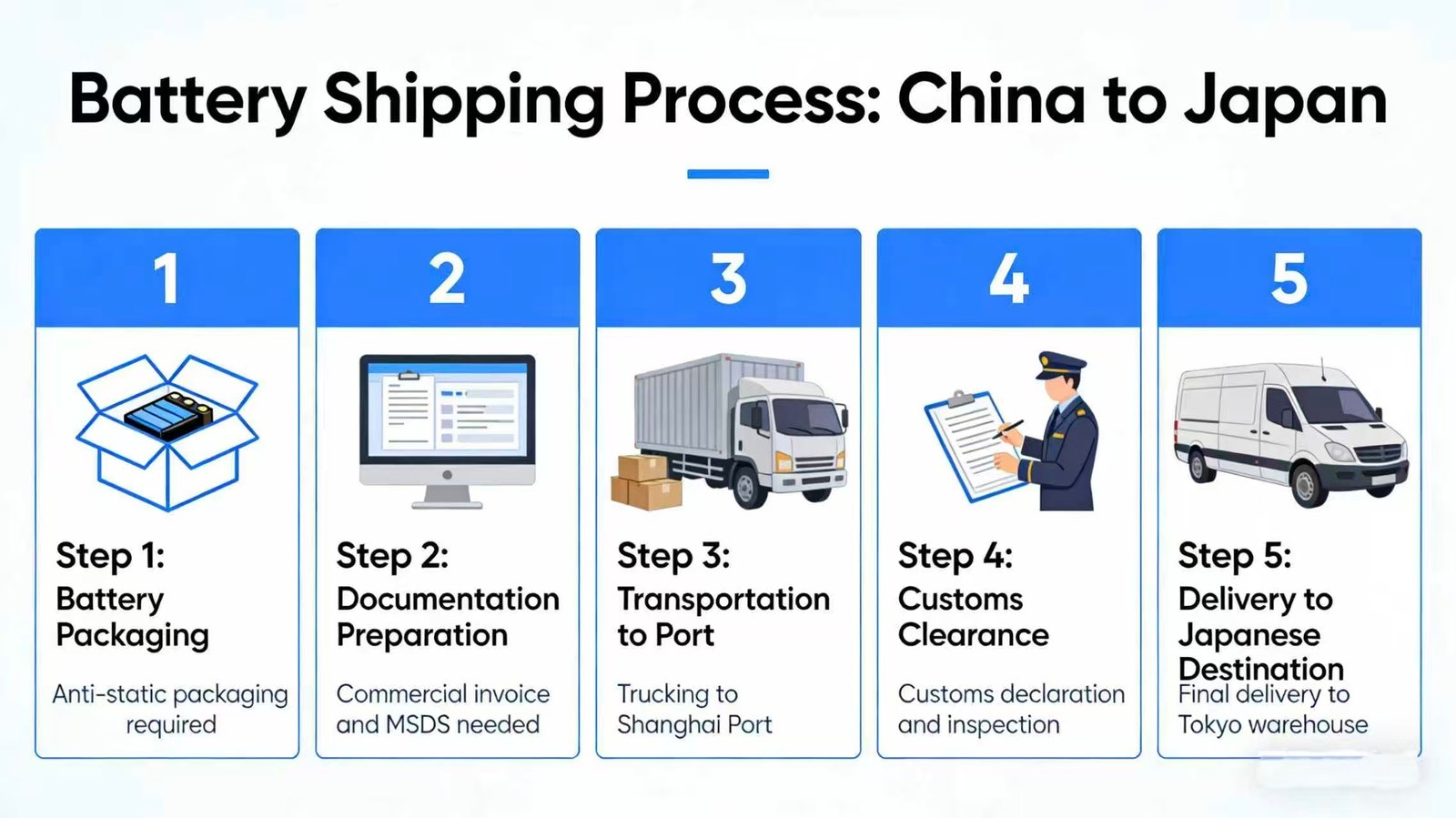
Shipping batteries from China to Japan requires strict compliance with international DG regulations and Japan’s import standards. BAT specializes in compliant and efficient battery logistics, covering lithium batteries shipping from China to Japan, energy storage system shipping from China to Japan, marine batteries shipping from China to Japan, and NIMH battery shipping from China to Japan.
Lithium & NIMH battery shipping
Lithium and NIMH batteries must meet UN38.3 testing, MSDS, and proper DG packaging requirements. Shipments can move by air or sea depending on weight and urgency, with air freight commonly used for small packs and sea freight preferred for volume cargo to Japan.
Energy storage system & marine batteries
Large energy storage systems and marine batteries are typically shipped by sea due to weight and safety considerations. Japan’s major ports such as Tokyo, Yokohama, Osaka, and Nagoya are well-equipped to handle DG cargo, but accurate declaration and pre-approval are critical to avoid customs delays.
With strong carrier resources and hands-on DG handling experience, BAT ensures battery shipments to Japan move safely, compliantly, and on schedule — minimizing risk while keeping logistics predictable for importers.We offer battery DDP, DDU, and DAP shipping services. Please contact us online for pricing.
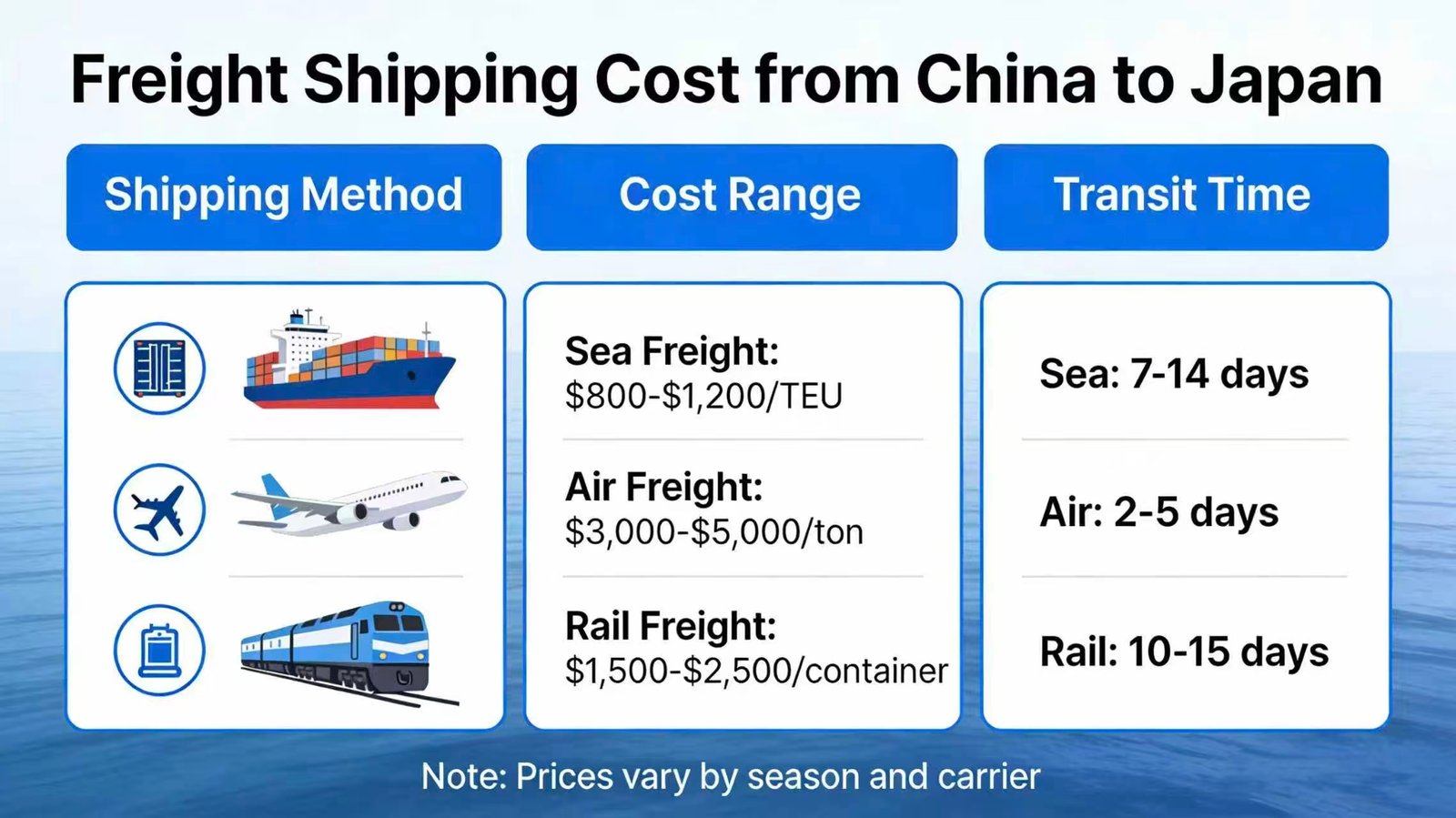
Estimating freight shipping cost from China to Japan in 2026 helps you plan your logistics budget accurately and choose the right transport method for your cargo. At BAT, we provide transparent cost guidance based on the latest market rates and typical routes into key Japanese gateways like Tokyo, Yokohama, Kobe, and Osaka. Costs vary by mode, cargo volume, and season — sea freight is generally the most economical for large shipments, while air and express are faster but higher in cost.
Estimated Shipping Costs (2025–2026 reference)
| Shipping Method | Typical Cost | Notes |
|---|---|---|
| Sea Freight (FCL 20‑ft container) | USD 275–$600 | Port‑to‑port to Tokyo/Yokohama/Kobe — very competitive on short China–Japan route. |
| Sea Freight (FCL 40‑ft container) | USD 350–$1,250 | Larger volume; economies of scale. |
| Sea Freight (LCL per CBM) | USD 10–$80 per m³ | Shared container space for smaller loads. |
| Air Freight | USD 1.5–$8 per kg | Standard air cargo for >1,000 kg; fast transit. |
| DDP Sea Freight (per CBM) | USD 80–$250 per m³ | All‑inclusive service covering duties & delivery. |
| DDP Air Freight (per kg) | USD 4–$9 per kg | Inclusive of delivery, duties & taxes. |
| Express Courier | USD 5–$12 per kg | Quick door‑to‑door delivery (1–3 days). |
Notes:
Sea freight costs on the China–Japan corridor are generally lower than global long‑haul routes thanks to short distances and high carrier frequency.
Air freight delivers within about 1–3 days, whereas sea freight port‑to‑port transit typically takes approximately 3–10 days on this route.
DDP options bundle duties and taxes into the quote, simplifying landed cost planning.
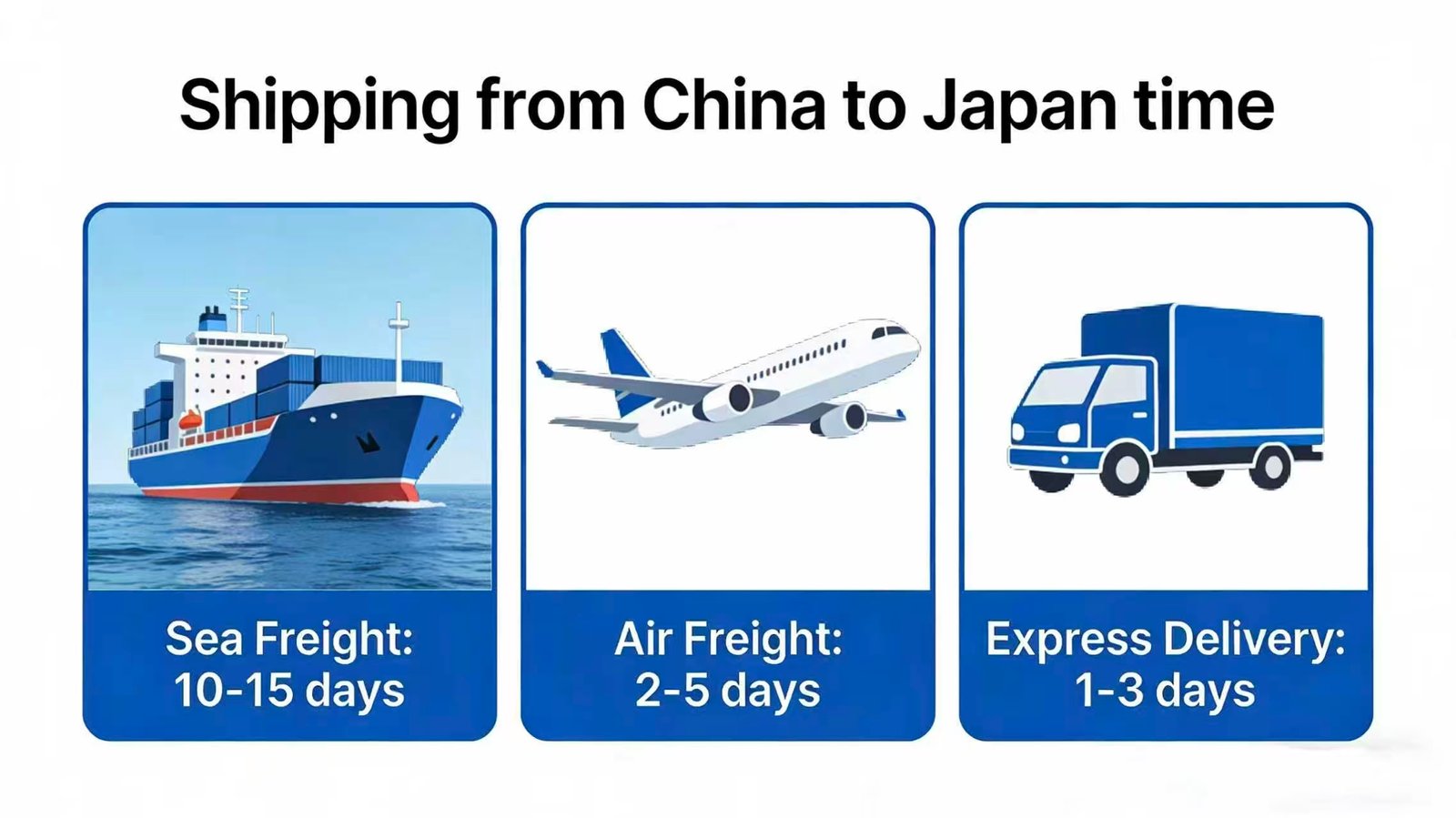
Understanding shipping time from China to Japan helps you plan delivery expectations and choose the right transport mode based on urgency and cargo type. At BAT, we use real transit data to provide accurate time ranges for sea, air, express, and DDP services into major Japanese gateways like Tokyo, Yokohama, Osaka, Kobe, and Nagoya. Japan’s proximity to China means international routes are relatively short, but actual times depend on origin port/airport, carrier schedules, customs clearance, and local delivery connections.
Typical transit times (China → Japan)
| Shipping Mode | Typical Transit Time | Notes |
|---|---|---|
| Sea freight (port‑to‑port) | 3–7 days | Shanghai → Tokyo/Yokohama/Kobe; fast regional ocean route. |
| Sea freight (door‑to‑door) | 5–12 days | Includes customs clearance and inland delivery. |
| Air freight | 1–3 days | Frequent flights from PVG, CAN, SZX to NRT/HND/KIX. |
| Express courier | 1–3 days | Door‑to‑door via DHL/FedEx/UPS from China to Japan. |
| DDP services (air/sea) | 3–10 days | Includes duties & taxes; depends on mode chosen. |
Notes:
Sea freight between China and Japan is one of the shortest international maritime routes, with many direct sailings.
Air freight delivers quickly but may vary slightly with airline schedules and peak seasons.
Express courier services often include customs clearance and last‑mile delivery within the quoted transit time.
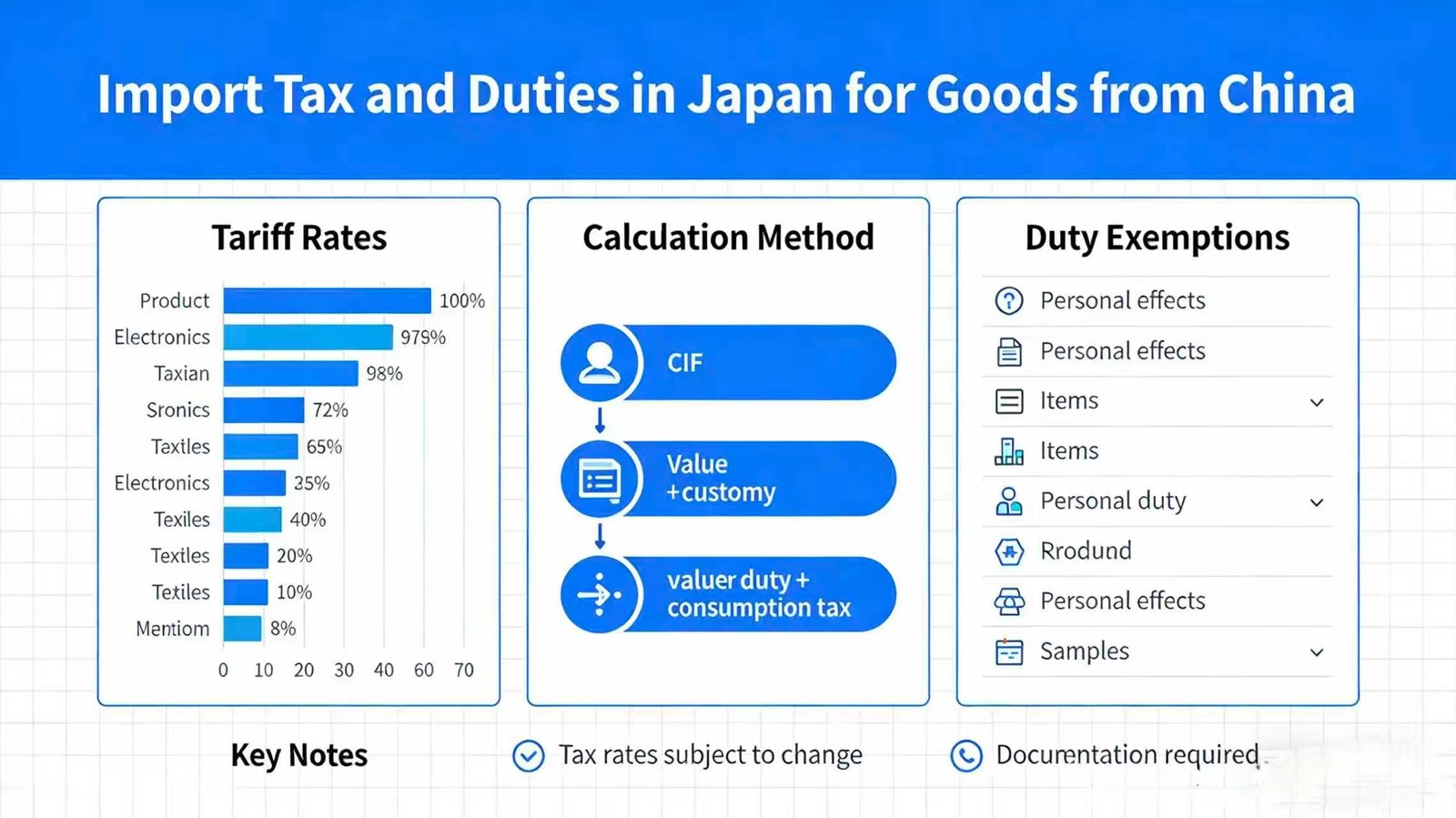
When importing goods from China into Japan in 2026, understanding import tax and duties in Japan is essential for accurate landed-cost planning and smooth customs clearance. Japan applies Customs Duty and Consumption Tax (VAT equivalent) based on the Customs Value — the sum of the cost, insurance, and freight (CIF) — plus applicable duty. BAT helps importers calculate and prepare for these charges accurately, reducing surprises at clearance.
Customs Duty in Japan
Japan’s customs duty rates vary by product type and HS code, with the majority of finished goods — such as consumer electronics and parts — subject to low or zero duty under Japan’s tariff schedule. Some categories (for example certain textiles or specialty machinery parts) may carry duty rates up to 10%–12%, but many industrial imports from China benefit from Japan’s tariff reductions or preferential programs. Accurate HS classification is crucial, as misclassification can lead to incorrect duty assessment or clearance delays.
Consumption Tax (VAT)
In addition to duty, Japan levies a Consumption Tax of 10% on imports, calculated on the total taxable base (CIF + duty). This tax is generally collected at the time of import clearance unless deferred under certain bonded or importer-registered procedures. Compared with other markets where VAT is higher (e.g., some EU countries), Japan’s 10% rate is relatively straightforward, though it must still be calculated and paid before goods release.
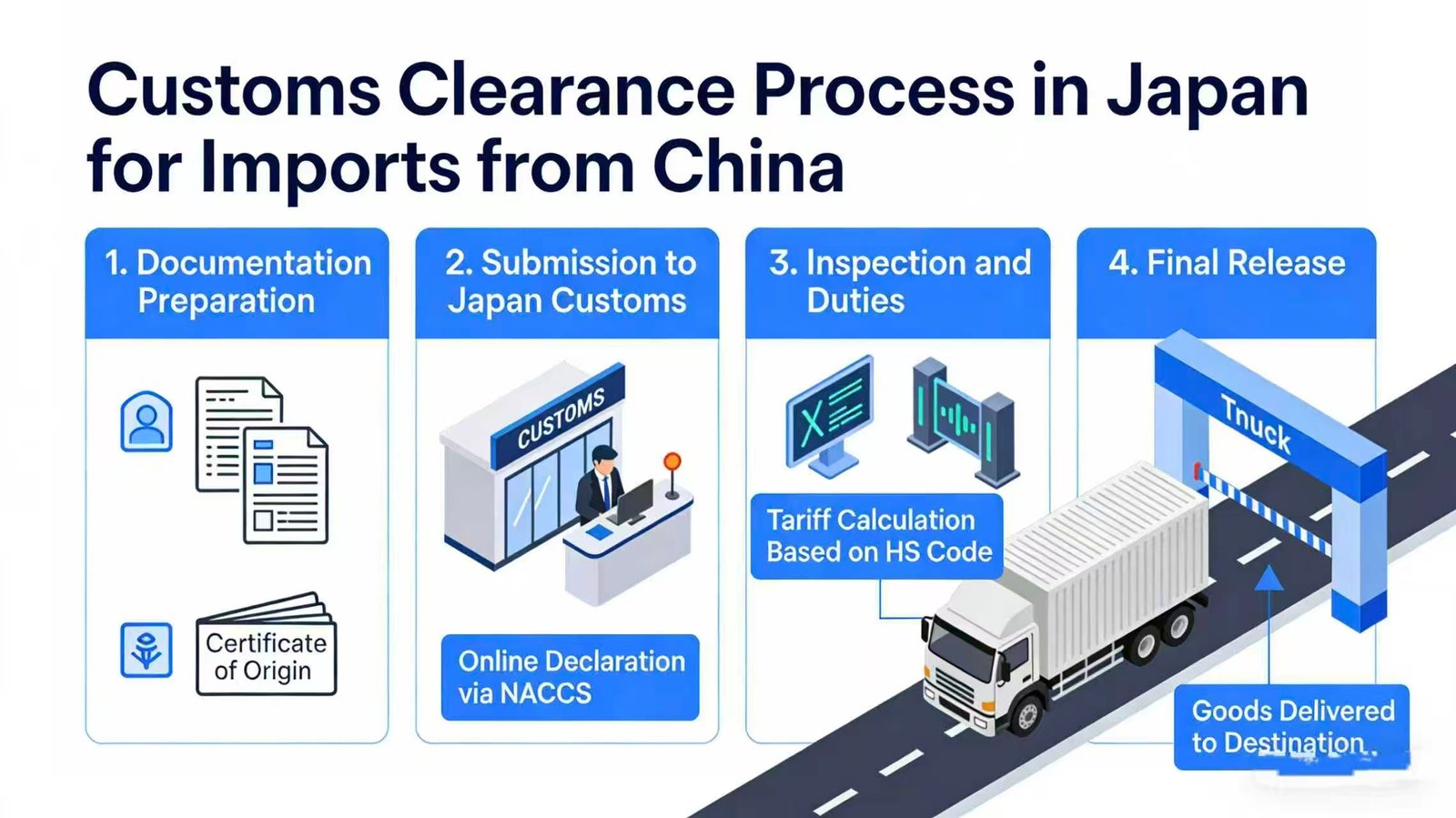
Customs clearance in Japan for imports from China is a structured process overseen by the Japan Customs and Tariff Bureau, requiring accurate documentation, tariff classification, and compliance with local regulations. At BAT, we provide dedicated customs clearance in Japan services that ensure your shipments clear smoothly and quickly, whether you are importing general cargo, high-value goods, or regulated items like batteries.
When goods arrive — typically at major entry points like Tokyo (NRT/HND), Osaka/Kobe, or Nagoya Port — SpeedWin prepares and submits all required documents electronically, including the commercial invoice, packing list, bill of lading/airway bill, and precise HS tariff codes. Japan Customs emphasizes correct HS classification and valuation; errors are one of the main causes of inspection holds or additional duties. Compliance with Japan’s food, pharmaceutical, or electronics standards may also require specific certificates or conformity documentation.
Japan’s clearance process is generally efficient, with routine imports processed in 1–2 business days if paperwork is complete. However, goods classified as dangerous or regulated — such as lithium batteries or energy storage systems — trigger enhanced scrutiny. SpeedWin’s expertise in battery customs clearance in Japan includes ensuring UN38.3, MSDS, and DG labeling compliance, coordinating carrier acceptance, and expediting inspections, which significantly reduces the risk of delays at customs checkpoints.
With BAT handling customs clearance, you benefit from proactive tariff planning, accurate duty and tax calculation, and alignment with Japanese regulatory expectations — making your China-to-Japan imports more predictable and cost-effective.
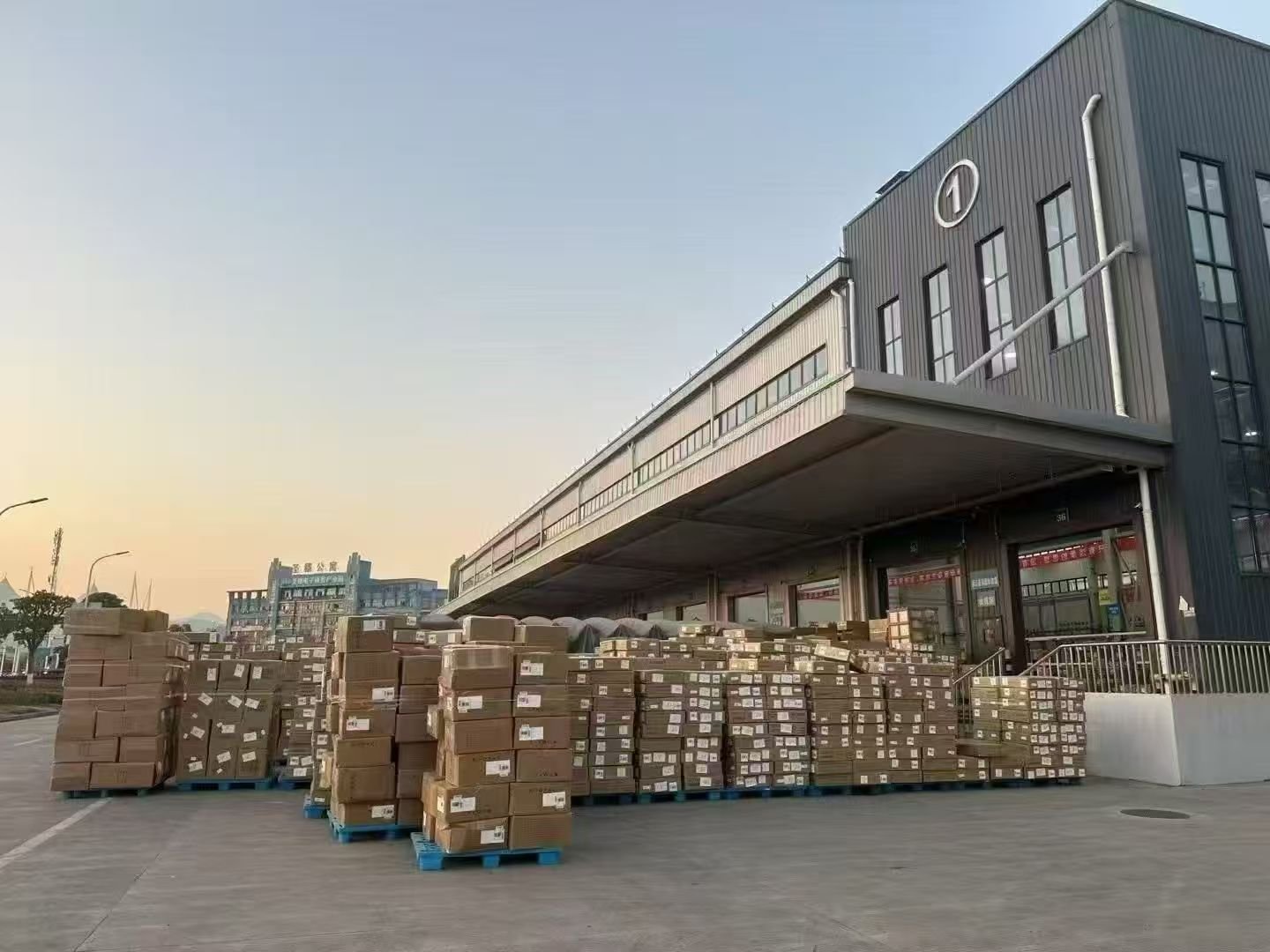
For businesses importing from China to Japan in 2026, BAT provides tailored logistics solutions that combine reliability, efficiency, and compliance. Whether you need sea, air, rail, or express shipping, SpeedWin plans the best route based on your cargo type, urgency, and budget — from major Chinese export centers like Shanghai, Ningbo, and Shenzhen to key Japanese destinations such as Tokyo, Yokohama, Osaka, and Nagoya.
SpeedWin’s strengths on the China–Japan corridor include:
Multimodal expertise: We manage air freight with transit times typically 1–3 days, sea freight with efficient 3–10 day port-to-port sailing, and express delivery in 1–3 days for small parcels — helping you meet Japan’s fast-moving market demands.
Customs and compliance support: Japan’s import system requires accurate HS codes, proper documentation, and knowledge of local procedures. SpeedWin handles Japanese customs clearance, duty and consumption tax preparation, and risk assessment to avoid delays at ports like Tokyo and Osaka.
Specialized services: We provide DDP, DAP, and DDU delivery options, including battery and DG cargo handling (following UN38.3 and MSDS requirements), so your shipments arrive fully compliant and on schedule.
Real-time transparency: With professional tracking and proactive updates at each milestone, SpeedWin gives you full visibility from China pickup to final delivery in Japan, making your logistics predictable and cost-effective.
By focusing on Japan’s specific logistics landscape — including its short transit distances, strict customs compliance, and dense urban delivery network — BAT ensures that your China-to-Japan shipping is both efficient and resilient in 2026.