Road Freight From China-2026 Guide
Table of Contents
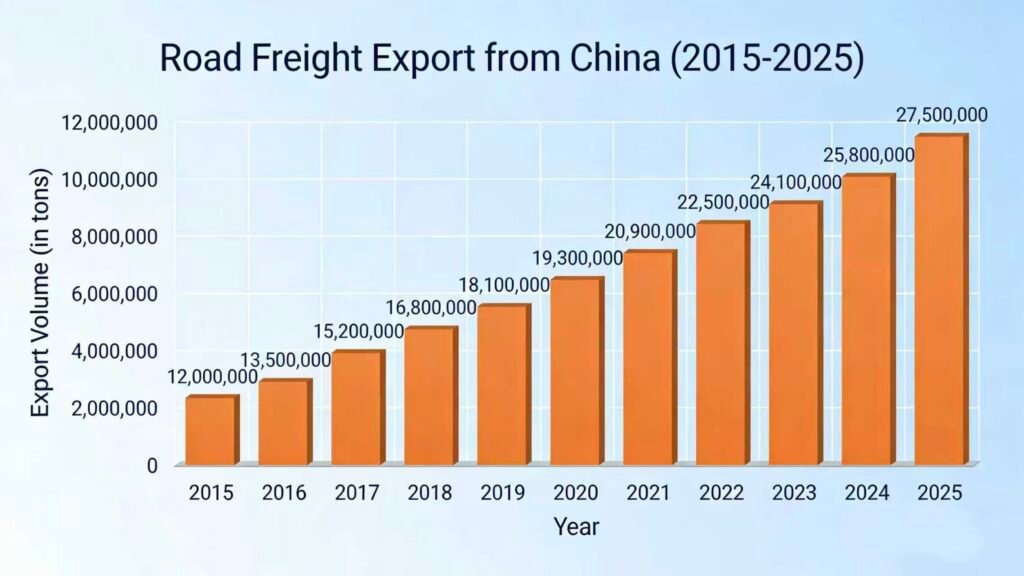
China’s overland export transportation is mainly destined for Europe, Southeast Asia, and Central Asia.
Compared with other transport modes, road and land transport services are generally more convenient and flexible, making them especially suitable for small and medium-sized shipments. In addition, certain sensitive goods are most commonly transported by land routes.
Shipping schedules are also more flexible, although they can be affected by various external factors, which may result in some degree of instability.
Nevertheless, there is still a steady group of customers who rely on this type of transportation.
Below is a detailed introduction to China’s overland export transportation services.
If you would like to learn more about land transport routes from China to certain countries, please see the information below
1. Shipping from China to Malaysia
What is road freight?
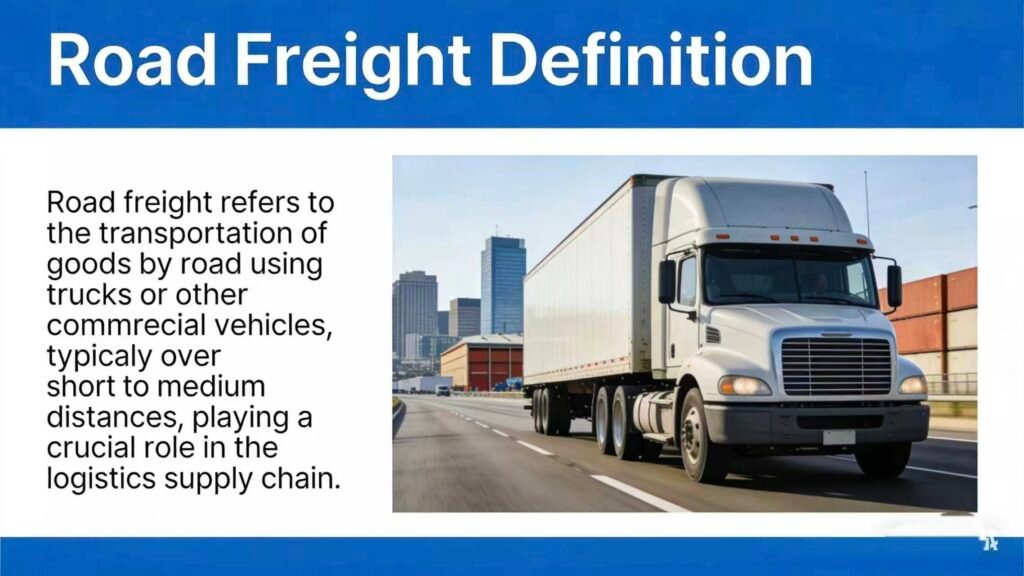
Road freight is a versatile and reliable logistics solution that moves goods over land using trucks, trailers, or specialized vehicles. It plays a critical role in both domestic and cross-border transport, offering flexible, door-to-door delivery for a wide range of cargo, from consumer goods and electronics to industrial products and automotive parts.
Unlike rail or sea freight, road freight provides unmatched accessibility, reaching remote areas, industrial zones, and urban centers without ports or rail terminals. It supports both full truckload (FTL) and less-than-truckload (LTL) shipments, making it suitable for small-to-medium batches and time-sensitive cargo. Typical regional transit times range from 2–7 days, faster than sea freight and more cost-effective than air freight.
Key advantages include flexible scheduling, real-time GPS tracking, and tailored solutions for specialized cargo, such as temperature-controlled trucks or flatbeds for oversized items. Road freight also serves as a critical link in multimodal logistics, connecting factories, ports, and rail terminals to final destinations. For businesses prioritizing speed, flexibility, and reliability, road freight is an essential component of a cost-efficient, fully integrated supply chain.
Road Freight Process
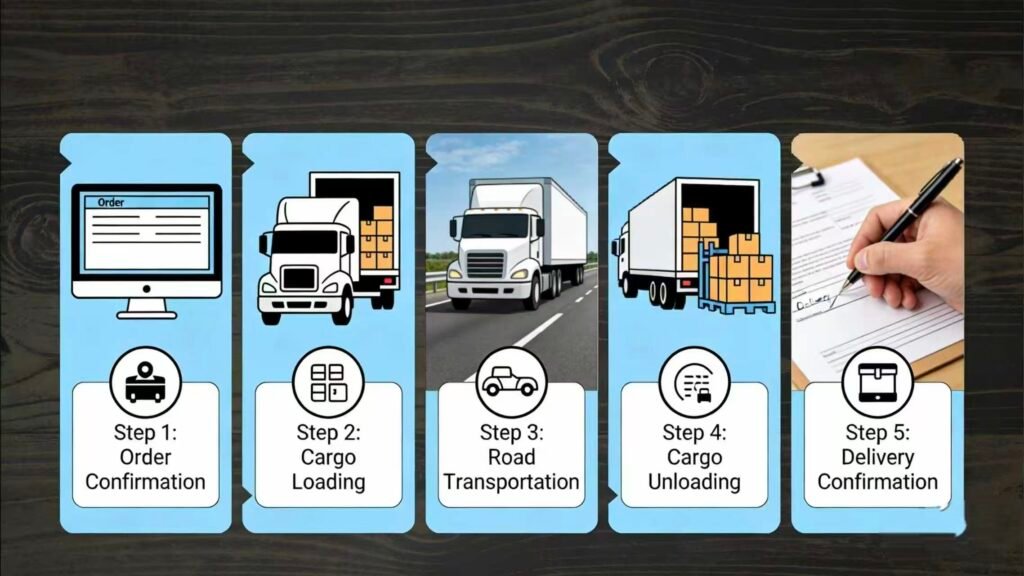
China’s overland road exports mainly follow two core models:
TIR International Road Transport Standard – the mainstream model, governed by the Convention on International Road Transport. It is suitable for long-distance exports crossing multiple countries.
Border Small-Scale Trade Road Transport – applicable for small-batch exports to neighboring countries such as Vietnam, Laos, and Mongolia.
Below is a detailed overview of the road freight export process.
1. Pre-Shipment Preparation (Book 5–10 Days in Advance)
Confirm the transportation plan:
For long-distance routes (Europe / Central Asia), full truckload (FCL) / groupage (LCL), moderate transit time requirements: choose TIR transport (fastest customs clearance, no unloading en route).
For neighboring countries (Vietnam / Laos), small shipments, urgent deliveries: choose standard border road transport.
Also confirm:
Transport type: FCL (single truck ≤30 tons / 70 m³) or LCL (small shipments consolidated).
Cargo restrictions: TIR prohibits flammable, explosive, prohibited items, or live animals; confirm cargo eligibility in advance.
Select a compliant service provider:
Must choose freight forwarders / carriers with TIR operational qualification (registered with the China International Freight Forwarders Association, TIR guarantee deposit paid). Recommended providers: Sinotrans, SF International, China Railway Intermodal.
Prepare specialized documents (road export-specific):
In addition to commercial invoice, packing list, trade contract, customs declaration, also prepare: TIR Carnet (international road transport handbook), cross-border vehicle qualifications, and additional documents for special cargo (e.g., hazardous goods transport permits).
2. Domestic Loading
FCL Operation:
Service provider arranges cross-border trucks with TIR markings (or regular trucks + TIR registration) to pick up cargo from factory/warehouse.
Loading requirements:
Cargo securing: Use triangular wooden braces, straps, protective nets for cartons to prevent damage from road bumps.
Weight limits: Single axle ≤10 tons, total ≤40 tons (per cross-border road load standards).
Photo documentation: empty truck, 1/2 loaded, fully loaded, seal applied (4 photos total for verification).
Apply commercial seal + TIR-specific seal, and record the seal number in the TIR Carnet.
LCL Operation (Groupage):
Deliver goods to the designated cross-border consolidation warehouse using the service provider’s warehouse entry number.
Label each package clearly with consignee, destination, and number of packages.
Warehouse weighs, consolidates, and generates the groupage packing list, then applies the seal.
3. Domestic Customs Declaration
A core advantage of road exports: TIR transport offers much higher customs clearance efficiency compared to other methods.
Steps: customs declaration → customs review and inspection → cross-border handover.
Road freight shipping from China
BAT provides fast, flexible, and cost-effective road freight solutions from China, ideal for businesses needing door-to-door delivery across short, medium, and regional distances. Leveraging China’s extensive highway network, our services support full truckload (FTL) and less-than-truckload (LTL) shipments, making them perfect for consumer goods, electronics, industrial products, automotive parts, and small-batch batteryshipment. Road freight bridges the gap between air, rail, and sea transport, offering reliable schedules, real-time tracking, and seamless integration with multimodal solutions.
Road Freight Shipping from China to Europe
China-to-Europe road freight primarily serves as first- and last-mile support for rail and sea freight, while direct overland transport via corridors like the Western China–Western Europe Highway is increasingly viable. Key Chinese hubs include Xi’an, Urumqi, and Beijing, with cargo crossing borders through Manzhouli, Alashankou, and Khorgos. Transit times generally range from 10–20 days, depending on distance and customs efficiency. This route suits medium-batch shipments (5–100cbm), e-commerce cargo, and emergency deliveries, offering flexible routing, simplified customs via TIR Carnet, and faster access to inland European regions compared with sea freight.
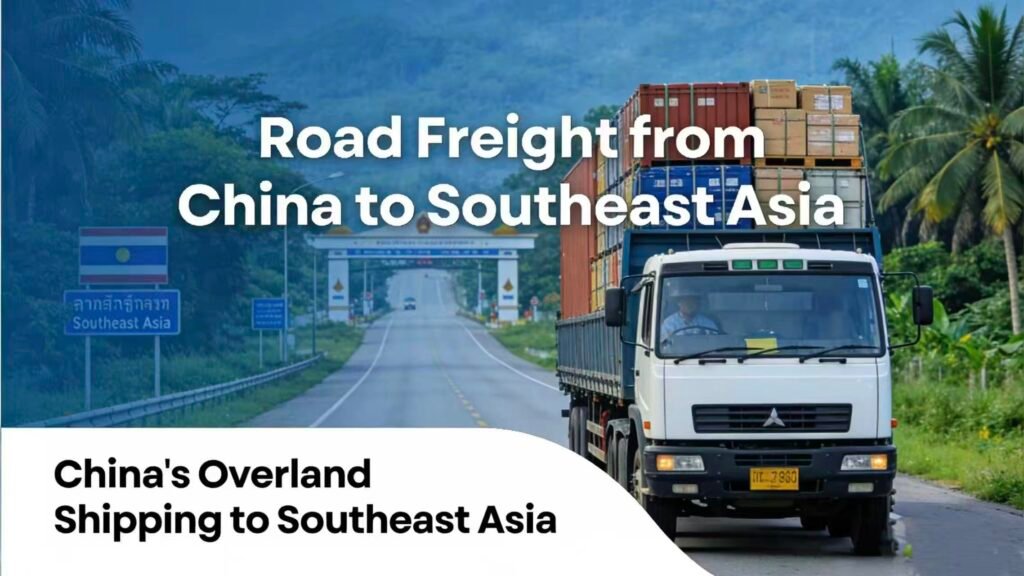
Road Freight Shipping from China to Southeast Asia
Southern Chinese hubs such as Guangzhou, Kunming, and Nanning connect via the China-ASEAN highway network to Vietnam, Thailand, Malaysia, Cambodia, and Laos. Transit times range from 2–7 days depending on destination, making it ideal for perishable goods, electronics, e-commerce parcels, and small-batch batteryshipment. Direct door-to-door service, fewer handling points than sea freight, and streamlined customs under RCEP ensure faster, safer, and more reliable delivery for regional trade.
Road freight from China with BAT Logistics offers businesses a powerful combination of speed, accessibility, and cost-efficiency, making it a preferred solution for China-Europe and China-ASEAN overland logistics.
Road freight cost from China
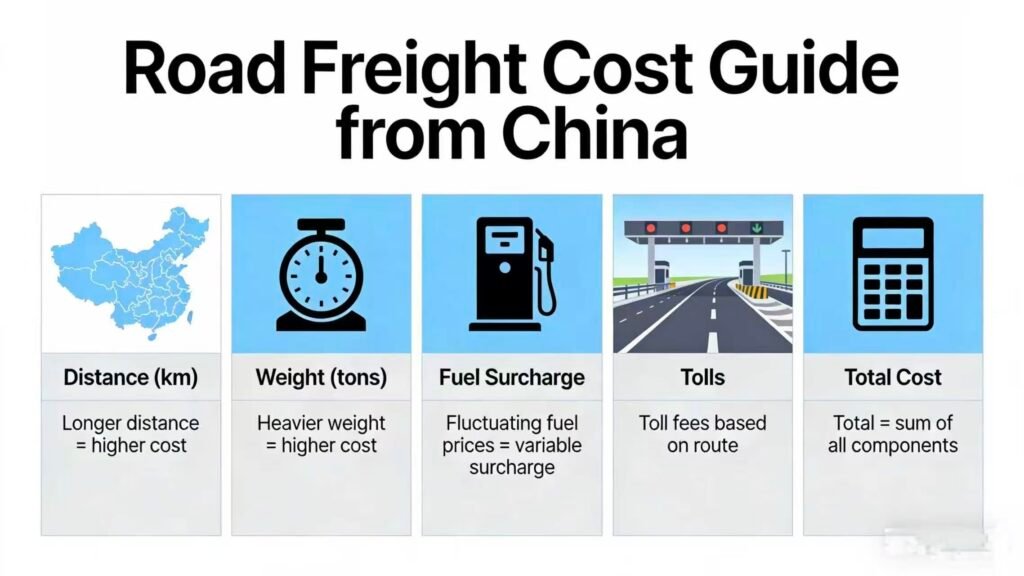
China Road Export Pricing Overview
Road freight pricing from China is primarily divided into Full Truckload (FTL) and Less-than-Truckload (LCL) billing modes. Below is a detailed explanation of the pricing calculation:
I. Pricing Modes & Cost Composition
1. Calculation Method:
Full Truckload (FTL): For large shipments (≥15 tons / 30 m³), charged per truck (USD/truck or RMB/truck).
Less-than-Truckload (LCL): For small shipments (<15 tons / 30 m³), charged by weight (RMB/kg) or volume (RMB/CBM), taking the higher value.
2. Cost Components:
Base Freight: 60%-70% of total cost, calculated based on distance and vehicle type.
TIR-Specific Fees: TIR Carnet (approx. 500–800 RMB per booklet), guarantee deposit (approx. 50,000 RMB/truck, refundable).
Border Fees:
Transit fees (Youyi Pass 400 RMB/truck, Dongxing 350 RMB/truck)
Inspection fees (random)
Additional Fees:
Fuel surcharge: varies with international oil prices (approx. 5%-10% of base freight)
Seasonal surcharge: peak season (Sep–Dec) +15%-30%, pre-Chinese New Year +20%-40%
Special cargo surcharge: hazardous goods +20%-30%, cold chain +30%-50%, oversize/overweight +50%-100%
II. Reference Prices by Route
- China-Europe Routes (TIR Transport)
Route | FTL (USD/truck) | LCL (RMB/kg) |
Shanghai / Guangzhou → Poland / Germany | 19,500–21,000 | 25–35 |
Xi’an / Chongqing → Poland / Germany | 19,000–20,000 | 23–32 |
To France / Netherlands / Belgium | 20,300–21,500 | 26–36 |
To Moscow, Russia | 9,400–10,400 | 18–25 |
- Central Asia Routes
Destination | FTL (USD/truck) | LCL (RMB/kg) | Transit Time |
Almaty, Kazakhstan | 7,500–8,700 | 15–22 | 7–10 days |
Tashkent, Uzbekistan | 10,200–10,800 | 18–25 | 10–14 days |
Ashgabat, Turkmenistan | 11,000–12,000 | 20–28 | 18–22 days |
Dushanbe, Tajikistan | 9,800–10,500 | 17–24 | 12–16 days |
- Southeast Asia Routes
Destination | FTL (RMB/truck) | LCL (RMB/kg) | Transit Time |
Vietnam (Hanoi / Ho Chi Minh) | 6,500–9,000 (15 tons) | 15–20 | 3–5 days |
Laos (Vientiane) | 42,000 (45HQ) | 6–8 | 4–6 days |
Laos (Luang Prabang) | 45,000 (45HQ) | 7–9 | 5–7 days |
Thailand (Bangkok) | 50,000–55,000 (45HQ) | 9–12 | 6–8 days |
Road freight transit time
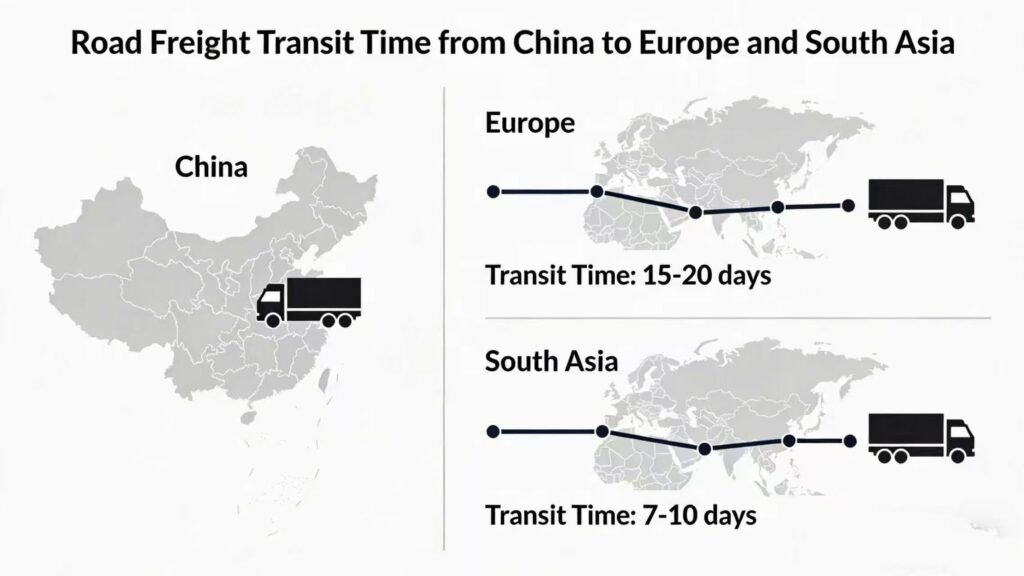
Road freight from China offers flexible, door-to-door delivery for domestic, regional, and cross-border shipments. Transit time varies by destination, cargo type, and route selection, making it a key solution for time-sensitive goods. For regional moves within Southeast Asia, trucks from southern hubs like Guangzhou, Nanning, and Kunming typically deliver in 2–7 days to Vietnam, Thailand, Malaysia, and Cambodia. For longer overland routes to Europe, including China-to-Germany and China-to-Poland corridors, transit usually ranges from 10–20 days, depending on border clearance efficiency and highway conditions. BatteryShipment provides specialized handling for regulated items like lithium batteries (UN3480/UN3090), ensuring compliance without delaying transit.
China to Europe Transit Times
Key corridors include the Eastern route via Manzhouli and Russia/Belarus (15–20 days) and the Western route via Alashankou/Khorgos and Central Asia (10–18 days). These routes balance distance, border efficiency, and infrastructure reliability. Expedited services with dedicated trucks can reduce transit to 8–12 days, making road freight a strategic option for supplementing rail or sea shipments. Ideal cargo includes industrial goods, electronics, and medium-batch e-commerce shipments, particularly for destinations lacking direct rail or port access.
China to Southeast Asia Transit Times
Road freight to Southeast Asia is highly efficient, leveraging the China-ASEAN highway network. Typical transit: Vietnam 2–3 days, Cambodia 4–5 days, Thailand 5–7 days, Malaysia/Singapore 7–10 days. Key factors influencing delivery include border clearance efficiency (ASEAN-China trade agreements can reduce delays to 4–8 hours), road conditions, cargo type, and seasonal weather. Small-batch battery shipments and temperature-sensitive goods are supported via specialized vehicles, ensuring safe and timely delivery.
Road freight from China combines speed, flexibility, and accessibility, bridging the gap between rail, air, and sea. With real-time tracking, reliable carriers, and optimized routes, it remains a competitive and practical choice for businesses seeking cost-effective, timely, and compliant overland logistics solutions.
Road Freight VS Rail Freight
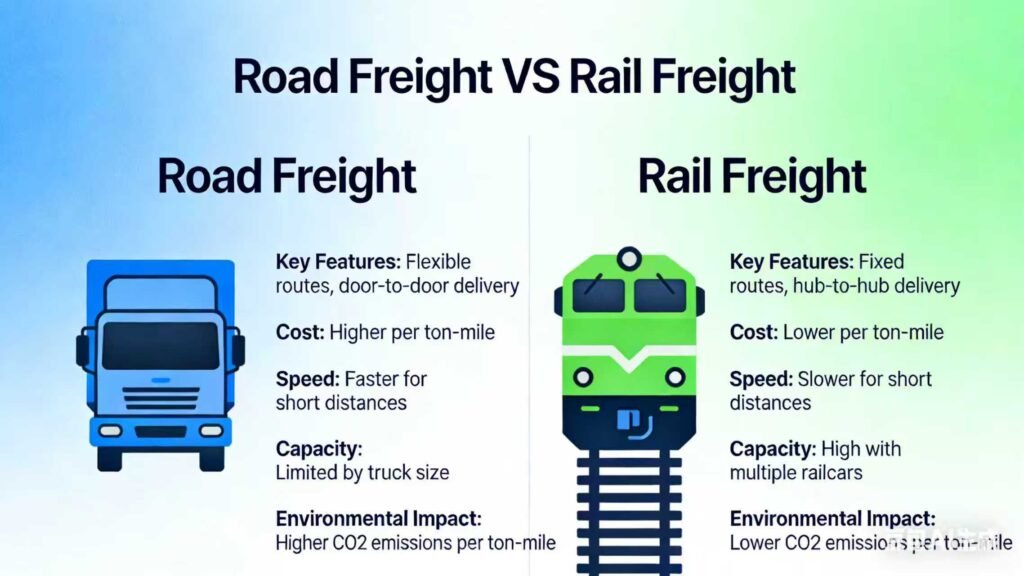
Cross-border international transport from China is primarily represented by TIR international road transport for road shipments and by China-Europe Railway Express, China-Laos Railway, and Central Asia railways for rail shipments, covering key foreign trade export regions.
Rail Transport: Operates on fixed railway tracks, mainly station-to-station. A single container (40HQ) can carry up to 30 tons / 70 m³, and a single train can transport 55 containers (total 1,650 tons). Transport relies on railway stations as hubs.
Road Transport: Cross-border trucks operate door-to-door without changing vehicles or unloading en route. Trucks can deliver directly to the consignee’s address, leveraging the road network covering 77 TIR member countries. A single container (40HQ) can carry up to 30 tons / 70 m³, and a single truck can carry up to 40 tons.
Road Freight VS Sea Freight
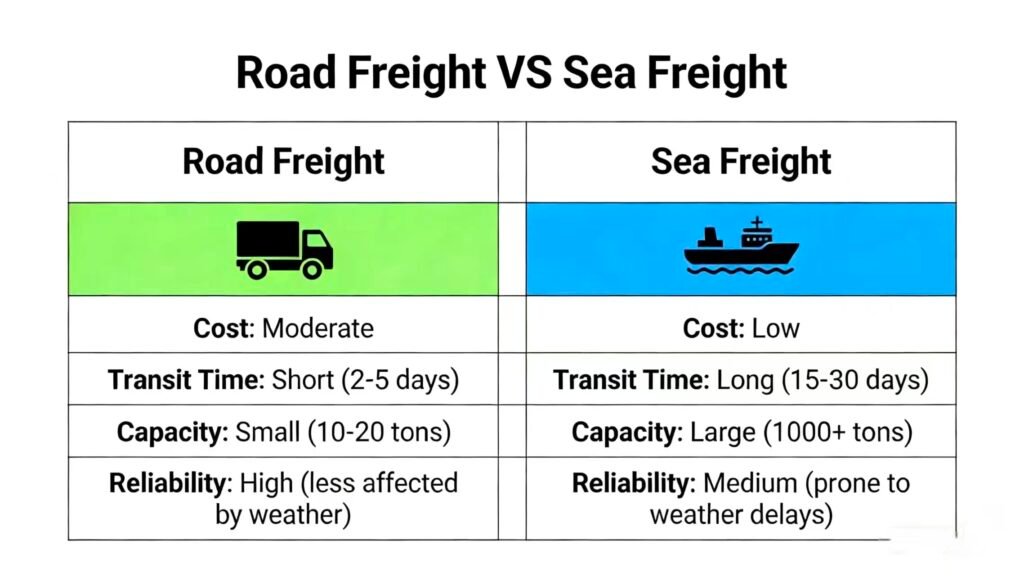
Road freight and sea freight are two core international shipping solutions, each tailored to specific cargo needs, timelines, and budgets. Road freight from China offers fast, flexible, door-to-door delivery for short-to-medium hauls, making it ideal for time-sensitive shipments to Southeast Asia (2–7 days) and regional Europe corridors (10–20 days). By contrast, sea freight dominates large-volume, long-distance shipping, connecting China to Europe, the US, and Australia with cost-effective container solutions, though transit times are longer (30–45 days) and inland delivery requires additional trucking or rail.
Cost and Cargo Efficiency
Sea freight provides the lowest per-unit cost for ultra-bulk cargo, heavy machinery, and low-value goods. Road freight, while typically 1.5–3x more expensive than sea freight, is highly efficient for small-to-medium shipments (5–100cbm), fragile products, and sensitive cargo like batteryshipment. Its shorter supply chain reduces handling, lowers damage risk, and supports on-demand scheduling—advantages sea freight cannot match for urgent deliveries.
Flexibility and Accessibility
Road freight reaches inland areas, industrial parks, and urban centers without port or rail access. It accommodates both full truckload (FTL) and less-than-truckload (LTL) shipments, with real-time tracking and route optimization. Sea freight offers global coverage for ultra-bulk goods but is more prone to port congestion, weather delays, and fixed sailing schedules.
For businesses balancing speed, cost, and reliability, road freight from China provides a strategic advantage for regional trade, especially to Southeast Asia and select European markets. Sea freight remains optimal for large-volume, cost-sensitive cargo, while road freight ensures agile, flexible delivery for semi-urgent or high-value shipments. Partnering with professional forwarders like BatteryShipment ensures seamless handling, compliance, and optimized transit times across all routes.
Frequently Asked Questions
Mainly in Europe and Southeast Asia.
Yes we accept.
We can handle DDP shipments.
Yes, professional forwarders like BatteryShipment provide real-time tracking for full transparency throughout the delivery.
Generally yes
Yes ,we can handle it .